My Parents Made Me Take The Bus To My Graduation — While Buying My Sister A Tesla
My Parents Made Me Take The Bus To My Graduation — While Buying My Sister A Tesla.
Ignored by a family that adores her younger sister, Daisy Parker hits a breaking point when her parents skip her college graduation to buy her sister a Tesla, telling her to take the bus. This ultimate act of neglect fuels a quiet, relentless ambition. Daisy builds a multi-million-dollar empire from scratch, driven by the memory of that lonely bus ride. When her family finally returns seeking her help, she confronts their past cruelty and discovers that true power lies not in revenge, but in using her success to help others.
“My parents made me take the bus to my graduation while buying my sister a Tesla.
My name is Daisy Parker. I’m 23 years old. The morning of my college graduation, I stood at the bus stop in my cap and gown. The scratchy fabric of the gown felt heavy on my shoulders, and the cheap cardboard mortar board kept slipping. It was a bright, sunny day in Nashville, the kind of day that’s supposed to feel full of promise. But for me, it just felt empty.
Down the street in the driveway of our family home, a different ceremony was taking place. My parents, Lydia and Charles, were handing my younger sister, Amber, the keys to a brand new pearl white Tesla. Its chrome handles gleamed in the sun. A giant red bow was perched on its hood, looking ridiculous and perfect all at once.
My mother cried. They were big, happy tears that streamed down her face as she hugged Amber.
“Oh, my baby,” she whispered loud enough for me to hear from the sidewalk. “You deserve the world.”
My father beamed, his chest puffed out with pride. He clapped Amber on the back, his expensive watch catching the light.
“The safest car on the road for our girl,” he announced to no one in particular.
Amber squealled, jumping up and down. She was wearing a designer sundress, not a graduation gown. Her senior year of high school had just ended. Mine, the one I’d worked three jobs to get through, was culminating in a ceremony a 45-minute bus ride away. No one even asked how I was getting there. No one looked my way.
I was a ghost in a black gown, watching a perfect family portrait being painted without me in it.
The city bus hissed to a stop in front of me. The doors folded open with a tired sigh. I climbed the steps, paid my fair with a crumpled dollar bill, and found a seat by a smudged window.
As the bus pulled away from the curb, I looked back. My family was still gathered around the Tesla, laughing and taking pictures. They didn’t see me go.
That bus ride became the quiet beginning of everything. The sticky vinyl seat, the rumble of the engine, the faces of strangers. It all felt more real than the family I had just left behind. I stared out the window, watching the city blur past, and I made a promise to myself.
It wasn’t loud or angry. It was a cold, hard, and silent vow. This feeling, this invisibility, would end. Their favoritism would no longer define me. And one day, I swore they would drive miles and miles in whatever fancy car they owned just to see my name on a billboard they never believed I’d earn.
And before I tell you how everything flipped, like and subscribe and drop a comment to let me know where you’re watching from.
Growing up in our Nashville home was like living in a perfectly curated museum where my sister was the main exhibit and I was the placard on the wall no one bothered to read.
The house itself was beautiful. A sprawling colonial with black shutters and a porch swing where my mother and Amber would often sit in the evenings, their laughter drifting through the open windows. Inside, the walls were a gallery of Amber’s life. Amber’s first steps. Amber’s first toothy grin. Amber on the shoulders of my father at a Titans game. Amber in a tiara as homecoming princess.
The one photo of me on the mantle was a small 5×7 frame tucked behind a much larger portrait of Amber on horseback. In it, I was about seven, wearing a plain yellow dress, standing slightly to the side. It was a metaphor I understood long before I had the words for it.
My father, Charles Parker, was a man who measured the world in square footage and return on investment. He was a successful real estate developer, and he applied the principles of his business to his family.
Amber was a prime piece of real estate, a beachfront property with endless potential for appreciation. She was beautiful, charming, and effortlessly social, all qualities he valued. He would invest in her endlessly: the best dance lessons, a private tennis coach, a wardrobe of clothes that cost more than my textbooks for an entire semester of college.
His affection was a transaction. He would give her the world, and in return, she would be the sparkling, successful daughter who reflected well on him.
When he came home from work, his first question was always, “Where’s my princess?”
I, on the other hand, was a sensible, low-maintenance property, reliable, sturdy, but ultimately lacking in curb appeal. I was quiet where Amber was bubbly, studious where she was social. My father saw my self-sufficiency not as a strength, but as a sign that I required no investment.
My good grades were expected, like a building being up to code. My achievements were simply the fulfillment of a baseline requirement, unworthy of celebration.
I remember one dinner when I was 15. I had just been accepted into a prestigious summer science program at Vanderbilt University. I waited for a lull in the conversation, my heart thumping nervously.
“I got into the Vanderbilt program,” I announced, trying to sound casual.
My father looked up from his stake. “The science thing? Good. That’ll look solid on a college application.”
He then turned to Amber. “Now, tell me again about the theme for the spring formal. Your mother and I were thinking a new dress is in order.”
The conversation shifted, and my news was left behind, a small discarded thing.
My mother, Lydia, dealt in a different currency, emotional energy, and she was perpetually overdrawn when it came to me. Amber was her life’s work. She managed Amber’s social calendar like a CEO, spent hours helping her with school projects, often doing most of the work herself, and served as her confidant, therapist, and best friend.
Their bond was a fortress, and I was on the outside. My attempts to connect with her were usually met with a gentle but firm redirection.
I remember one Saturday I found her in the garden tending to her roses. I wanted to tell her about a book I was reading, to share something of my inner world with her.
“Mom,” I started. “I’m reading this book, and the main character reminds me—”
She didn’t look up from her pruning. “Oh, that’s nice. Honey, listen. Can you be a deer and go start the laundry? Amber has her big competition tonight and her costume isn’t clean. We’re in crisis mode.”
Her voice was sweet, but the message was clear. Amber’s needs were a crisis. Mine were an interruption.
I went inside and did the laundry, the words about my book unsaid.
The disparity was never clearer than on holidays. Christmas at our house was an exercise in theatrical gift-giving for Amber. One year, she got a pony, a literal pony that my father arranged to have boarded at a nearby stable. She shrieked with joy, and the rest of the morning was spent watching her open dozens of other presents.
That same year, I received a set of encyclopedias and a new desk lamp for studying.
“To help you keep up those grades,” my father had said with an approving nod.
The gifts weren’t malicious. In their own way, they were practical, but they reinforced the roles we had been assigned. Amber was to be delighted, and I was to be diligent.
The science fair when I was in 8th grade was a defining moment. I had worked on my project, a solar powered water dissalinator, for three solid months. I spent weekends in the garage soldering wires and calibrating tubes. I had burned my fingers, stayed up late reading physics textbooks, and poured my entire being into it.
When they announced my name for first place in the state, I felt a surge of pride so powerful it made me dizzy. I walked home with a giant trophy, replaying the moment in my head, convinced this would be the thing that finally made them see me.
I found them in the living room helping Amber memorize lines for a school play. She had a minor role with three lines.
I held up the trophy. “I won,” I said, my voice filled with a joy I couldn’t contain.
My mother smiled faintly. “Oh, Daisy, that’s fantastic. Now, please be quiet for a moment. Amber is trying to concentrate.”
My father glanced at the trophy. “State level. Impressive. Charles Parker’s daughter, the scientist.”
He said it with a strange detachment, as if reading a headline about a stranger. There was no hug, no exclamation of pride, no request to hear about the project.
The trophy felt heavy and stupid in my hands. I took it to my room and set it on my desk where it sat, not as a monument to my achievement, but as a reminder of how little my achievements mattered.
A few days later, Amber performed her three lines in the school play flawlessly. My parents gave her a standing ovation and took us all out for ice cream to celebrate her star-making performance. I sat in the booth staring at my melting sundae and understood.
It wasn’t about the scale of the achievement. It was about the achiever.
I tried in my teenage years to be more like Amber. I tried to be bubbly and outgoing. It felt like wearing clothes that were two sizes too small. It was awkward and inauthentic, and my parents saw right through it.
“Don’t try so hard, Daisy,” my mother told me once. “It’s better to just be yourself.”
But what they didn’t understand was that they had left me with no choice but to be myself. The quiet, serious, independent girl who learned not to need them because they had made it so abundantly clear that they were not available. This self-reliance wasn’t a personality trait. It was a scar.
The last week of my senior year of college was a frantic, sleep-deprived haze. I felt like I was running the final lap of a 4-year marathon. My world had shrunk to the confines of the university library, my dorm room, and the fluorescent lit hallways of the buildings where I took my final exams.
Every day was a delicate balance of cramming for tests, putting the finishing touches on my thesis, and working my last few shifts at the campus security office. But beneath the crushing exhaustion, a fragile hope was beginning to bloom.
This wasn’t just the end of college. It was the beginning of everything else. It was my escape.
I had circled the date on my calendar in red ink for months. Saturday, May 17th, graduation day. In my mind, the day was imbued with an almost magical significance. It was the day my family would finally have to acknowledge what I had done.
They couldn’t dismiss a university degree with honors the way they had a science fair trophy. This was real, tangible, and undeniable.
I had spent hours daydreaming about it. I pictured them in the audience, my father looking stern but secretly proud, my mother dabbing her eyes with a handkerchief. I imagined us going out to a fancy lunch afterward, the kind of celebratory meal we only ever had for Amber. I imagined raising a glass of champagne and giving a small, graceful speech and for once having everyone at the table listen.
This fantasy was so vivid, so detailed that it felt like a memory of something that had already happened. It was this vision that kept me going through the endless nights and the grueling exams.
The night before my last final, I took a break from studying and walked to a small boutique near campus. I used the last $70 in my bank account to buy a simple, elegant blue sheath dress to wear under my gown. Holding it up in my dorm room, it felt like more than just a dress. It was a symbol of the person I was about to become, a capable, successful woman whose family was proud of her.
The day I finished my last exam, I walked out of the lecture hall into the bright May sunshine and felt a wave of pure relief. I had done it. It was over. I practically floated back to my dorm room, the weight of four years of relentless pressure finally lifting from my shoulders.
I couldn’t wait to share the news, to make the plans for my perfect day a reality.
I sat on my bed, took a deep happy breath, and dialed my mother’s number.
“Hi, Mom,” I said, the joy evident in my voice. “I’m officially done. My last final is over, and I passed everything with flying colors. I just wanted to nail down the plans for Saturday’s ceremony.”
“Oh, hi, sweetie,” she replied, her voice light and airy. I could hear the distinct sound of silverware clinking against a plate in the background. She was likely having lunch with one of her friends. “That’s wonderful news. We knew you would. What plans were those again?”
The question was so casual, so dismissive, that it momentarily stunned me.
“My graduation,” I said, my voice a little quieter now. “The ceremony is at 10:00. I sent the invitation packet with the tickets and parking pass last month. I was hoping we could all go to the Palm for lunch afterward to celebrate. My treat.”
I added that last part quickly, wanting them to know this wasn’t about their money. This was about their presence.
There was a pause. It stretched for an uncomfortably long time. I heard her murmur something to someone in the background. It sounded like my father’s name.
When she came back on the line, her voice had changed. It was now laced with a kind of gentle plecading tone she used when she was about to let me down easy.
“Oh honey, about Saturday,” she started, and my stomach immediately clenched. “I’m afraid we’re in a bit of a bind. Something has come up and we’re not going to be able to make it.”
The room suddenly felt very cold.
“What?” I whispered. “What do you mean you can’t make it? What could possibly be more important than my college graduation?”
My father must have taken the phone from her because his voice, clipped and business-like, suddenly filled my ear.
“Daisy, your mother is right. We can’t be there. The delivery of Amber’s graduation present is scheduled for Saturday morning. It’s a very tight window, and we have to be there to sign for it.”
I was so confused I could barely process his words.
“Her graduation present? Her high school graduation isn’t for another two weeks. What are you talking about?”
“It’s a car, Daisy,” he said, a note of impatience in his voice, as if I were a child asking a stupid question. “A Tesla. It’s a significant gift for a significant achievement. The delivery is coming from out of state, and Saturday is the only day they could do it. Our hands are tied.”
Our hands are tied.
The phrase was so absurd, so insulting. I imagined them wrestling with the decision, agonizing over the impossible choice between their daughter’s once-in-a-lifetime achievement and a car delivery. The image was so ludicrous, it made me want to scream.
My mother’s voice returned, dripping with false sympathy.
“You know how your sister is, sweetheart. Her heart is just set on it. It’s a huge milestone for her. Finishing high school, and we think it’s so important to be there for these big moments. You understand?”
I didn’t understand. I couldn’t understand. The unfairness of it was a physical thing, a crushing weight on my chest. I thought of the endless nights I had worked, the sacrifices I had made, the immense effort it had taken to get to this point. All accomplished with virtually no support from them. And they were choosing to miss it.
For a car.
For Amber.
“So you’re just not coming?” I asked, my voice cracking on the last word. I hated the sound of my own vulnerability.
“Don’t be so dramatic, Daisy,” my mother chided gently. “It’s just the ceremony. A lot of pomp and circumstance for a piece of paper. The important part is that you earned the degree, and we are so, so proud of that. You’re such an independent girl. You always have been. You can just take the bus or call an Uber. You’ll figure it out.”
There it was. The summary of my entire existence in their eyes. I was the independent one. The one who would figure it out. The one who didn’t need them.
“We’ll celebrate with you when you come home,” she added brightly, as if that solved everything. “You have to see the car. It’s a beautiful pearl white. Amber is just ecstatic.”
I couldn’t speak. The lump in my throat felt as large as a stone. All the air had been sucked out of the room, out of my life, out of the perfect day I had built in my head. It all came crashing down, shattering into a million pieces.
“Okay,” I managed to whisper. It was the only word I had left.
“Wonderful. Talk to you soon, honey. Love you.”
The line clicked dead.
I sat on my bed, the phone still pressed to my ear, listening to the dial tone. I looked at the beautiful blue dress hanging on my closet door. It looked gaudy and pathetic, a costume for a play that had just been cancelled.
In that moment, something inside me broke for good. It wasn’t a loud, messy shatter. It was a quiet, clean, and irreversible fracture of the soul. The last stubborn ember of hope that I could ever be a priority to them was finally extinguished, leaving nothing but cold, hard ash.
College was not an ivy-covered dream for me. It was a tightroppe walk over a financial abyss. My partial academic scholarship was a life raft, but it only covered tuition. Everything else, room, board, books, food, the occasional tube of toothpaste, was a mountain I had to climb on my own.
The $100 my parents sent each month felt less like support and more like a token gesture to appease their own consciences. It was just enough for them to tell themselves they were helping, but not enough to actually make a difference. I was effectively on my own, and the reality of that was a constant grinding weight.
My life became a meticulously organized schedule of survival. The pivot point of my day was not the sun, but the start of my night shift with campus security. At 10 p.m., while my peers were heading to parties or settling in for a night of studying, I was pulling on a stiff, ill-fitting uniform and lacing up heavy sold boots.
The job, from 11:00 p.m. to 7:00 a.m., was my lifeline. It was lonely, isolating work, but the campus at night offered a strange kind of peace. My duties consisted of walking a set patrol route, my footsteps the only sound in the sleeping quads, and then monitoring a bank of security cameras from a small, sterile guard station.
That little station became my sanctuary. Under the harsh, flickering fluorescent light, I would prop open my textbooks and write papers, the silent, grainy footage of empty hallways playing out before me. The coffee from the station’s ancient machine was thin and tasted like burnt plastic, but it was the fuel that got me through the night.
When my shift ended at sunrise, I would trudge back to my dorm, feeling like a ghost, re-entering the world of the living. I’d catch two or three hours of broken sleep before my 10:00 a.m. class.
I walked through my days in a perpetual fog of exhaustion. I perfected the art of looking attentive in lectures while my brain was screaming for sleep. More than once, I jerked awake to find my professor looking at me with a mixture of pity and annoyance, a line of ink from my pen trailing across my cheek where my head had rested on my notebook.
After classes, my day wasn’t over. I would take a bus downtown to my unpaid internship. It was a small, perpetually struggling marketing firm called Henderson Associates. My official title was intern, which was a euphemism for free labor. I made coffee, ran errands, answered phones, and organized files.
The office was small and cluttered, but to me it was a glimpse into the future I was fighting for. I did the grunt work with a smile, but my real work was observing. I listened to how Mr. Henderson pitched clients. I studied the campaign briefs left on the printer. I stayed late, long after everyone else had gone home, to teach myself Photoshop and web design on the office computers using online tutorials.
I was a sponge, determined to absorb every drop of knowledge, because I knew this experience was more valuable than any grade.
This relentless schedule left no room for a life. Friendships withered from my constant refusal to go out. “I have to work” became my mantra, a phrase that built a wall around me.
The isolation was profound. My only window into the world of a normal college student was through social media, and more specifically, through Amber’s feed. It was a constant, painful stream of the life I wasn’t living.
I’d be eating a crushed protein bar for dinner at 3:00 a.m. in the guard station, my eyes burning with fatigue, and I’d scroll through photos of her at a sorority formal, looking radiant in an expensive dress. I’d be trying to fix a hole in my only pair of sneakers with duct tape, and a picture would pop up of her on a ski trip in Aspen, captioned, “Best vacay ever. THX mom and dad.”
The contrast wasn’t just about money. It was about ease. Her life was effortless, a smooth, paved highway. Mine was a grueling uphill climb on a rocky, unmarked trail.
The injustice of it all settled deep inside me, not as a loud, explosive anger, but as a cold, dense nod of resentment. It was a quiet internal fire that I learned to stoke, using it as fuel. Every picture she posted, every story of her carefree existence, became another log on that fire. It hardened me, sharpened my focus.
There were moments when the weight of it all became too much. I remember one particularly brutal week of midterms. I had worked a double shift to cover for a sick co-orker, studied for 48 hours straight, and lived on nothing but vending machine coffee and crackers. My last exam was in calculus, a subject I had to fight for every point in.
I walked out of the exam hall knowing I had failed. The numbers had just blurred on the page. I went back to my empty dorm room, sat on the floor, and for the first time in years, I cried.
I cried out of sheer soulc crushing exhaustion. I cried for the girl who was trying so hard and still coming up short. The thought of giving up, of calling my parents and admitting defeat, was an overwhelming temptation.
But as I sat there, surrounded by my textbooks and my worn-out clothes, the image of Amber’s smiling face on that yacht in Cabo flashed in my mind. Then the memory of my mother’s voice on the phone telling me to figure it out.
The tears stopped. The cold, hard resolve returned, stronger than before.
Failure was not an option. Quitting was not an option, because I had no safety net. There was no one to catch me, no one to offer a soft place to land. It was just me. And in that moment of utter despair, I made a new promise to myself.
This struggle would not break me. It would be the forge that made me. All this pain, all this loneliness, all this work, it would be the foundation of the life I was going to build. A life so solid and so successful that they would never be able to ignore it again.
The internship at Henderson Associates was my real education. Mr. Henderson was a gruff, overworked man in his late 50s who seemed to be perpetually stressed. But he had a good heart and a sharp mind. He saw that I wasn’t a typical intern just looking to pat a resume. He saw my hunger.
While other interns would watch the clock, I would ask for more work. I’d organize old files, rewrite website copy for practice, and leave detailed memos on his desk with ideas for his existing clients. Most of the time he’d just grunt in acknowledgement, but occasionally he’d look at me over the top of his reading glasses and say, “Not bad, Parker. Not bad at all.”
Coming from him, it was high praise.
My turning point came on a dreary, rain-soaked Wednesday. A major client, a local car dealership, had just fired the firm, taking a huge chunk of their revenue with them. The mood in the office was furial.
Mr. Henderson, looking more defeated than I had ever seen him, came out of his office and dropped a heavy, dustcovered accordion file on my desk with a thud.
“Here,” he said, his voice flat. “This is a graveyard. Dead leads from the last 10 years. Small businesses we couldn’t sign or who couldn’t afford us. Go through it. Make a spreadsheet. I don’t care. Just find something to do.”
He meant it as busy work, a way to keep me out of the way while the real employees mourned. But as I wiped the dust off the cover and opened the first flap, I felt a jolt of excitement. This wasn’t a graveyard. It was a treasure map.
The files were filled with the stories of Nashville’s forgotten entrepreneurs. There was a woman named Jean who ran a small bakery called The Rolling Pin. Her file contained a handwritten letter explaining her passion for her grandmother’s recipes along with a blurry, poorly lit photo of her storefront.
There was a man named S who owned a thirdeneration auto repair shop. His file had testimonials from loyal customers praising his honesty, but his business was losing ground to the big chains. There was a tailor, a book seller, a luier who made beautiful custom guitars.
I spent the next two weeks immersed in their worlds. I didn’t just make a spreadsheet. I created a profile for each one. I looked them up online and found their broken websites and their empty social media pages. They were all brilliant at what they did, but they were invisible to the digital world.
They were being outmaneuvered and outspent by larger corporations. The bigger marketing firms, like the one I was interning at, wouldn’t touch them. Their budgets were too small, their potential for profit too low. They were being systematically overlooked.
As I read their stories, a profound and deeply personal connection formed. I saw myself in their struggle. I was the overlooked daughter. They were the overlooked businesses. We were the underdogs, working in the shadows, our passion and hard work going unseen.
The world celebrated the ambers, the flashy, well-funded and effortlessly successful, but who was fighting for the jeans and the sals?
That night, I couldn’t sleep. The idea arrived not as a gentle spark, but as a bolt of lightning that illuminated everything. I sat up in my bed, my heart racing.
What if I could be the one to fight for them?
What if I could build a different kind of agency?
Not one that chased massive corporate accounts, but one that dedicated itself to the small, passionate business owner. An agency that believed visibility wasn’t a privilege for the rich, but a right for anyone with a good story to tell.
We wouldn’t just offer marketing services. We would offer a lifeline. We would be the champions of the unseen.
The name came to me in that moment, clear as a bell: Bright Trail Digital. We would light the path.
The idea possessed me. It was all I could think about. I spent every spare moment at the university library, not studying for classes, but devouring books on small business management, digital marketing strategies, and lean startup principles. I filled notebooks with business plans, pricing models, and service packages designed specifically for low-budget clients.
I used the design software at the internship to create a simple, clean logo and print out a 100 business cards on thick card stock.
The day after my lonely graduation, I didn’t go home. I took the $2347 I had painstakingly saved over four years and made the biggest investment of my life.
I found a classified ad for a small, windowless storage room in the basement of an old building on the edge of downtown. It was 10 ft x 12 ft, had bare concrete walls, and smelled of damp earth and neglect. It cost $300 a month. It was perfect.
I bought a secondhand laptop from a pawn shop and a wobbly desk and chair from a thrift store. With my laptop, my desk, and my box of business cards, Bright Trail Digital was born.
My first target was The Rolling Pin Bakery. I walked in on a Tuesday morning, my heart hammering against my ribs. A kind-faced woman with flower on her apron, Jean, stood behind the counter. The bakery smelled like heaven, but it was completely empty.
I gave her my pitch, my voice shaking slightly. I told her I believed in her product and I had a plan.
She was kind but weary. “Honey, I’ve heard it all before. Big promises, big bills. I can’t afford it.”
This was the moment I had rehearsed in my head a hundred times.
“You don’t have to,” I said, my voice gaining confidence. “Let me work for you for 1 month for free. I’ll build you a new website. I’ll run your social media. If you don’t see a significant increase in business by the end of the month, you owe me nothing. You can even keep the website.”
She looked at me, a long searching look. She saw the desperation and the determination in my eyes. She saw a fellow underdog.
“All right, kid,” she said with a small smile. “You’ve got yourself a deal.”
That month was a blur of frantic work. I spent days at her bakery, taking beautiful, highresolution photos of her pastries. I interviewed her, learning her story, her grandmother’s journey, the passion behind every recipe. I built her a warm, inviting website that told that story. I started an Instagram page filled with a mouthwatering gallery of her creations. I ran a small, hyperargeted Facebook ad campaign aimed at people within a 5m radius of her shop.
The change was staggering.
The next Saturday, a line formed outside her door for the first time in years. People came in holding up their phones, asking for the cinnamon roll they had seen on Instagram. By the end of the month, her revenue had quadrupled.
She met me in my tiny basement office with tears in her eyes and handed me a check for double what we had agreed upon. That check was the first dollar I had ever truly earned. It was proof.
My idea wasn’t just a dream born from my own pain. It was a viable business that could change people’s lives.
The success of The Rolling Pin became my blueprint and my best advertisement. Jean, eternally grateful, became my most vocal evangelist. She told S at the auto shop, who told the tailor, who told the book seller.
My client list grew organically, one overlooked business at a time. I was no longer just the girl in the basement. I was the secret weapon of Nashville’s small business community.
My days were a blur of 16 to 18our stretches. I was the CEO, the creative director, the account manager, and the janitor. I met with new clients, built websites, designed social media campaigns, wrote ad copy, and at the end of the day, I swept the concrete floor of my tiny office.
The work was bone crushing. But for the first time in my life, I felt a sense of purpose that was intoxicating. I wasn’t just building a company. I was building a community.
After a year, the basement could no longer contain my ambition. I had a waiting list of clients and a small, growing profit margin. It was time to expand.
I took a massive leap of faith and leased a real office space in a renovated warehouse in the Gulch, a trendy upandcoming neighborhood. The space was beautiful, with high ceilings, exposed brick, and massive windows that flooded the rooms with natural light. The monthly rent was more than my entire life savings had been a year prior.
Signing the lease was the scariest and most exhilarating moment of my life.
With a real office, I could hire a real team. My first hire was Sarah, a brilliant graphic designer I found through a freelance website. She had a keen eye and a sarcastic wit that kept me grounded. Next came Ben, a quiet, thoughtful writer who could turn a company’s history into a compelling narrative.
One by one, I built my team. I wasn’t just looking for skilled people. I was looking for fighters. I hired people who had been underestimated, who had something to prove. Our office culture became an extension of our mission. We were a team of underdogs fighting for other underdogs.
The energy was electric. We worked tirelessly, fueled by cheap pizza, gallons of coffee, and a shared belief that our work mattered.
Our big break came from an unexpected place. A small local tech startup with a revolutionary new approached us. They had been rejected by every big agency in town. They were seen as too small, too niche, but I saw their passion and the brilliance of their product.
I took them on for a fraction of our usual fee, making a bet on their potential. We poured everything we had into their launch. Ben crafted a powerful story about the founders, and Sarah created a stunning visual identity. We launched a gorilla marketing campaign that was authentic, clever, and deeply connected to the Nashville community.
It went viral.
The app skyrocketed to the top of the charts. Six months later, the startup was acquired by a Silicon Valley giant in a multi-million dollar deal. In every interview, the founders credited Bright Trail Digital as the catalyst for their success.
Overnight, we were no longer just a local agency. The phone started ringing with calls from Atlanta, from Charlotte, from beyond. National brands wanted to know who we were and how we had done it.
My life changed. I was featured in Forbes Nashville under the headline “The Underdog Champion.” I started getting invitations to speak at business conferences. I was 24 years old and the CEO of a multi-million dollar company.
It was during this period of explosive growth that I had a moment of jarring self-awareness. I was sitting on the city bus heading to a highstakes meeting with a potential new client when I looked out the window and saw one of our ads on the side of another bus. And I realized I was still taking the bus to my multi-million dollar company.
The irony was so thick I could taste it.
That evening, I walked into a car dealership. My eyes scanned the showroom past the gleaming sports cars and luxury sedans. In a prominent spot near the front was a pearl white Tesla, almost identical to Amber’s. A wave of nausea rolled over me.
I turned and walked out of the main showroom to the used car lot. There, in a back row, I found it. A three-year-old Jeep Wrangler. It was dark green with a few minor scratches on the fender and slightly muddy tires. It wasn’t sleek or sophisticated. It was rugged, capable, and unpretentious. It felt like me.
I walked inside and found a salesman.
“I’ll take the Jeep,” I said, “and I’ll be paying in cash.”
The look on his face was one I would treasure.
Driving that Jeep off the lot was a profound experience. It wasn’t the thrill of a new toy. It was the quiet, solid feeling of self-reliance made manifest. This vehicle wasn’t a gift, a prize for being the favorite. It was 3,000 lb of steel and rubber that I had earned through my own blood, sweat, and tears.
I gripped the steering wheel, turned up the radio, and drove through the streets of the city that was now my own. Every mile was a victory.
This modest secondhand Jeep held more freedom, more power, and more dignity than a thousand brand new Teslas ever could.
The ultimate validation came a year later. A prestigious venture capital firm from New York flew me out for a meeting. They had been tracking our growth and were impressed by our unique market position and our incredible client loyalty. They wanted to invest to help me take Bright Trail nationwide.
I spent a week in a whirlwind of meetings, sitting in intimidating glasswalled boardrooms across from titans of industry. They grilled me on my financials, my growth strategy, my leadership philosophy. I wasn’t intimidated. I thought of the lonely nights in the guard station, of the taste of desperation and stale crackers. These men in their thousand suits couldn’t scare me.
I negotiated hard, not just for the money, but for the soul of my company. I ensured we would retain creative control and that our mission to serve smaller clients would be protected.
On the final day, they made their offer. They wanted to partner with me, valuing Bright Trail Digital at $25 million. As I signed the papers, my hand was perfectly steady.
I flew back to Nashville that night. I didn’t call my parents. Instead, I took my team out for the most expensive dinner the city had to offer. We celebrated our collective victory. A victory for every underdog we had ever fought for. Starting with ourselves.
The girl who had been told to take the bus now had the means to buy the entire bus company.
The two years after the partnership deal were a blur of controlled chaos. Life accelerated to a speed I had never imagined. We opened offices in Austin, Denver, and Seattle. I was constantly flying, living out of a suitcase, and making decisions that affected hundreds of employees.
My world was a landscape of spreadsheets, market analyses, and conference calls. I had become the person I had always aspired to be: a successful, respected, and completely independent woman.
The wounds of my childhood had been paved over with a thick layer of success. I had built a new family, my team, and a new home within the walls of my company. My biological family had become a distant, faded photograph from a past life. The silence from them had been absolute for nearly 5 years, and I had interpreted it as a mutual unspoken agreement to let the past lie. I preferred it that way.
The call came on an ordinary Tuesday afternoon. I was in a high-level strategy session in our Nashville headquarters, brainstorming a Super Bowl commercial for a major new client. The energy in the room was palpable, a mix of creative tension and exhilarating possibility.
My phone, set on the polished boardroom table, vibrated. I had a strict rule about not taking calls during these meetings, but for some reason, I glanced at the screen. A single word glowed there.
Mom.
Time seemed to slow down. The vibrant discussion around me faded into a muffled hum. My heart didn’t just jolt. It seized. A painful, violent contraction in my chest. It felt like a ghost had reached out from the past and squeezed.
I stared at the name and a chaotic slideshow of memories flashed through my mind. Her dismissive smiles, her back turned to me in the kitchen, her cheerful voice on the phone telling me she couldn’t make it. The old familiar sting of rejection was so potent, so immediate, it was as if no time had passed at all.
My executive vice president was looking at me, her brow furrowed in concern.
“Daisy, everything okay?”
I blinked, forcing myself back to the present. I stood up, my legs feeling strangely unsteady.
“I need to take this,” I said, my voice coming out as a strained whisper. “I’ll be right back.”
I walked out of the boardroom and into the sanctuary of my private office. The floor-to-seeiling window offered a panoramic view of the Nashville skyline, a view I had earned. It was my armor. I stood there for a long moment, my back to the door, taking a few deep, ragged breaths.
Then I swiped to answer.
“Hello.”
My voice was colder and flatter than I intended.
“Daisy. Oh, thank goodness it’s really you. I wasn’t sure you still had this number. It’s been so long.”
It was her voice. Exactly as I remembered it. A melodic southern draw that could sound both incredibly sweet and incredibly condescending at the same time.
“I do,” I said, offering nothing more.
“Well, I’m sure you’re very busy, but I just had to call. Sweetheart, your father and I are just bursting with pride. Charles saw you in Forbes magazine, the big national edition. He went right out and bought 10 copies. We saw the article about the big partnership deal, $25 million. I just sat at the kitchen table and cried happy tears. To think of our little girl, a big CEO, our little girl.”
The phrase was a lie, a revision of history so blatant it was breathtaking. I was never their little girl. I was their other daughter, their afterthought.
The silence on my end of the line was heavy and deliberate. I wanted her to feel it. I wanted her to squirm in it. But my mother was a master of ignoring uncomfortable silences.
“Anyway,” she barreled on, her cheerful tone unwavering. “We were just saying that it has been far, far too long. We would love, absolutely love, to come visit and see your new office. We want to hear all about your incredible success. We could drive up this weekend, maybe take you to dinner.”
The request was so audacious, so completely devoid of self-awareness that for a moment I was speechless. After 5 years of nothing—no calls, no texts, no apologies—they wanted to just reappear and bask in the glow of my success. They weren’t interested in me. They were interested in my new shiny life.
It was so transparent it was almost pathetic.
A cold, calculating part of my brain took over. I wanted to see this through. I wanted to see exactly what they wanted.
“This weekend is booked,” I said, my voice like ice. “Next Wednesday at 2 p.m. I have a 1-hour window.”
I was treating her like any other business appointment.
“Oh, well, Wednesday it is. That sounds wonderful. We’ll finally get to have a proper family reunion. We are so, so excited, sweetheart. We’ll see you then.”
She hung up, leaving me in a stunned, ringing silence.
The next week was a torment of anticipation. I was on edge, irritable with my staff, and unable to focus. On Wednesday, at precisely 1:55 p.m., I stood at my office window and watched them arrive.
My father was behind the wheel of a new, obscenely large black Cadillac Escalade. Following it, like a loyal, gleaming puppy, was Amber’s pearl white Tesla. It looked exactly the same, a pristine symbol of their priorities.
I had my assistant greet them in the lobby and bring them up. When they stepped out of the elevator, I was standing there, a calm, neutral expression on my face.
My mother rushed forward, enveloping me in a cloud of Chanel Number Five and a hug that was all air and no contact.
“Oh, Daisy, just look at you. So chic. And this office. It’s even more beautiful than in the magazine pictures.”
My father was more reserved. He shook my hand, his grip firm, his eyes sweeping across the space, taking in the expensive art on the walls and the number of employees, making a silent calculation.
“You’ve done well, Daisy,” he said.
It was a statement of fact, not a compliment.
Amber, now a young woman, looked listless and unimpressed. She was texting, barely looking up as she offered a mumbled, “Hey.”
I gave them the grand tour, my voice polished and professional. I showed them the creative suites, the bustling open plan workspace, the breakroom with its gourmet coffee bar. I introduced them to my senior staff. They smiled and nodded, but I could see in their eyes that they didn’t grasp it. They saw the surface, the success, the money, but they had no concept of the foundation of relentless work and painful sacrifice that lay beneath it.
We concluded the tour in my corner office. My mother ooed and awed at the view. My father examined the quality of my desk. And then my mother, with a smile that was both dazzling and predatory, delivered the line I had been waiting for.
“You know, Daisy, seeing all this, it’s just so inspiring. And your sister Amber, she’s so creative, just like you. She has this brilliant idea to start her own online fashion boutique. She has the vision, but she just needs a little push, a little guidance.”
She paused, her eyes locking onto mine.
“We were thinking, with all your expertise and resources, you could help her get it off the ground.”
There it was. The reason for the phone call, for the visit, for the sudden miraculous pride. It wasn’t a reunion. It was a business pitch. After all these years, I was still just a resource to be used, a problem to be solved. Only now, the problem was Amber’s lack of a career, and I was the solution.
The silence that followed my mother’s proposal was thick and heavy, charged with 5 years of unspoken resentment. I remained standing by the window, my posture rigid, my expression unreadable. I let them wait. I wanted them to feel the weight of what they were asking, of what they had done.
My mother’s practiced smile began to twitch at the edges. Amber, for the first time, looked up from her phone, a flicker of petulent expectation in her eyes.
It was my father who finally broke the silence, stepping into the role he knew best: the dealmaker. He cleared his throat and took a step forward, adopting a tone that was both paternal and condescending.
“Daisy, let’s be practical about this. Your sister has a genuine talent for fashion. She has curated a brand identity, sourced potential suppliers. What she’s lacking is the seed capital and the digital marketing savvy to launch effectively.”
He gestured expansively at my office, at the city sprawling below us.
“You have built an incredible machine here. It would be a simple matter for you to lend your resources to your own family. A small investment, a bit of your team’s time to build her a website and run some ads. It’s the least you could do.”
The least you could do.
The phrase hung in the air, a monument to his own spectacular blindness.
I turned my head slowly, not to look at him, but to gaze down at the parking lot three stories below. Amber’s Tesla was parked in a prime spot. Its white paint so bright it almost hurt to look at. It was the centerpiece of the whole scene. The silent, gleaming witness to this entire charade.
I could feel the ghost of my 22-year-old self standing beside me. The scratchy graduation gown on her shoulders, a crumpled bus ticket in her hand.
My father, mistaking my silence for consideration, pressed his advantage. He walked to my desk and placed a glossy, professionally bound business plan on its surface.
“We’ve had this drawn up. The numbers are all there. We’re thinking of this as a family venture. You provide the initial investment and the marketing launch. And we’ll consider it you returning the favor for all the support we’ve given you over the years.”
That was the line, the one that severed the last frayed thread of any familial obligation I might have felt. Returning the favor. The sheer unmitigated gall of it was almost magnificent.
What favor?
The favor of my lonely childhood? The favor of their profound and consistent indifference? The favor of being abandoned on the most important day of my academic life for the delivery of that very car sitting in the parking lot?
A strange cold calm descended over me. The anger that had been simmering for years didn’t boil over. It froze into a solid, sharp point of clarity. I knew with absolute certainty what I had to do. This wasn’t about revenge anymore. It was about truth.
I turned away from the window and walked slowly, deliberately toward my desk. I didn’t look at them. I looked at the business plan they had placed on my desk, a symbol of their entitlement. I picked it up, felt its weight in my hands, and then placed it to the side.
I sat down in my chair, the plush leather sighing under my weight. It felt like a throne.
My mother smiled, a quick, triumphant little expression. She thought they had won.
I opened the top drawer of my desk and pulled out my personal checkbook, not the company one. This was my money, the money I had earned in spite of them. Their eyes were riveted on my every move. I could feel their collective greed, a palpable ugly thing in the pristine air of my office.
I unccapped my pen.
“You mentioned returning a favor,” I said, my voice quiet but carrying an unnatural weight. “To do that properly, I need to know the exact amount of the original investment. So, tell me, Dad, how much was a city bus ticket in Nashville in the spring of 2019?”
The question landed in the room like a grenade.
My father’s confident expression dissolved into a mask of pure confusion.
“What in God’s name are you talking about?”
“The bus fair,” I repeated, my voice remaining level, almost conversational. I looked up and met his eyes. “The fair for the bus you told me to take to my own college graduation. I think it was somewhere around $1.75, but I’m feeling generous, so let’s round it up to cover any emotional damages.”
My mother let out a small, strangled gasp. Amber’s jaw literally dropped. My father’s face began to cycle through a series of colors, from pale white to a blotchy, furious red.
With a hand that was perfectly steady, I wrote the date. I made the check payable to Charles and Lydia Parker. In the amount line, I wrote, with clear, precise letters, $1 and 0/100. Then in the memo line, the place for explanations, I wrote two words: bus fair.
I tore the check from the book with a neat, satisfying rip. I stood up, leaned across my desk, and held it out to my father.
He stared at my hand, then at the check, as if it were coated in poison.
“Take it,” I said, my voice no longer quiet. It was hard, cold, and final. “This settles our accounts. This is a full and complete repayment for every bit of support, financial, emotional, and otherwise, that you ever invested in me. We are now even.”
He finally snatched the check from my hand, his fingers trembling with rage. He looked from the pathetic, insulting piece of paper to my face.
“After everything we’ve done for you,” he sputtered, his voice choking with indignation.
“What have you done?” I shot back, the damn of my restraint finally breaking. “What exactly have you done? You ignored me for 18 years. You celebrated my sister’s every breath while you treated my accomplishments like a checklist. You chose a car over my graduation. You left me to struggle through four years of college completely on my own. And now, now that I have built something for myself from the dirt you left me in, you dare to walk in here and talk about returning the favor? This check isn’t an insult. It’s an invoice. You’re paid in full. The family venture is dissolved.”
He stood there, speechless, the $1 check clutched in his fist. My mother was crying now, quiet, horrified tears. Amber just looked shocked, as if she had never considered that the world didn’t revolve around her.
“We’re leaving,” my father finally bit out. He threw the check onto my desk. It fluttered down like a dead leaf. He grabbed the business plan, turned on his heel, and stormed out of the office without another word.
My mother, with one last wounded look at me, scured after him, pulling a bewildered Amber along with her.
I stood there and watched them go. I didn’t feel a surge of triumph. I didn’t feel joy. I felt a vast—
The immediate aftermath of the confrontation was silence, a deep, ringing silence that filled my office, my car, my apartment. For years, my ambition had been a roaring fire fueled by resentment and a burning need to prove them wrong. Now, after that final explosive confrontation, the fire was out. All that remained was a landscape of cold ash and a hollow, aching emptiness.
The victory was pirick. I had said everything I ever wanted to say. I had won the argument in the most definitive way possible, but the relief I expected never came. The wound was still there. Humiliating them hadn’t healed it. It had only shown me its true depth.
I had spent so long defining myself in opposition to them that without that conflict, I felt adrift.
I spent a week in a fog. I went to work. I led meetings. I made decisions. But I was on autopilot. My team noticed the change, casting worried glances my way, but no one dared to ask what was wrong.
One night, I was working late, staring blankly at a spreadsheet when my eyes drifted to a framed photo on my credenza. It wasn’t a family photo. It was a picture of me with Jean from The Rolling Pin, taken on the one-year anniversary of her bakery’s rebirth. We were both covered in flower, laughing.
I remembered the feeling of that day, the pure, uncomplicated joy of seeing her success, of knowing I had played a part in it. It was a feeling of purpose, completely separate from my family drama.
That was the moment the fog began to lift.
I realized my quiet revenge couldn’t be a single destructive act against them. A true, lasting victory had to be creative, not destructive. It had to be about building something positive from the rubble of my own pain. It had to be about ensuring that my story, which had been a source of so much personal suffering, could become a source of strength for someone else.
I thought about the girl I used to be, standing at that bus stop in her cap and gown, feeling like the most invisible person on the planet. I knew with a certainty that chilled me that there were countless others just like her. Talented, brilliant, hard-working students who were navigating the immense challenge of higher education without a familial safety net.
They were the ones working two jobs, skipping meals, fighting silent battles of self-doubt and exhaustion, all while being told by society that college should be the best time of their lives. They were the ultimate underdogs.
The idea for the Ride Forward Foundation solidified in that moment. It wouldn’t just be a scholarship fund. A check for tuition was helpful, but it didn’t solve the deeper problems of isolation and a lack of guidance. My foundation would be different. It would be a comprehensive support system.
Our mission would be to empower students who were achieving their dreams without or in spite of their family’s support. The name felt perfect. It reclaimed the most painful symbol of my past, that bus ride, and transformed it into a symbol of progress and hope.
I threw myself into the project with a renewed sense of purpose. This was a fire I could control, one that would provide warmth instead of just destruction.
I leveraged the resources and connections I had built with Bright Trail. I assembled a board of directors made up of trusted adviserss, lawyers, and financial experts. I personally seated the foundation’s endowment with a $10 million donation, ensuring it would have a real, immediate, and lasting impact.
We designed the Ride Forward scholarship to be holistic. It covered full tuition and fees, but it also provided stipens for housing, books, and even a small emergency fund so a student would never have to drop out because their car broke down or they had an unexpected medical bill.
The most important component for me was the mentorship program. Each scholarship recipient, or rider as we called them, was paired with a successful professional in their field. They would get the guidance, the encouragement, and the belief that I had so desperately craved.
The first round of applications was overwhelming. We received thousands of essays from across the country. I insisted on being part of the selection committee, and I read every single one. The stories were raw, powerful, and deeply moving. They were stories of resilience in the face of unimaginable obstacles.
I read about a young man from Appalachia who wanted to be the first in his family to graduate college, whose family saw his ambition as a betrayal of his roots. I read about a young woman who had aged out of the foster care system with nothing but a dream of becoming a social worker. And then I read Emily’s application.
Her story was a haunting echo of my own. She was a brilliant student from a small town in Tennessee, graduating at the top of her class with a passion for literature and a dream of becoming a teacher. She wrote with heartbreaking clarity about her parents, who loved her but who fundamentally did not believe in her dream. They saw her desire for education as a frivolous, impractical pursuit.
In her essay, she wrote a line that made the air leave my lungs:
“They told me that if I insisted on going, I was on my own and that they would not be at my graduation to celebrate a choice they didn’t support. They said they would only come if I was successful enough by their standards.”
Not successful enough.
It was the unspoken message of my entire childhood, finally given a voice.
I called Emily myself to tell her she had been awarded the first ever full ride scholarship. She was so stunned she couldn’t speak at first. And then she began to sob, a sound of such profound relief that I found myself crying with her.
“We believe in you,” I told her, the words I had always needed to hear. “You are more than successful enough.”
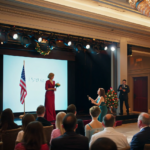
A year later, we held our first Ride Forward Foundation gala. All of our inaugural riders were flown in. Meeting them in person was transformative. They were a living, breathing testament to the power of resilience.
During the event, Emily, who had just completed her freshman year of college with a 4.0 GPA, gave a speech. She stood at the podium, poised and confident, and spoke about what the foundation had given her.
“The Ride Forward scholarship did more than pay my tuition,” she said, her voice clear and strong. “It gave me a community. It gave me a mentor. But most of all, it gave me the knowledge that I wasn’t alone. It told me that my dream was valid, that my struggle was seen, and that my journey mattered.”
I sat in the audience, watching this incredible young woman who was now thriving, and I felt a sense of peace that had eluded me my entire life. The hole in my heart, the one that had been carved out by years of neglect, was being filled not with anger or wealth, but with the success and happiness of others.
This was my quiet revenge.
It wasn’t about tearing my family down. It was about building hundreds of new families up. It was about turning the deepest pain of my life into the greatest purpose of my life.
Years passed. Bright Trail Digital continued to grow, and the Ride Forward Foundation helped hundreds of students. My life was full and busy, filled with work I loved and people I respected. The dull ache of my family’s betrayal had faded, replaced by a quiet strength.
One evening, my phone buzzed with a text from an unknown number. I opened it. It was a picture, slightly blurry, taken at dusk.
It was a photo of one of my foundation’s new billboards on the highway leading into Nashville. The billboard featured a smiling picture of our latest scholarship recipient and the words, “The journey forward starts here. Ride Forward Foundation.”
Standing just to the side of the billboard, almost out of frame, was my mother.
A second text came through from the same number. It was a simple sentence.
“We’re proud of you, Daisy.”
There was no apology. There was no acknowledgement of the years of pain, no admission of guilt. It was just a statement, but it was a statement I had spent the first two decades of my life desperate to hear.
I looked at the photo, at my mother standing beside the legacy I had built from the hurt she had caused. And I felt nothing. No anger. No surge of victory. No desire to text back a list of her failings.
The desperate need for her approval was gone. I had proven everything I needed to prove, but more importantly, I had proven it to myself.
I typed back a simple reply.
“Thank you. I made it on my own.”
And I meant it.
I hadn’t made it in spite of them. I had made it because of me. My success wasn’t the final word in an argument with them. It was the first word in a conversation with myself.
Because sometimes the best revenge isn’t proving them wrong. It’s not needing to anymore.
If you’ve ever been the overlooked one, hit like and tell me where you’re watching from. You’re not alone.
Have you ever had someone dig into your life hoping to expose you—only for their own lies or hypocrisy to come out instead? How did you find the strength to stand in your truth while a so-called “golden child” finally faced consequences? I’d love to hear your story in the comments below.
News

At My Brother’s Wedding, Dad Mocked Me “Just a Soldier” — Then an SUV Pulled Up “President Awaits You”. What happens w
At My Brother’s Wedding, Dad Mocked Me “Just a Soldier” — Then an SUV Pulled Up “President Awaits You” What…
When I Came Home from NATO Duty, I Didn’t Expect My Own Father to Drag Me Into Court. He stood b
When I Came Home from NATO Duty, I Didn’t Expect My Own Father to Drag Me Into Court He stood…

My Younger Brother Texted In The Group: “Don’t Come To The Weekend Barbecue. My New Wife Says You’ll Ruin The Whole Party.” My Parents Spammed Likes. I Just Replied: “Understood.” The Next Morning, When My Brother And His Wife Walked Into My Office And Saw Me…
My younger brother texted: “Don’t come to the BBQ.” Until my brother and wife step into my office… When your…

At the family party, my sister called me “the family failure.” Her boss only smiled and said… Skyler, the golden c
At the family party, my sister called me “the family failure.” Her boss only smiled and said… A shocking family…
At The Inheritance Meeting, My Daughter-In-Law Shouted Proudly: ‘My Father-In-Law Left Us The Seven Miami Houses. Ella, Too Bad, You Only Got The Shed In Mississippi.’ Everyone Applauded. I Just Smiled And Said: ‘Son… You Really Don’t
During the Inheritance Split My Daughter-In-Law Celebrated But I Smiled: “Son, You Still Don’t Know?” The words hit me like…
My Dad Said: “STOP TREATMENT — WE WON’T APPROVE THE SURGERY.” He Signed a DNR to Take Control of My $15M Inheritance
Some fathers protect their daughters—mine tried to sign my life away. A DNR, a $15M trust, and a coma became…
End of content
No more pages to load