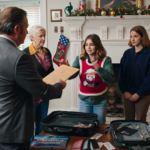
My sister broke into the house I bought for our parents and screamed, “This house is mine now.”
I never thought I’d be changing locks on a house I bought for my own parents, but here we are.
My name is Sloan. I’m 37, and I’m a neurosurgeon. That matters because it explains the money, the absence, and why my family treats me like an ATM.
This started on a Saturday in late June. I’d taken the day off and driven three hours to the coast with an expensive birthday cake and champagne. The cake had strawberries and cream, the kind my dad loved as a kid but couldn’t afford. I was stupidly happy: windows down, thinking my parents deserved this.
When I pulled into the driveway, something was wrong.
A massive SUV blocked the path, parked at an angle. The front door was wide open, the screen banging in the wind. My stomach dropped. I heard shouting before I reached the porch. A man’s voice, aggressive. My mother’s voice, high-pitched. Underneath it all, cartoons blaring and kids shrieking.
I’m used to chaos. I work in operating rooms where lives depend on staying calm. But walking into my parents’ house and seeing what I saw made my hands shake so hard I nearly dropped the cake.
My mother gripped a dish towel in the kitchen, eyes red and swollen from hours of crying. My father sat at the table, hands trembling so badly his wedding ring tapped against the wood. He looked up at me with pure defeat on his face.
The living room was complete chaos. Moving boxes everywhere, spilling clothes. A huge muddy dog dug at the couch cushions. Two small kids, maybe five and seven, ran in circles screaming while cartoons played at deafening volume.
And sprawled on my parents’ new couch like she owned it was my younger sister.
She looked comfortable—messy bun, yoga pants, scrolling her phone with bare feet on the coffee table. She glanced up and smiled. Her husband, Kyle, stood next to the couch holding a beer at two in the afternoon, also barefoot. I’d met him a few times and always thought he was an ass.
My instincts were solid.
Kyle was mid-sentence when I walked in, pointing at my father. “This is my house now. You need to accept that.”
The room went silent. My sister’s eyes went wide. Kyle’s finger froze mid-point. Even the kids stopped running.
I walked slowly to the coffee table and set down the cake. The box made a soft thump.
“What,” I said quietly, “is going on here?”
My sister recovered first, putting on her victim face.
“Sloan, oh my God, I didn’t know you were coming. We were just—”
“How did you find this house?” I cut her off.
She bit her lip. “Well… Dad posted a photo on social media. You could see the street sign and it was easy to figure out the address. I just wanted to see where they were. And when we saw how big it was—”
“You tracked down the house I bought for our parents using social media,” I said. “Then showed up with your entire family and decided to move in.”
“We’re just staying for a bit. The house is huge, Sloan. There’s room for everyone. You’re never around anyway, and Mom and Dad are getting older.”
“I’m fifty-nine,” my father said quietly. First words I’d heard from him, voice hoarse.
Kyle stepped close, trying to intimidate me with his size. “We’ve already talked to your parents. We’re family. We take care of each other. This house is big enough for everyone. It’s stupid to let it sit here unused.”
“Using it,” I repeated.
“Your parents agree with us, don’t you?” He turned to my mother, who still gripped that dish towel.
I looked at my mom. Really looked. She wouldn’t meet my eyes. This wasn’t an unexpected visit. This was planned. Coordinated. An invasion.
“Mom, did you invite them here?”
She opened her mouth, closed it. “I… they just showed up this morning and… and we explained the situation—”
My sister interrupted, standing. “Look, Sloan, you need to think rationally. You bought them this giant house they don’t need. They can’t handle the stairs.”
“I can handle the damn stairs,” my father said louder.
“And we’re in a tight spot with money,” Julia went on. “Kyle lost his job. Our lease is up. We’ve got the kids. This makes sense. We help with upkeep. They spend time with grandkids. Everybody wins.”
I stared at the boxes, at the dog chewing my mother’s pillow, at my parents looking like hostages.
“Get out,” I said.
Kyle laughed. “Yeah, that’s not happening.”
“You have thirty seconds to start packing before I call the police.”
“Call them. This is family. They won’t do anything. Your parents invited us, didn’t you?” Something threatening in his expression made my stomach turn.
My mother looked at me with tears streaming. “Sloan, please, let’s just talk.”
That’s when I understood. They’d shown up uninvited and bullied their way in. Spent hours wearing my parents down, using the grandkids as leverage. Every manipulation card they had.
I pulled out my phone.
“Who are you calling?” Kyle demanded, confidence draining.
“Someone to change all the locks. He’s been on standby since Dad called me last night.”
My sister’s face went pale. “Dad called you?”
I found the number and dialed. “Yeah. He called at eleven last night, crying, telling me you’d invaded their house. I’ve been preparing all morning. I wanted to see it first.”
The locksmith answered. “Hey, Victor. Yeah, I’m here. Can you come over? Two houses down like we discussed. Perfect. Ten minutes.”
I hung up and looked at Kyle. “Ten minutes to get out. After that, you’re trespassing and I’ll have you arrested. This house belongs to our parents. I’m the legal trustee and property manager. You have zero rights here.”
My sister’s face was pale. “You can’t just—”
“I absolutely can, and I will. Ten minutes starting now.”
I need to back up, because none of this makes sense without context. You’re probably wondering why my sister would do this, why my parents seemed paralyzed, why I had a locksmith on speed dial.
I was always the responsible one. Not bragging, just fact. I was translating medical bills for my parents at ten years old. I did homework while my sister Julia played outside. Not because I was smarter, but because someone had to figure out how to get us out of poverty.
My parents weren’t bad with money. They just never had enough. Dad worked construction. Mom cleaned houses. They kept us fed and clothed, but there was never cushion, never savings. One unexpected expense, and we ate rice and beans for a month.
Julia was five years younger, the baby, the fun one, the creative one, the free spirit everyone loved. I was the boring one who studied too much and worried too much.
When I got into college on scholarship, my parents cried. When I got into medical school, they threw a party with cheap cake and twelve-dollar champagne. When I finished residency with a salary that had more zeros than they’d made in a year, they didn’t know what to say.
That’s when it started.
Small things first. Julia calling, needing rent help. “Just this once, just until my freelance design work picks up.” Then her car broke down. Then security deposit on a new apartment because the landlord was “unfair.” Then she met Kyle, and suddenly two people needed help “just until they got on their feet.”
I said yes every time. Every single time. Because that’s what family does, right? That’s what I told myself at two in the morning, sending transfers between surgeries. My payment app history reads like a diary of enabling: rent again, car repair, Kyle’s “interview clothes,” groceries, emergency dental, baby stuff—“just this once”—over and over.
I never added it up because I didn’t want to know. Probably six figures over eight years. Maybe more.
My parents never said anything. Just quietly suggested Julia needed to figure things out, while asking me to be patient and remember she’s family. They wanted both of us okay, and I had resources, so the math was simple.
I didn’t resent helping my parents. When Dad’s company went under, I paid their mortgage eighteen months without blinking. When Mom needed surgery, I covered what insurance didn’t. That felt right.
But Julia was different. Julia was a black hole no amount of money could fill.
About a year ago, I decided I was done. Not with my parents—with Julia. I told her no more money unless it was a genuine emergency. She cried, said I was abandoning her, that money had made me cold. My parents called, gently suggesting I was too harsh. I held firm but felt awful.
That’s when I got the idea for the beach house.
My parents were approaching their fiftieth anniversary. Fifty years scraping by, worrying, never taking vacation, never having peace. I wanted something permanent, something representing everything they deserved.
I spent four months house hunting in secret. Close to the ocean, quiet neighborhood, turnkey ready. When I found it, I knew. White house, blue shutters, big windows catching morning light, porch for coffee and sunrises. Four hundred twenty-five thousand dollars. Worth every penny.
I put it in their names, not mine. Set up a trust with me as administrator, but them as owners. Paid property taxes twenty years ahead. Set up utilities, fees, maintenance accounts. I wanted them to never stress, just enjoy.
I spent a weekend furnishing everything. Left a note on the counter: morning coffee and loud laughter. “Happy anniversary. Love, Sloan.”
I brought them on a random Tuesday. Said we were going for a drive. When I pulled into the driveway and handed Dad the keys, they stood there staring. Mom started crying before we reached the door. Dad kept saying, “Sloan, what did you do?” and I kept saying, “It’s yours. Really. Yours.”
We spent three days there. Dad walked the beach every morning, collecting shells like a kid. Mom cooked in that bright kitchen, touching the countertops like she couldn’t believe they were real. We played cards at sunset, laughed until my stomach hurt. They told stories I’d never heard. We didn’t mention money or stress or Julia. It was perfect.
I made them promise not to tell anyone yet. I wanted this space to be just theirs for a while, where they could figure out who they were without family drama. They agreed, though Mom especially struggled with secrets.
I went back to my normal life. Surgeries, rounds, conferences, seventy-hour weeks. I was operating on a sixteen-year-old with a brain tumor when my phone started buzzing. Six hours later, I had forty-seven texts.
Julia had called my parents.
Day two: random check-in that Mom answered without thinking.
“Where are you? What’s that sound?”
The sound was waves. Mom panicked, made up a terrible lie. Julia, who has a career detecting when people hide things, asked more questions. By dinner, she had the address. I don’t know exactly how. Maybe she convinced Mom to admit it. Maybe reverse-image searches on Dad’s social media photos. Maybe luck. But she got it and sat on that information for months.
Planning.
Because Julia didn’t just show up on a whim. This was calculated. She and Kyle were struggling. Kyle lost another job, facing eviction, nowhere to go. Then Julia remembered the beach house. The beautiful, fully paid, empty-most-of-the-time beach house.
She saw opportunity and took it.
That’s what I was dealing with. Not a family misunderstanding, not a communication problem. A calculated takeover of the one thing I’d given my parents that was supposed to be sacred.
Victor pulled into the driveway nine minutes after I called. Professional, efficient, unfazed by family drama playing out on the lawn, where Kyle protested loudly while Julia cried and my parents watched, looking shell-shocked.
Some wars aren’t fought with weapons. Sometimes they’re fought with property documents, lock changes, and one fed-up neurosurgeon finally done being the family ATM.
While Victor got his equipment, I asked my parents to show me around. Not because I needed a tour—I’d furnished the place—but to see what Julia and Kyle had done in those few hours.
The master bedroom with the ocean view, specifically designed as my parents’ sanctuary, was completely taken over. Julia’s clothes in the closet. Kyle’s shoes by the door. Kids’ toys scattered everywhere. They’d moved their entire life into the best room without asking.
My parents’ belongings were shoved into the smaller guest room. No view, no attached bathroom, barely space for the bed.
“When did they do this?” I asked quietly.
My mom wrung her hands. “They arrived around eight, said they wanted to visit for the day, then started bringing things in. And Kyle said the room assignments made more sense because of the kids. And before I knew what was happening…”
“Did you tell them they couldn’t stay?”
My dad’s jaw clenched. “About fifty times. Kyle kept saying we were being unwelcoming. That family helps family. That we had space we weren’t using.”
I opened Kyle’s laptop on the bed. I know, invasion of privacy. Desperate times. What I found made my blood run cold.
The house was listed on a rental platform. Listed that morning. Kyle had taken professional photos—my photos from furnishing—and created “Luxury Beachfront Escape – Entire Home.”
The description read: “Gorgeous coastal retreat sleeps 10. Available year-round. Owner-occupied during off-season only.”
Owner-occupied during off-season only.
The calendar showed bookings. Actual bookings starting next weekend through August. Twelve bookings in hours, three thousand dollars a week, times twelve weeks, thirty-six thousand dollars for summer. The payment account was in Kyle’s name, not my parents’. Kyle’s.
I scrolled his browser history. He’d researched rental income for beachfront properties. Calculated profit margins. Looked up HOA regulations and ignored the clear clause prohibiting short-term rentals. There was even a business plan on the desktop. I opened it.
This is where it got insane.
Kyle projected two hundred thousand dollars yearly if they managed the property correctly. He’d accounted for taxes, maintenance, and something called “family residence fees”—what he planned to charge my parents to live in the downstairs bedroom during off-season.
He was going to charge my parents rent in their own house that I bought them with my money.
In the notes section at the bottom, Julia’s handwriting: “Mom always caves when emotional. Mention grandkids. If Sloan interferes, remind about med school loans. She always feels guilty.”
Spoiler: I paid off my med school loans six years ago. But the fact Julia thought she could use imaginary debt as leverage told me everything about how she saw me.
I photographed everything. The listing, bookings, business plan, notes. Then went downstairs where Kyle was talking to Victor about “family matters,” and Victor was professionally ignoring him while measuring the door.
“Kyle, come inside. I need to show you something.”
He swaggered in, still holding that beer. Julia followed, tear-streaked and defiant. My parents came down slowly.
I opened Kyle’s laptop for everyone.
“So, you listed my parents’ house on a rental platform without permission, without ownership rights. You’ve accepted money from twelve families who think they’re renting legitimate property.”
Kyle’s face went pale. Julia’s mouth dropped open.
“That’s not—” Kyle started. “Not illegal.”
“Because it absolutely is. That’s fraud. You’re taking money for property you don’t own, with no authority to rent, violating HOA regulations that could get my parents sued.”
I pulled up HOA documents. “Section 7, paragraph 3: no property shall be used for short-term rental purposes of less than thirty days. You’re renting by week. Exposing my parents to tens of thousands in fines.”
“We were going to cut them in,” Julia said quickly. “It’s their house. Obviously they’d get a percentage.”
“A percentage of money you’d make illegally renting a house you don’t own. How generous.”
“The house doesn’t belong to you either,” Kyle shot back. “It belongs to them. They can do whatever they want if they want us to manage it.”
“Did they agree to this?” I asked quietly.
Silence.
“Did my parents say, ‘Yes, Kyle. List our house and keep the money’?”
More silence. Because we all knew. They didn’t ask, because they knew I’d say no. The whole plan depended on overwhelming my parents’ defenses before I could intervene.
I turned to my parents. “Did you know about the rental listing?”
Dad shook his head. “We found out an hour before you got here. Your mother saw what he was doing. That’s when she called me crying. That’s when I called you.”
“We’re not leaving,” Kyle announced. “This is going to court. Family court. Judges favor keeping families together, especially with kids.”
I looked at him, then pulled up my email and started typing.
“Okay, let’s think this through. You refuse to leave, so I contact the platform with proof you’re listing property you don’t own. Contact the HOA with proof you’re violating regulations. Contact those twelve families and inform them the listing is fraudulent. Contact police because you’re trespassing. Contact my lawyer about pursuing criminal fraud charges. Does that cover it?”
Kyle’s beer can, squeezed too tight, made a small sound.
“Or you pack and leave in fifteen minutes and we pretend this never happened. Your choice.”
Julia grabbed my arm. “Sloan, please. We have nowhere. The kids—”
“The kids are not my responsibility. You’re their mother. Kyle’s their father. You’re responsible for housing them. Not me. Definitely not Mom and Dad.”
Victor appeared. “First lock’s ready. Want me to do all the doors?”
“All of them. Every door. Every window that opens.”
Kyle slammed his beer down. “Fine. We’ll leave. But you’re making a huge mistake.”
They packed with noise and drama. Julia cried. Kyle muttered about lawyers. The kids asked questions. Nobody answered. The dog left muddy prints on the white couch.
When the SUV finally left, my mother sat on the porch steps with her head in her hands. My father stood beside her, staring at the ocean.
Victor changed all five locks, installed new deadbolts, programmed a keypad only my parents and I would have codes for. I tipped him two hundred.
After he left, we sat on the porch in silence. The sun was setting, painting everything gold and pink. It should have been peaceful. Instead, I felt empty, because I knew this wasn’t over.
Julia never gave up. I’d humiliated her, thrown her out, cut off what she saw as legitimate lifeline.
My phone started buzzing. Julia. Cousins. My aunt. Family friends. The war was just starting.
The text assault started twenty minutes after Julia’s SUV disappeared. My phone vibrated continuously, like a trapped wasp. Julia’s messages came in a pattern: first hurt.
“I can’t believe you treat family like this.”
Then guilt.
“The kids are asking why Aunt Sloan doesn’t love them.”
Then anger.
“You’ve always thought you were better.”
Finally, manipulation.
“Mom’s crying because of what you did.”
I didn’t respond. I’d learned that lesson. Any engagement, even “leave me alone,” would be twisted.
But Julia wasn’t working alone. Within an hour, I had messages from cousins asking about “the situation,” from my dad’s sister who’d heard “concerning things,” from family friends who’d seen Julia’s social media.
Oh yes. Social media.
My mom called around eight, voice small and shaky, saying I should probably look at Julia’s posts.
I pulled up Julia’s profile. She’d been busy.
Photo of my car with a caption about priorities and what money does to people. Vague post about “when you realize blood doesn’t mean anything.” A story showing a real estate listing captioned, “Some people buy love.”
My favorites were the think pieces. Julia fancied herself a writer. Long emotional posts about family struggle, people who “forget where they came from.” Never mentioned me by name, but obvious who she meant. Comments were supportive friends, distant relatives who loved drama, random people with opinions.
“You should respond,” my mom said. “Tell people what really happened.”
“No. I’m not getting into a public fight. That’s what she wants. She wants me to engage, defend myself, look like the bad guy. I’m not playing.”
“But people think you threw her out for no reason.”
“People who matter know the truth. People who don’t know don’t matter.”
It sounded good, but the posts stung. I spent that night at the beach house. We ordered pizza, sat on the porch, and didn’t talk about Julia. Dad told me about the neighbor he’d met. Mom showed me shells she’d collected. Normal things, the kind that feel enormous after a day like that.
Around ten, after they’d gone to bed, I created a document. Simple, clear list of boundaries with three rules:
-
I will not provide financial support unless there’s a genuine, verified emergency. Not “short on rent” or “car needs tires.”
Communication requires respect. I will not engage with manipulation, guilt-tripping, or public campaigns.
My parents’ home is their sanctuary. Not available for extended stays, profit ventures, or hostage situations. Brief, pre-arranged visits welcome. Everything else, no.
Then I did something I had avoided for eight years. I went through banking records and added up every dollar I’d sent Julia. Every rent payment, every emergency, every “just this once.”
One hundred forty-seven thousand dollars.
I stared at that number. That was a house. Retirement savings. Financial security I’d traded for peace.
Except it never bought peace. Just temporary quiet followed by more requests.
I attached my three-boundary document to an email.
Julia,
These are my boundaries going forward. I love you, but this is not negotiable.
If you need to talk about anything else, I’m available—but these rules stand.
I sent it. Set up auto-response for her address that restated the boundaries. Felt empowered and exhausted.
Two days later, Kyle relisted the house on a different platform under a fake account.
The HOA president called me. Someone reported a suspicious listing matching my parents’ address. I tracked down the listing. Same photos, same description, different account. Kyle learned nothing, except how to be slightly more subtle.
I forwarded everything to the platform with property deed, trustee documents, formal letter explaining fraud. Account banned in ten minutes. Sent the same information to the HOA explaining my parents weren’t involved. The HOA sent Kyle a cease-and-desist. Then a notice of violation with potential fines. Then notice that if it happened again, they’d pursue legal action.
Kyle’s response was calling my dad and screaming about “sicking lawyers on family.” My dad, who’d spent fifty-nine years avoiding conflict, hung up on him, then unplugged the house phone, then sat on the porch looking guilty and relieved.
“I’ve never hung up on anyone in my life,” he told me later. “But I wasn’t going to let him talk to me like that.”
Social media attacks continued for a week, then escalated. Julia posted about “narcissistic family members,” about people who “weaponize success,” about “systemic inequality” and buzzwords strung together to make it sound like I was personally responsible for every bad thing that ever happened to her. Then the posts got darker: mentions of how stress affects children, how instability creates trauma, photo of her kids looking sad with caption about “innocent casualties.”
That got to me. Not because I believed I was harming her kids, but because using children as emotional ammunition is maybe the lowest move possible. She was crafting a narrative where I was the villain who made children suffer.
I called my lawyer, not to sue, but to ask what I should document. He advised saving everything—every message, post, communication. Not because I planned anything, but if things escalated, I’d need a record.
Things escalated.
Kyle lost his job, or maybe didn’t have one to lose. Either way, unemployed, facing eviction. Suddenly their situation was “urgent” in a way it hadn’t been when they were planning to profit off my parents’ house.
Julia called. I didn’t answer. Seven-minute voicemail. First three minutes about desperation. Next two about how I could fix everything if I let go of “pride.” Last two barely coherent—something about lawyers, family court, proving I was an unfit aunt.
I saved it. Added it to the documentation folder.
Julia called my parents. Cried. Begged. Said the kids would be homeless. Said this was my fault. Said if they loved their grandchildren, they’d “make me see reason.”
My mother called me in tears. “I can’t stand thinking of those babies without a home.”
“Those babies have two parents responsible for housing them. Not you. Not me.”
“But we could help—”
“Mom, no. We’ve been helping for years. Every time we do, we teach her she doesn’t need responsibility because someone will catch her. It has to stop.”
Silence.
“I know this is hard, but guilt isn’t good enough reason to sacrifice your peace. What they did wasn’t okay. Consequences aren’t the same as cruelty.”
After we hung up, I sat in my apartment looking at the city lights, feeling a decade older. This is what standing up for yourself feels like—not triumphant, just necessary and exhausting and lonely.
Three weeks passed. I threw myself into work with an intensity that made colleagues ask if I was okay. I wasn’t really, but operating on people’s brains is wonderfully clarifying. When you’re holding someone’s cerebral cortex, your own problems seem manageable.
My parents called every few days. Brief check-ins, updates about small things: the garden Dad was starting, Mom’s book club with the neighbor. They didn’t mention Julia unless I asked, and when I did, they’d get quiet and change the subject quickly.
I drove down on a Saturday in mid-July. No warning, just showed up with sandwiches from a deli my parents loved. When I arrived, flower boxes on the porch were planted with bright red geraniums—Mom’s favorite.
That felt like progress.
Dad was on the porch working on something. He looked up and smiled, genuinely. The first real smile I’d seen since this started. Not the worried smile trying to reassure everyone—a real one.
“What are you building?”
“Address plaque. Figured we should make this place feel official. Permanent.”
I noticed small changes: a wind chime, a new doormat, a wooden sign by the door saying “Welcome” in Mom’s handwriting. They were making the house theirs. Actually theirs. Not just a gift they were afraid to touch, but a home they were claiming.
We ate lunch on the deck. Sandwiches were good. Conversation easy. We talked about nothing important—weather, neighbors, whether the pelican at the dock had any dignity. Nobody mentioned Julia for two hours.
That was the victory.
“Julia’s been calling,” my mother said finally. “Every day, sometimes twice.”
I set down my food. “And…?”
“And we’ve been letting it go to voicemail, mostly. Your father listens. I can’t hear her crying like that.”
Dad put down his sandwich. “Messages are all the same. She’s desperate. Kyle’s still unemployed. About to lose the apartment. Kids need school supplies. Same story, different details.”
“Have you sent money?”
“No,” my mother said, surprised at herself. “I wanted to. God knows I wanted to. But your father and I talked, and we decided we’ve been helping wrong.”
“We’ve been enabling,” Dad corrected. “That’s what the therapist called it.”
I blinked. “You’re seeing a therapist?”
“Started two weeks ago,” Mom said. “The neighbor recommended someone. We go together once a week to talk about all this, to figure out how we got here and how to move forward.”
Relief flooded me. Pride. “That’s really good. I’m proud of you both.”
“The therapist explained something,” Dad said. “There’s a difference between helping and enabling. Helping is giving support so they can solve their own problem. Enabling is solving it for them so they never learn.”
“We’ve been solving Julia’s problems since she was a teenager,” Mom added quietly. “And you’ve been solving them since you started making money. She’s never had to learn.”
We sat with that. Waves crashed. A seagull screamed. Life continued around our family drama, completely indifferent.
“She sent us a payment request,” Dad said. “Through that app. For two thousand dollars. For housing assistance. As if we’d forgotten how to say no.”
“What did you do?”
“Declined it. Then blocked her on the app. Then felt sick for three hours.”
Mom squeezed his hand. “We’re learning. Not easy, but we’re learning.”
“Julia sent me an email,” Mom said. “Long one about choosing you over her. About how we never gave her the same opportunities. About how we favored you because you were successful.”
“That’s not—” I started, but Mom cut me off.
“I know it’s not true. We tried to help both of you, but you took that help and built something. Julia’s still waiting for someone else to build her life.”
There was something different about Mom’s voice. Firmer. Sadder, but firmer. Like she’d crossed an internal threshold and couldn’t go back.
“I wrote her back,” Mom said. “Told her we love her. We’ll always love her. But we can’t keep sacrificing our security for decisions she and Kyle are making. We’re here if she needs emotional support, but we’re not an ATM.”
“How’d she respond?”
Dad snorted. “Badly. Lots of capital letters. Words I didn’t know she knew. Then silence. Haven’t heard from her in four days.”
“That’s good. Silent treatment is Julia’s way of punishing people for boundaries. She’ll wait to see if you crack. When you don’t, she’ll try a different approach.”
“The therapist said the same thing,” Dad said. “Called it ‘extinction burst.’ Said Julia will probably escalate before accepting the new reality.”
I helped Dad finish the address plaque that afternoon. Meditative work. While we worked, Mom told me about book club—eight women all around her age. They read mysteries, drank wine, gossiped in the best way. She’d made friends. Real friends, not just people who knew her as someone’s mother or wife. People who knew her as herself.
“I didn’t realize how lonely I was,” she said. “I had your father and you girls, and I thought that was enough. But it wasn’t the same as having my own friends, my own life. Does that sound terrible?”
“That sounds healthy.”
That evening, we grilled chicken. Dad told terrible jokes. Mom laughed at all of them. I felt my phone buzz several times but didn’t check. Whatever it was could wait. This moment, of my parents being genuinely happy, was more important than whatever fresh hell Julia was cooking up.
I stayed over, took the guest room my parents had reclaimed. In the morning, I woke to the smell of coffee and found them on the porch, wrapped in blankets, watching the sunrise.
“This is what I wanted,” I said from the doorway. “This exact thing. You two, peaceful, enjoying something beautiful.”
Dad looked back. “Thank you, Sloan. Not just for the house. For standing up when we couldn’t.”
“You’re standing up now. That’s what matters.”
I left after breakfast. Had to get back for Monday surgery. As I drove away, I watched them in my rearview mirror—two people on their porch waving, surrounded by geraniums and their new address plaque and hard-won peace.
My phone had seventeen missed calls, all from numbers I didn’t recognize. When I checked voicemail, they were all Julia, calling from different phones. Each message more desperate. The final message was different. Calmer. Almost cold.
“Fine, Sloan. You win. You’ve turned our parents against me. You’ve made sure I have nothing. I hope you’re happy. Don’t expect to ever see your niece and nephew again. You’ve made your choice.”
I saved it. Added it to the documentation folder. Then I called my lawyer and asked, “At what point does harassment become legal grounds for action?”
Silence. Then: “Based on what you’ve told me, you’re probably already there. But once you start legal proceedings against family, there’s no coming back.”
“I know.”
“Think about it. Document everything, but think about whether that’s the road you want.”
I thought about it for three days while Julia sent increasingly unhinged messages, while Kyle sent Dad a letter threatening to sue for “elder exploitation.” The letter was so legally illiterate it would have been funny if it weren’t so sad. But it showed intent, escalation, that Julia and Kyle weren’t backing down.
On day four, my niece—Julia’s oldest, sixteen—sent me an email.
Subject line: “Please read this.”
I opened it expecting more manipulation, more guilt, more weapons fashioned from family bonds. Instead, I got the truth. The whole ugly truth.
And it changed everything.
The email from my niece was long, the kind that takes time and courage to write. I read it three times, each time finding new details that made my stomach turn.
It started with an apology.
“Aunt Sloan, I’m sorry I didn’t tell you sooner. I wanted to, but Mom said you’d twist everything. I’m sixteen now, old enough to know when something’s wrong. This is wrong.”
She laid it all out. Timeline, dates, conversations she’d overheard.
Julia and Kyle had been planning this for six months. Six months. Not impulse. Not desperation. Calculated strategy.
They’d found the beach house back in January. Not from Dad’s social media. That came later. Julia had gone through Mom’s phone during Christmas when Mom was in the bathroom. Found photos, found texts about the house, found the address saved under “Beach House” because that’s how Mom organizes things.
Julia said nothing. Just took a photo of the address. Spent weeks doing reconnaissance, looking up property value, calculating rental income, finding it was in my parents’ names but I was trustee, figuring exactly how much money could be made.
My niece wrote, “Mom and Kyle had this whole plan. They talked every night after we went to bed, but I’m sixteen, not six. I could hear through the walls. Kyle would pull up rental listings showing Mom how much people made on beach houses. He said your parents didn’t need that much space. Said you were selfish keeping it empty when you had so much.”
The plan had levels. If Plan A didn’t work, try Plan B.
Disturbing how much thought they’d put in.
Plan A was takeover. Show up unannounced. Move in. Establish residence. Make it hard for anyone to remove them without a lengthy legal process. List for rent before anyone could stop them. Make enough money to solve financial problems while betting my parents were too conflict-averse to call the police on their daughter.
Plan B, if I interfered, was claim “family agreement.” Say my parents invited them. “Misunderstanding.” Cry about being struggling parents. Play victim. Make me look like the cruel sibling who wouldn’t help family in need.
Plan C, if that didn’t work, was legal action. Sue for elder exploitation, claiming I’d manipulated my parents into giving me control of assets that should be “shared.” Sue for emotional damages. Sue for anything that might force a settlement or create enough chaos I’d give in.
My niece included screenshots of text conversations between them, planning sessions, discussions about “handling the parents” and “managing Sloan” like we were obstacles in a business acquisition.
Kyle to Julia: “Your mom will cave. She always does. Just keep kids visible and crying. She can’t handle crying kids.”
Julia’s response: “Sloan’s the problem. She’ll fight this, but she’s also a surgeon. Never around. By the time she figures out what happened, we’ll have rights.”
Another exchange from three months ago:
Kyle: “What if we just asked her for money? Wouldn’t that be easier?”
Julia: “She said no more money, remember? Plus, this way we get way more. That house is worth serious money. If we can get established, we can make it work.”
Kyle: “And your parents are going to be okay with this?”
Julia: “They don’t have a choice. What are they going to do? Call cops on their daughter? On grandkids? No way. Sloan might be stubborn, but she won’t let her niece and nephew be homeless. She’ll cave eventually.”
I felt sick reading it. Not shocked exactly, but seeing it spelled out so clearly, so cold—it was different from suspecting.
My niece continued, “I know Mom’s been posting things, calling you and Grandma and Grandpa. I want you to know it’s all fake. She practiced her crying before calling Grandma last week. Actually practiced in the bathroom mirror. Kyle coaches her on what to say. They have a script about kids needing stability and family helping each other.”
Then the part that broke my heart.
“I don’t want to be part of this anymore. Don’t want to be the excuse they use to make people feel guilty. Every time Mom calls someone crying about us, I feel sick. We’re not homeless. We’re staying with Kyle’s brother. It’s crowded and gross, but we have a place to sleep and food. Mom makes it sound like we’re living in a car.”
She explained they lost their apartment, but only because Kyle stopped paying rent two months before it was due. They’d saved that money deliberately for the transition to the beach house. When that fell through, they’d already burned bridges with their landlord.
Kyle did get fired, but it was for stealing—taking supplies from the warehouse and selling them online. His boss gave him a choice: quit quietly or face charges. So he quit, told everyone he was “laid off.” He’s not even looking for work. Says, “Why should he work minimum wage when there are better opportunities?” My niece wrote, “I don’t know what opportunities he means.”
She was clearly at breaking point.
“I’m writing from a friend’s house because I don’t want them to know. I’m scared of what they’ll do if they find out I told, but I can’t keep watching them hurt people and use me and my brother as the reason. It’s not right. And I miss Grandma and Grandpa. I miss just visiting without it being part of some plan.
“I don’t know if this helps or makes things worse, but you deserve to know. Grandma and Grandpa deserve to know. Maybe if everyone knows, Mom and Kyle will stop and try to fix things for real instead of with schemes.
“Can I still visit Grandma and Grandpa sometimes? Like, for real? Not as part of Mom’s plan. I promise I won’t cause problems. I just miss them.”
I sat at my kitchen table, staring at the screen for twenty minutes, then forwarded it to my parents with a note: Call me when you’ve read this. Take your time.
Dad called thirty minutes later. He was crying. I’d heard my father cry maybe three times in my life.
“She’s sixteen,” he said. “She’s sixteen and she’s been carrying this. Watching all this. Knowing all this.”
“I know.”
“We failed her. Failed both kids. We were so focused on not enabling Julia, we didn’t think about what this was doing to them.”
“You didn’t fail them. Julia and Kyle failed them. You and Mom are victims too.”
“She asked if she could visit,” he said. “Of course she can. Jesus, I want her here right now.”
My mother got on the phone. She wasn’t crying. She’d gone past tears to that numb place beyond.
“I knew Julia struggled,” Mom said. “I knew she made bad choices. But I didn’t think she’d plan something like this. Didn’t think she’d use her own children as props. What do we do now?”
“We document everything. Keep boundaries in place. And make sure my niece knows she’s welcome, always, with no strings attached.”
I responded to my niece.
Thank you for being brave enough to tell the truth. That took courage. You are always welcome to visit your grandparents. Just you. No plans, no drama. I’m going to work with them to set that up.
You’re not responsible for your parents’ choices. None of this is your fault. I’m proud of you.
She responded in under five minutes.
“Thank you. I was so scared to send that. Thought you’d be mad or not believe me.”
“I believe you, and I’m not mad. I’m grateful.”
That weekend, my parents invited her down. She took the bus—three hours—paid with money from her part-time job at a sandwich shop. My parents told Julia she was coming, because legally they had to. Julia’s response was vicious—about “parental alienation” and “lawyers.”
My father’s response was shorter than Julia expected: “Your daughter asked to visit. She’s sixteen. She can make that choice. We’ll have her home Sunday evening.”
My niece spent the weekend helping Grandma in the garden, learning Grandpa’s famous pancakes, existing without being a pawn. Mom sent photos. My niece was smiling—really smiling.
Sunday evening, they drove her back. She hugged them for a long time, whispered, “Thank you for still loving me,” and Mom had to hold it together until they got back to the car.
Julia sent me a message: “You’ve poisoned my own daughter against me. I hope you’re happy. This is unforgivable.”
I didn’t respond, but I saved the message. Added it to the file that was becoming a chronicle of escalation I hoped I’d never use, but couldn’t afford not to have.
August came in hot. I was mid-surgery, removing a meningioma from a patient’s frontal lobe, when my pager went off three times. Emergency pages from my parents’ area code. My hands stayed steady—they had to. I was inside someone’s brain, but my heart spiked.
The tumor came out clean. Patient would recover. I closed up, stripped gloves, checked my pager. Three messages from Mom: “Call ASAP. Julia showed up. We’re okay, but please call.”
I called from the surgical floor. Mom answered on the first ring.
“We’re fine. I’m sorry, I shouldn’t have paged during surgery.”
“What happened?”
“Julia came to the house. Just showed up around noon. She had Kyle and the kids.”
My jaw clenched. “Did you let them in?”
“No. That’s the thing. We didn’t. Your father answered and told them very calmly they weren’t welcome right now. That if Julia wanted to rebuild the relationship, we could talk. But it would take time and actual change, not just promises.”
“How’d she react?”
“About how you’d expect. Crying, yelling. Kyle tried to push past your father. Actually physically push. And your father just stood there. Didn’t move. Didn’t argue. Just stood in the doorway until Kyle backed off.”
I felt pride for my dad, followed by concern. “Is Dad okay?”
“Shaken, but okay. Kyle was all bluster. Made threats about lawyers and rights and legal nonsense. Your father just let him finish. Then said, ‘We’ve consulted with an attorney. You have no standing. Please leave.’”
“Did they?”
“Eventually. But not before Julia went around to all the neighbors, telling them we’d stolen her inheritance. That you’d manipulated us. That we were keeping her children from her.”
Neighbors who know us nodded politely and closed doors. But newer ones looked at our house differently. Public shaming. Making neighbors question whether my parents were victims or villains. Smart, in an awful way: isolate them, make them uncomfortable, create social pressure to give in.
“Your father went next door to John and explained everything,” Mom said. “She said not to worry, that half the neighborhood had already heard from Julia and most people could recognize manipulation. That helped. She also said she’d been through something similar with her own son. That sometimes family hurt you the most because they know where to aim. It helped hearing we weren’t the only ones.”
That night, Julia posted a long screed about elder abuse and financial exploitation. Claimed falsely that I’d coerced my parents into a trust I controlled, preventing them from making their own decisions, isolating them from family. Written in that concerned, “worried daughter” voice that sounded plausible if you didn’t know the truth.
Comments were predictably split. Some believed her. Some left supportive messages. A few gently questioned her story, which Julia took as attacks.
I didn’t respond publicly, but I asked my lawyer what constituted defamation. He explained truth was an absolute defense, but proving something false—especially emotional claims—was difficult and expensive.
“Unless she’s costing you business or employment, probably not worth pursuing. These posts make her look unstable more than they make you look bad. Right?”
Right. But it still stung.
My parents started declining most of Julia’s calls. Not all—they weren’t ready to cut her completely—but most. They’d listen to voicemails and decide whether to respond. If it was just manipulation, they ignored it. If it was a genuine crisis, Dad would text: “We hope you’re safe. We’re not discussing money or the house. If you need emergency help, call 911.”
Progress. Painful progress.
Julia tried a new approach mid-August: reconciliation theater. She sent Mom a card with a long handwritten note about how sorry she was for “everything that happened” and wanting to “move forward as family.” Carefully worded to sound apologetic without admitting anything specific. “I’m sorry for the pain this situation caused” is very different from “I’m sorry I tried to steal your house.”
Mom called me, reading it aloud, asking what I thought. “Does this sound sincere?”
“Mom, what do you think? In your gut?”
Long pause. “No. Feels like another tactic. Like she’s trying a different approach because others didn’t work.”
“Then trust that feeling.”
Mom responded with a brief note: “Thank you for reaching out. We love you. We’re open to rebuilding trust, but that will take time and consistent behavior change. We’re not discussing the house or money. We hope you understand.”
Julia’s response was immediate and furious—calls, texts, angry posts about “conditional love” and “impossible standards.” Mom turned off her phone for three days. First time in her life.
“I just need quiet,” she said. “Just a few days where I don’t have to manage her emotions.”
Early September, my niece started junior year. Doing well. Good grades. Debate team captain. Working part-time, saving for college. She visited once a month, taking the bus down Saturday morning, back Sunday evening. Julia raged about “parental alienation,” but my niece was sixteen and legally could make her own visitation choices.
During one visit, my niece told my parents something that changed the game. Julia and Kyle were planning to move across the country. Kyle had a “business opportunity” in Nevada that would “solve everything.” Leaving in October.
My parents called immediately. “Do you think it’s real?”
“Could be. Either. Or real, but not for the reasons they’re claiming. They might be running from their problems. Debt. Burned bridges. People who know their patterns.”
“What about the kids?”
My niece had a long conversation with Mom. She didn’t want to move. She’d finally found stability—school, friends, job, regular visits with grandparents. Starting over sounded like a nightmare. She asked if she could stay, live with my parents for the last two years of high school.
Big ask. My parents were late fifties, not old but not young. Taking on a teenager full-time was different from weekend visits. Legal considerations, custody issues. Julia would lose her mind.
My parents called a family meeting. Not with Julia—with me and my niece. We sat on the deck and talked it through like adults. Logistics, legal requirements, what it meant for everyone.
“I don’t want to be a burden,” my niece said quietly. “But I don’t want to leave. And I don’t want to watch Mom and Kyle do the same things in a new place, pretending everything’s different when nothing changed.”
Mom looked at Dad. Silent conversation happened in that look. Then Dad said, “We’d be honored to have you, if your mother agrees.”
“She won’t agree. She’ll say I’m choosing you over her. She’ll make it a whole thing.”
“Then we’ll handle it legally. Properly. With lawyers and mediators and everything documented. If your mom fights, we have evidence of instability, fraud attempts, harassment. We don’t want to use that against her, but we will if it means keeping you safe.”
Weeks of working through details. My niece approached Julia first, trying to frame it as her choice for education and future. Julia reacted exactly as predicted: tears, accusations, threats. But when my lawyer sent a formal letter outlining evidence about rental fraud and harassment, she backed off. Not because she agreed, but because fighting would expose everything.
An agreement was hammered out by October 1st. My niece would live with my parents for her final two years. Julia maintained legal custody but agreed to the living arrangement. My parents provided housing; I’d cover additional expenses. Julia could visit with reasonable notice. Everything documented and filed.
Julia and Kyle moved to Nevada mid-October. No goodbye party. No tearful farewell. They just left with my nephew and whatever belongings they had, leaving behind unpaid bills and burned bridges and a daughter who’d chosen stability over chaos.
My parents enrolled my niece in the local high school. She got a part-time job at a coffee shop, joined the debate team, did normal teenage things in an environment that wasn’t constantly imploding.
Julia called sporadically from Nevada. Sometimes apologetic, sometimes accusatory, always with an undertone of victimhood. My parents responded when emotionally able and ignored her when they weren’t. They’d learned to protect their peace.
Social media posts continued, then gradually faded. Julia found new drama. My parents stopped checking. I stopped checking. The digital war petered out, replaced by someone else’s family drama.
By Thanksgiving, something resembling peace had settled. Not perfect peace, but functional peace. Sustainable peace. The kind where you wake up and don’t immediately check your phone for crisis messages.
It’s late March now. Almost a year since that Saturday when I walked in carrying birthday cake and discovered my sister had tried a hostile takeover. Nine months since Julia left for Nevada. Eight months since my niece moved in with my parents.
I’m driving down to the beach house on a random Friday. I almost never take random days off, but I’ve been trying. Just show up without crisis, without a plan—just to be there.
Turns out you can enjoy the thing you gave someone without it being weird.
The drive is familiar. Three hours I use for audiobooks or thinking or, when I’m really tired, absolutely nothing. Today I’m listening to the same true-crime podcast Mom’s hooked on. We compare theories during calls. It’s dorky and I love it.
When I pull in, the first thing I notice is the flower boxes have been expanded. Planters all along the porch railing bursting with early spring flowers. Dad’s doing. He’s taken to gardening with the enthusiasm of someone who finally has time and space.
My niece sits on the porch doing homework, earbuds in, completely absorbed. She’s seventeen now, will be eighteen in two months. She looks up when my car door closes, breaks into a smile, and waves. No drama. No tension. Just a kid happy to see her aunt.
“Surprised you?” I say. “Thought I’d do the spontaneous visit thing.”
“Grandpa’s going to lose his mind,” she says. “He’s been organizing the garage all day, talking about showing someone his new tool system.”
“Excellent. I’ve been needing a detailed tour of tool organization.”
She grins. “You’re such a liar. But he’ll appreciate it.”
She’s thriving. That’s the word. Grades excellent. Planning to apply to college next year. Wants environmental science. She’s got friends who come over. I met one last month who was clearly more than a friend based on how my niece’s face lit up. My parents are handling the teenage years with grace.
Mom appears in the doorway with flour on her hands.
“Sloan! I didn’t know you were coming.”
“That’s generally how surprises work, Mom.”
She laughs, kisses my cheek, leaves a small flour mark she tries to wipe off. “I’m making bread. Real bread, from scratch. Your father’s convinced I’ve been possessed by the spirit of a homesteading blogger, but I find it relaxing.”
Dad emerges from the garage looking delighted. “Sloan, perfect timing. I need to show you what I did with the pegboard system.”
“I’ve been briefed. Prepared to be amazed.”
He is genuinely excited about garage organization, and I am genuinely interested because it means he’s happy and engaged and spending his days doing things that bring him joy instead of managing chaos.
We spend twenty minutes looking at his setup. We have lunch on the deck. Mom’s bread is legitimately good. My niece tells us about a debate team victory. Dad shows photos from a bird-watching group he joined. We’re just a family having lunch, being normal. Nobody’s checked their phone anxiously. Nobody’s jumped at notifications. Nobody’s mentioned Julia except when my niece casually said she’d gotten a text from her little brother, and he seems okay in Nevada. Just an update. No drama.
After lunch, my niece goes back to homework. My parents and I walk on the beach. Cool but sunny. Perfect for walking and talking without saying anything important.
“Julia called last week,” Mom says eventually. “First time in about a month.”
“How’d that go?”
“Fine, actually. She sounded… I don’t know. Not happy exactly, but stable. She got a job managing a restaurant. Kyle’s working too, apparently. They have an apartment. She didn’t ask for money.”
“That’s progress.”
“She asked about her daughter. How she’s doing. I showed her photos from debate competition. She cried a little, but not in that manipulative way. More like genuine sad that she missed it.”
“Do you think she’s actually changing?”
Mom is quiet, watching the waves. “I think she’s in a place where old patterns don’t work anymore. Nobody’s bailing her out. She and Kyle have to figure things out. Whether that leads to actual change or just resentment, I don’t know. Time will tell.”
“Do you miss her?”
“Every day. She’s my daughter. But I don’t miss the chaos. Don’t miss the anxiety. Don’t miss walking on eggshells. I miss the person I hoped she’d be, but I’m learning to accept the person she is.”
Dad adds, “The therapist helped with that. Distinguishing between loving someone and accepting their behavior. You can do one without the other.”
They’re still seeing the therapist, bi-weekly now. Working through decades of patterns, learning boundaries, figuring out how to be supportive without enabling.
“What about you?” Dad asks. “How are you handling this?”
I think about that. “Better than expected. I thought I’d feel more guilty, but mostly I just feel relieved. Like I can breathe properly for the first time in years.”
“You did the right thing,” Mom says firmly. “Standing up when we couldn’t. Protecting the house. Protecting us.”
“You’re protecting yourselves now,” I say. “I just helped with initial lock-changing. You’ve done the hard work of maintaining boundaries.”
We walk in comfortable silence. I pick up a shell, examine it, throw it back. Dad does the same. Meditative.
“Your niece wants to visit Julia this summer,” Mom says. “After school ends. Go to Nevada for a week or two. We’re working with the therapist on safety measures, escape plans if things go sideways.”
“That’s healthy. She should have a relationship with her mother if that’s what she wants.”
“We’re not stopping her,” Dad says. “Just making sure she’s protected.”
That night, we make dinner together. My niece teaches me a recipe from cooking class. We burn the vegetables slightly and laugh. Dad tells terrible jokes. Mom puts on music slightly too loud, and we all pretend to be annoyed while loving it.
This is what I wanted. This exact thing. When I bought this house, this was the dream: my parents relaxed and happy, building a life that was theirs, surrounded by people who loved them without agenda. I just didn’t know it would require setting the whole thing on fire and rebuilding from the ashes first.
Around nine, my phone buzzes. Email from Julia.
Subject: “Thank you.”
I almost delete it without reading, but curiosity wins.
The email is short. No manipulation. No guilt. No requests. Just:
Thank you for taking care of my daughter when I couldn’t. I know I don’t deserve thanks after everything, but she’s thriving there, and that matters more than my pride. I’m working on myself. Really working. It’s hard, but I see now how much damage I was doing to everyone, but especially to her. So, thank you. That’s all.
I don’t expect a response.
I stare at it for a long time. Could be manipulation. Could be genuine. Could be both. People are complicated.
I decide it doesn’t matter which. What matters is my niece is safe and happy, my parents are at peace, and I’m learning to prioritize people who show up for me instead of people who drain me.
I don’t respond, but I don’t delete it either. I save it in a folder labeled “Maybe Someday” and close my laptop.
We stay up late playing cards. My niece wins every hand, which Dad insists is cheating. It’s not. She’s just good. Mom makes hot chocolate, even though it’s not cold enough. We tell rambling family stories that go nowhere but are perfect anyway.
Around midnight, I head to bed. Through the wall, I hear my parents getting ready, my niece brushing her teeth—normal sounds of a normal household.
I drive back to the city Sunday evening. My parents and niece walk me to my car—hugs and “drive safe” reminders and promises to call. Normal goodbye stuff, the kind that isn’t weighted with unspoken anxiety or unresolved crisis.
As I pull out, I look in the rearview mirror. The three of them stand on the porch waving, the house lit behind them in the gathering dusk. Mom has her arm around my niece. Dad has his hand raised in an exaggerated wave.
This was worth it, I think. All of it. The confrontations, the boundaries, the uncomfortable conversations, the changed locks, the documentation, the legal letters, the months of harassment. Worth it to get to this moment of them standing there safe and happy in a home that’s truly theirs.
I turn the corner and they disappear. But I can still see them in my mind: three people who’ve learned that sometimes love means setting boundaries. That sometimes family means choosing peace over chaos. That sometimes the hardest thing and the right thing are the same thing.
My phone is silent. No crisis texts. No panicked calls. No manipulative voicemails. Just the quiet hum of a life that’s finally balanced.
I turn up the music and drive toward home—toward Monday morning surgeries and hospital rounds and ordinary complications that have nothing to do with family drama.
And for the first time in almost a decade, that feels like enough.
That feels like victory.
News

At My Brother’s Wedding, Dad Mocked Me “Just a Soldier” — Then an SUV Pulled Up “President Awaits You”. What happens w
At My Brother’s Wedding, Dad Mocked Me “Just a Soldier” — Then an SUV Pulled Up “President Awaits You” What…

When I Came Home from NATO Duty, I Didn’t Expect My Own Father to Drag Me Into Court. He stood b
When I Came Home from NATO Duty, I Didn’t Expect My Own Father to Drag Me Into Court He stood…

My Younger Brother Texted In The Group: “Don’t Come To The Weekend Barbecue. My New Wife Says You’ll Ruin The Whole Party.” My Parents Spammed Likes. I Just Replied: “Understood.” The Next Morning, When My Brother And His Wife Walked Into My Office And Saw Me…
My younger brother texted: “Don’t come to the BBQ.” Until my brother and wife step into my office… When your…

At the family party, my sister called me “the family failure.” Her boss only smiled and said… Skyler, the golden c
At the family party, my sister called me “the family failure.” Her boss only smiled and said… A shocking family…
At The Inheritance Meeting, My Daughter-In-Law Shouted Proudly: ‘My Father-In-Law Left Us The Seven Miami Houses. Ella, Too Bad, You Only Got The Shed In Mississippi.’ Everyone Applauded. I Just Smiled And Said: ‘Son… You Really Don’t
During the Inheritance Split My Daughter-In-Law Celebrated But I Smiled: “Son, You Still Don’t Know?” The words hit me like…

My Dad Said: “STOP TREATMENT — WE WON’T APPROVE THE SURGERY.” He Signed a DNR to Take Control of My $15M Inheritance
Some fathers protect their daughters—mine tried to sign my life away. A DNR, a $15M trust, and a coma became…
End of content
No more pages to load