My Parents Kicked Me Out in 11th Grade for Being Pregnant — 22 Years Later They Sued Me…
Thrown out at 17 and pregnant, Hannah Walker is abandoned by her parents and boyfriend. Over the next 22 years, she builds a powerful life and a fortune, eventually adopting a son named Logan.
When news of Logan’s tech genius spreads, her estranged parents and ex-boyfriend resurface, suing her for “grandparent rights” and a share of the wealth. But Hannah is prepared. She systematically exposes their greed before revealing the final, devastating truth: her son is adopted. Victorious and at peace, she reclaims her life, finding love and purpose on her own terms.
The doorbell rang at 7:00 in the evening. It was a Tuesday. I was in my kitchen looking over architectural plans for a new foundation project. My son Logan was at a robotics competition in San Antonio. The house was quiet. It was the kind of deep, peaceful quiet that I had spent over two decades building for myself. The chime was a modern, gentle sound I had picked out myself. It was nothing like the jarring bell from the house I grew up in. Everything in this house, from the floor to ceiling windows to the smooth, cool quartz countertops, was a testament to a life I had built from nothing. A life I controlled completely.
Before we dive in, make sure to like this video, subscribe to the channel, and drop a comment below telling me where in the world are you watching from.
I walked to the door, expecting a courier with a late delivery. I glanced at the security panel. The screen showed two figures standing on my porch, their faces washed out by the soft glow of the recessed lighting. An older man and woman. They looked familiar in a distant, faded way, like a photograph from a life that belonged to someone else. My heart didn’t race. It didn’t pound. It just gave a single hard thump inside my chest, a dull knock against my ribs. Then it was still.
I opened the door. My father, Richard Walker, stood there, his shoulders a little stooped with age, but his jaw set with the same rigid entitlement I remembered. He wore a golf shirt and slacks that were probably expensive but looked uncomfortable on him. My mother, Elaine, stood slightly behind him, her hand clutching a designer purse. Her face was a careful mask of polite concern, the same mask she wore to church, to parent teacher meetings, and to the living room when she told me my life was over.
Twenty-two years. They hadn’t called. They hadn’t written. They hadn’t existed in my world, and I had made sure I didn’t exist in theirs. Now, they were on my doorstep in Austin, in the home I owned, under a sky they had no right to share with me.
“Hannah,” my father said. His voice was rougher than I remembered, but the tone was the same: a statement, not a question, an order.
“Hello, Richard,” I said. My voice was calm, steady. I did not call him dad. That word had been surgically removed from my vocabulary a long time ago.
My mother stepped forward, her mask cracking into a fragile, rehearsed smile. “Hannah, dear, it’s been so long. We were in the area and we just—we had to see you.”
“I see,” I said. I did not move. I did not invite them in. The polished concrete floor felt cool and solid beneath my bare feet. I was the wall they had to get past. I had become very good at being a wall.
My father’s patience, always a thin and brittle thing, finally snapped. He gestured impatiently at the house behind me. “Are you going to let us in? We’ve come a long way. We’re here to see him.”
I knew who he meant. I had known this day would come. I had prepared for it. I had built my entire life as a fortress against this very moment. But knowing and experiencing are two different things.
“See who?” I asked. My voice was genuinely curious, as if he were a stranger asking for directions to a house that didn’t exist.
My mother’s smile faltered. She looked at my father, a flicker of panic in her eyes. He took over. “Don’t play games, Hannah. We know you have a son. We read about him, about his success. He’s our grandchild. We have a right to meet our grandchild.”
A right? The word hung in the humid Texas air between us. It was a word they had always loved, a word they felt belonged only to them. They had a right to a perfect daughter. They had a right to a pristine family reputation. They had a right to erase any problem that threatened their perfect picture.
I looked at my father’s angry, pleading face. I looked at my mother’s anxious, cracking facade. I saw them not as the giants who had shattered my world at 17, but as they were now, two small, greedy people standing on a porch, trying to claim a piece of a life they had thrown in the trash. I felt a strange sense of peace settle over me. The final piece of the armor I had been building for 22 years clicked into place. There was no anger. There was no pain. There was only clarity.
I looked them both directly in the eyes. I let the silence stretch until they started to fidget. Then I gave them the truth. “What child?” I asked.
The confusion on their faces was immediate. It was deep and profound. My father’s mouth opened and closed. My mother’s hand went to her throat. They had come here with a script, a plan to demand, to guilt, to force their way back into a story they had written me out of. I had just told them they had the wrong book.
“What are you talking about?” my father stammered, his voice rising. “Your son, our grandson.”
“I don’t have a child that belongs to you,” I said. And the words were the cleanest, most honest things I had ever said. “The child you’re thinking of, the one that made me a disgrace in your eyes, never existed for you. You signed away that right 22 years ago. You made sure of that.”
I stepped back and my hand went to the doorknob. Their shocked faces were the last thing I saw before I closed the door, shutting out the past and leaving them alone in the quiet evening.
The house I grew up in was always cold. Not a physical coldness—my father was meticulous about the thermostat—but a chill that lived in the silence between words. It was a house of appearances. The lawn was perfectly manicured. The windows were spotless. And the family photos on the mantelpiece showed a smiling, happy family. We were the Walkers. We were respectable.
At 17, I understood that my primary role was not to disrupt the picture. I got good grades. I was captain of the debate team. I was quiet, obedient, and I tried my best to be the daughter they wanted. But in the spring of my junior year, I learned that I was pregnant, and I knew the picture was about to shatter.
I told my boyfriend, Jason Miller, first. We sat in his car by Town Lake, the water shimmering under the afternoon sun. He held my hand. He told me he loved me. He promised we would figure it out together. He said his parents would help. He was handsome, popular, and his family had money. For a few short days, his promises were the only things holding me together. I believed him. I believed in us.
The hardest part was telling my parents. I waited until after dinner on a Sunday. My father was in his armchair reading the paper. My mother was clearing the table, her movements precise and quiet. The air was thick with the unspoken rules of our family: don’t make a scene; don’t have problems; don’t be a disappointment. I stood in the middle of the living room, my hands twisting in front of me.
“Mom, Dad, I need to tell you something.”
My father lowered his paper, his eyes peering at me over the top of his reading glasses. It was a look of mild irritation, as if I were a commercial interruption. “What is it, Hannah?”
My mother stopped on her way to the kitchen, a stack of plates balanced in her hands. “Is this about your grades? I saw your last calculus test.”
“No,” I said, my voice barely a whisper. “It’s—it’s something else.” I took a deep breath. The words felt like stones in my throat. “I’m pregnant.”
Silence. It wasn’t a peaceful silence. It was a vacuum. It sucked all the air, all the warmth, all the life out of the room.
My father slowly folded his newspaper and placed it on the table beside him. He took off his glasses. My mother did not move. The plates in her hand seemed to be the only things holding her upright.
My father spoke first. His voice was low, controlled, and colder than any winter night. “What did you just say?”
“I’m pregnant,” I repeated, a little louder this time. I looked at him, searching for something, a flicker of concern, a hint of fatherly worry. I found nothing. His face was a mask of stone.
“You are a disgrace,” he said. The words weren’t shouted. They were delivered like a verdict, a final judgment. “You have brought shame on this family—on me.”
Tears started to well in my eyes. I turned to my mother. She was my only hope. “Mom—”
She finally moved, walking to the kitchen and placing the plates on the counter with a loud clatter. She didn’t look at me. She looked at the wall, at the sink, at anything but her daughter. “What did you expect, Hannah?” she asked, her voice thin and brittle. “What did you think was going to happen? All our friends—what will we tell them?”
It was always about them: their reputation, their friends, their perfect picture. I was just a smudge on the glass.
“Jason and I—” I started, my voice trembling. “We’re going to figure it out. He said he’d help.”
My father laughed. It was a short, ugly sound. “Jason Miller? Do you have any idea who his family is? They will crush you. They will erase you. And so will we.”
He stood up. He was not a tall man, but in that moment, he seemed to tower over me. He walked to the front door and opened it. The warm evening air rushed in, a stark contrast to the icy chill in the room.
“Get out,” he said.
I stared at him, unable to process the words. “What?”
“You heard me. Get out of my house. You are no longer my daughter.”
My mother finally turned to look at me, her face pale. There were no tears in her eyes. There was just a flat, empty resignation. “Richard, maybe we should think—”
“There is nothing to think about, Elaine,” he snapped, his voice finally rising. “She made her choice. She can live with it. I will not have a living under my roof.”
The word hit me harder than a slap. I flinched, my whole body recoiling. I looked from his face to hers, begging for one of them to stop this, to say it was a mistake, to say anything that sounded like love. They said nothing.
My father walked over to me, grabbed my arm, and pulled me toward the door. His grip was like iron. “Go on—get out.”
He shoved me onto the porch. I stumbled, catching myself on the railing. I had nothing. No purse, no phone, no jacket—just the clothes I was wearing.
The front door was still open. I could see the hallway, the stairs leading up to my bedroom—to my entire life. My father walked to the mantelpiece. He picked up the family photo from last Christmas: me, him, my mother, all of us in matching sweaters, smiling for the camera. He looked at it for a moment, then he turned it around so that my smiling face was pressed against the cold, dark wood of the mantle. Then he walked back to the door and slammed it shut.
The click of the lock was the loudest sound I had ever heard. It was the sound of my life ending.
I stood on the porch for ten minutes, maybe longer. I don’t know. Time had stopped making sense. The sky grew darker. The streetlights flickered on. I could hear the faint sound of a television inside the house. My house. My former house. I was 17 years old. I was pregnant, and I had just been erased.
The first person I tried to call was Jason. I walked for what felt like hours, my mind a numb fog of disbelief. The familiar suburban streets of my neighborhood looked alien and hostile. Every lighted window was a reminder of a home I no longer had. I finally found a pay phone outside a 7‑Eleven. My hands were shaking so badly I could barely dial the number I knew by heart.
It rang once, then went to a flat robotic voice: The number you have dialed has been disconnected.
Disconnected? I tried again. Same message. Panic, cold and sharp, began to cut through the numbness. He wouldn’t do this. He promised. We were in this together.
I used my last quarter to call his house. His mother answered. Her voice, which had always been so warm and welcoming to me, was now laced with ice.
“Mrs. Miller, it’s Hannah—”
“I know who this is,” she said coldly. “Jason is not available.”
“Can you just tell him I called? It’s important. I need to talk to him.”
“Listen to me, young lady,” she said, her voice dropping to a harsh whisper. “My son has a bright future ahead of him. College, law school. We will not let a mistake like you ruin that. Do not call this house again.”
The line went dead. I stood there, the receiver pressed against my ear, listening to the dial tone. That was it. His parents had intervened. They had erased me just as quickly as my own had. I was abandoned again.
But I still had a tiny, stupid flicker of hope. Maybe Jason didn’t know. Maybe his parents had taken his phone, forbidden him from talking to me. If I could just see him, talk to him, he would fix this. He had to.
His house was in a gated community on the other side of town. It took me the rest of the night to walk there. The sun was coming up as I reached the imposing iron gates. I told the guard at the gatehouse I was there to see Jason Miller. He made a call, then looked at me with a mixture of pity and contempt.
“The Millers have instructed me not to allow you on the property,” he said. “If you don’t leave, they will call the police for trespassing.”
I was standing on a manicured patch of grass outside a fortress of wealth and power. I was 17, pregnant, homeless, and now I was a threat. The absurdity of it was almost enough to make me laugh. Instead, I just turned and walked away.
The next few weeks blurred into a single, continuous nightmare of survival. I learned about hunger. It wasn’t just a pang in my stomach. It was a constant, dull ache that made it hard to think. I learned about shame. It was in the eyes of people who looked away as I tried to sleep on a park bench, in the way a store owner watched me as I lingered by the sandwich display, hoping for a miracle. I learned about fear. It was the sound of footsteps behind me in the dark, the constant gnawing anxiety of having nowhere safe to go.
Austin, the city I had always called home, had become a hostile landscape. The parks, the libraries, the 24‑hour diners—they were all temporary shelters where I could try to be invisible for a few hours. I learned to wash my face in public restrooms and to make a single cup of coffee last for an entire morning just to be allowed to sit in a warm booth.
My pregnancy was a secret I guarded with my body, hunching over to hide the small swell of my stomach. It was both a source of terror and my only connection to another human being. This tiny unborn life was the only reason I kept going. I had to survive for it.
The final betrayal came about a month after I was kicked out. I was using the computer at a public library to look for shelters when I saw an email from an address I didn’t recognize. It was from a law firm. Attached was a formal letter on expensive letterhead from a lawyer representing the Miller family. The language was cold and legal. It denied all responsibility. It called my claim of paternity unsubstantiated. It offered a one‑time payment of $5,000 in exchange for me signing a document that would relinquish all future claims and legally forbid me from ever contacting Jason or his family again.
It was a settlement, a payoff, the price of my silence. I sat there in the quiet library staring at the screen. The polite, professional words were more brutal than my father’s shouting. This was Jason’s answer. This was his promise. It wasn’t just his parents. It was him. He had chosen his comfortable future over me, over our child. He had signed off on my eraser.
That was the moment something inside me changed. The fear didn’t disappear, but something harder grew alongside it: determination. I was not a problem to be solved with money. I was not a disgrace to be hidden. I was a person, and I would survive.
I closed the email without responding. I would not take their money. I would not sign their papers. I would not give them the satisfaction of buying my silence. They had taken everything from me—my home, my love, my future. But they could not take my name. They could not take my will.
As I walked out of the library and into the harsh sunlight, I was no longer just a scared pregnant girl. I was a survivor. And I was completely, utterly alone. That loneliness, I realized, was a strange kind of freedom. There was no one left to disappoint. There was no one left to betray me. There was only me and the fight ahead.
The park bench had become my bed. It was wooden, hard, and unforgiving on my back, but it was set back from the main path, partially hidden by a large oak tree. It offered the illusion of privacy. Some nights I would lie there and stare up through the leaves at the stars, pretending I was just camping, a girl on an adventure, but the hunger in my stomach and the deep, aching loneliness always brought me back to reality.
One morning, I woke up to the sight of a pair of sensible, worn‑in shoes standing on the pavement in front of me. I sat up quickly, my heart pounding. My first instinct was always fear. I expected a police officer or a security guard telling me to move along. Instead, I saw a woman. She was probably in her late sixties, with short gray hair and a face full of wrinkles that seemed to have been earned through both laughter and grief. She was holding two paper cups.
“You look like you could use some coffee,” she said. Her voice was practical, without a trace of pity.
Pity was an emotion I had come to hate. It made me feel small. I stared at her, suspicious. “I don’t have any money.”
“I didn’t ask for any,” she replied, holding out one of the cups. “There’s also a bagel in this bag. CC cream cheese.”
My stomach rumbled, betraying me. I hadn’t eaten in two days. I took the cup. The warmth spread through my cold hands.
“Why?” I asked, my voice horse.
She sat down on the other end of the bench, taking a sip from her own cup. “Because I used to own a hotel just a few blocks from here. You learn to spot people who are running from something and people who have nowhere left to run. You look like the second kind.”
Her name was Margaret Rhodess. She was a widow. She had run a small independent hotel for forty years before selling it and retiring. But retirement, she explained, didn’t suit her. She missed the work. She missed the people.
We sat in silence for a while, drinking our coffee. She didn’t ask me questions. She didn’t ask my name, where I was from, or how I ended up on a park bench. She just let me be. For the first time in months, I felt like a person again, not just a problem.
When we finished, she stood up. “I still keep a small apartment on the top floor of my old building. There’s a spare room. It has a bed and a shower. The new owners let me keep it as part of the sale. You can stay there for a few days if you like. In exchange, you can help me sort through some old hotel records I’ve been meaning to organize.”
It wasn’t charity. It was a transaction, a job. It was dignity. Tears welled in my eyes. I tried to blink them back, but they spilled over. “Thank you,” I whispered.
“Don’t thank me yet,” she said, her expression softening just a little. “The work is boring, and I expect you to be on time.”
That was the beginning. The room she offered me was small and simple, but it was clean, warm, and safe. It had a door that locked. The first night, I took the longest, hottest shower of my life, washing away weeks of grime and shame. I slept for twelve hours straight in a real bed under a real blanket. It felt like heaven.
Margaret was true to her word. The work was boring. I spent my days in a dusty storage room, organizing boxes of old receipts and guest ledgers, but I didn’t mind. The repetitive, simple task calmed my racing mind. It gave my day structure. And every evening, Margaret would make dinner and we would eat together in her small kitchen.
Slowly, I started to tell her my story. I told her about my parents, about Jason, about the pregnancy. I expected her to be shocked. I expected judgment. Instead, she just nodded, listening patiently.
When I was finished, she was quiet for a long time. Then she looked at me, her eyes clear and direct. “Betrayal is a fire,” she said. “You can let it burn you down to ash, or you can use it to forge yourself into something stronger. They gave you a gift, Hannah, even if they didn’t mean to. They showed you that the only person you can ever truly count on is yourself. That’s a hard lesson, but it’s the most valuable one you’ll ever learn.”
She became my mentor. She was the mother I should have had. She wasn’t soft or sentimental. She was tough, practical, and incredibly wise. She taught me about business. As we sorted through the old ledgers, she explained profit margins, occupancy rates, and customer service. She told me stories of difficult guests, financial crisis, and the grit it took to keep a business afloat through sheer force of will.
“Power isn’t about having money, Hannah,” she told me one night. “It’s about having options. Money just gives you more options. The goal is to build a life where no one can ever take your options away from you again.”
She taught me how to use my pain as fuel. Every time I felt a wave of anger or sadness, she would give me a new task, a new problem to solve. “Don’t just sit there and feel sorry for yourself,” she’d say. “Use that energy. Build something.”
Under her guidance, the scared, broken girl who had been sleeping in a park began to disappear. In her place, someone new was being built. Someone stronger. Someone who understood that the world could be cruel and unforgiving, but that resilience was a choice. Margaret didn’t just give me a place to stay. She gave me a blueprint for a new life. And she was the first person to believe I had the strength to build it.
The first piece of armor was my education. With Margaret’s encouragement, I enrolled in a program to get my GED. I studied in the small apartment every night after working at the hotel, the hum of the city outside my window a constant reminder of the world I was determined to conquer. Mathematics, which I had once struggled with, now seemed simple. It was a world of logic and rules, a welcome escape from the chaotic emotions of my past.
I passed the exam with the highest score in my class. Margaret celebrated by taking me to a fancy dinner. It was the first time I had been in a nice restaurant since my parents had kicked me out. “This is your first step,” she said, raising her glass of iced tea. “Every accomplishment from now on is a brick in the wall you’re building around yourself. Make it high and make it strong.”
After my GED, I started working full‑time at the hotel. The new owners, friends of Margaret’s, gave me a job at the front desk. I learned how to handle difficult customers, how to manage bookings, and how to spot a lie from a mile away. The hotel was a microcosm of the world, and I became a student of human nature. I saw greed, kindness, desperation, and love check in and out every day.
Margaret guided my finances with a firm hand. A portion of every paycheck went into a savings account she helped me open. “This is your freedom fund,” she called it. When it was large enough, she helped me make my first investment: a small fractional ownership in a commercial property downtown. It was terrifying to sign that check, but Margaret was calm.
“You’re not buying property, Hannah. You’re buying power. You’re buying a piece of the city that tried to break you.”
As my savings grew, so did my ambitions. I took night classes in business management at the local community college. It was there, in a classroom, that I met Daniel Barrett. He was a few years older than me, a law student working two jobs to pay his tuition. He was quiet, intense, and brilliant. We became study partners, then friends. He understood the law not just as a set of rules, but as a system of protection and leverage.
One day, I told him my story—the whole thing. He listened without interruption, his expression unreadable. When I finished, he just said, “They left you with nothing. That was their mistake. It means you have no weaknesses they can exploit.”
Daniel became the architect of my legal fortress. After he graduated and passed the bar, he was the first person I hired. He helped me set up my first corporation—a shell company—to manage my investments. He drafted contracts that were airtight. He taught me about trusts, liability, and the importance of a paper trail.
“We will document everything,” he said. “We will build a case so strong that no one will ever be able to touch what’s yours.”
He was methodical, cautious, and fiercely loyal. He was the second brick in my wall.
The world was changing. It was the late ‘9s and the tech boom was just beginning. Margaret, with her old‑school business sense, was skeptical. But I saw something else. I saw a new world being built, one without the old rules and old money that had crushed me. It was a world where a smart idea and hard work could create an empire from nothing.
Through a tech investment forum, I met Samantha Lee. She was a genius coder, a socially awkward but visionary young woman who could see the future in lines of code. She was working on a new type of data encryption software. Most investors didn’t understand it. They thought it was too niche. But I understood the need for security. I understood the desire to protect what was yours. I invested everything I had in her startup. It was the biggest risk of my life. Margaret thought I was crazy. Daniel drew up the paperwork with a worried look on his face. But I trusted Sam, and I trusted my gut.
Sam became the third brick in my wall. With my funding and business guidance, her company took off. The encryption software became an industry standard. The returns were astronomical. I wasn’t just financially secure anymore. I was wealthy. But it was never just about the money. It was about what the money represented: safety, independence, and control.
With Daniel managing the legal side and Sam guiding my tech investments, I built my fortress. Every asset was placed in a complex web of trusts. Every communication was archived. Every potential threat was analyzed. I moved from the small apartment into a house I designed myself. It was modern, secure, and private. It was a home, but it was also a headquarters.
Years passed. I was no longer a victim. I was the CEO of my own life. My past was not a source of shame, but a case study. My parents and Jason were cautionary tales—examples of what happened when you underestimated someone. I never forgot the lessons they taught me: betrayal, abandonment, eraser. I had used those lessons to build my armor. And I was ready for a war I knew one day would come.
For years, my life was a fortress. It was built of work, investments, legal protections, and the quiet, steady friendship of Daniel and Sam. I was safe. I was successful. I was in control. But my fortress was also empty. It was a home with no one to come home to.
The silence that I had once craved as a refuge began to feel like a punishment. I was 29 when I realized I was pregnant again. It was an accident, the result of a brief, unremarkable relationship that had ended months earlier. But this time, I wasn’t a scared 17‑year‑old. I was a self‑made woman. I had resources. I had a home. This time I could do it right.
The news settled in my heart, not as a crisis, but as a quiet, blooming hope. This was a chance to build a family on my own terms, to give a child the unconditional love I had never known.
Margaret had passed away two years earlier, a quiet end to a powerful life. I missed her counsel more than ever. I would sit in my large, silent house and talk to her as if she were there, asking her what to do. I knew what she would say: Stop thinking and start doing. Build something.
So, I began to build a nursery. I painted the walls a soft, gentle yellow. I bought a crib. I read books on motherhood. For the first time since I was a teenager, I allowed myself to feel vulnerable, to hope for a future that wasn’t about defense, but about love.
Then, at five months, I lost the baby. It happened late one night. There was a sudden sharp pain and then a quiet, devastating finality. I was alone. I drove myself to the hospital, my hands steady on the wheel, my mind strangely calm. The doctors were kind. They used gentle words like miscarriage and unfortunate. They told me it wasn’t my fault. But as I lay in the sterile white room, a profound and terrible grief washed over me. It was a grief for the child I would never hold, but it was also a grief for the 17‑year‑old girl who had been so full of terror and hope. Twice now, a child had been taken from me. The first time by cruelty, the second time by fate.
I felt as if I was cursed, as if the universe was reinforcing the verdict my parents had delivered years ago. I was not meant to be a mother. I didn’t cry in the hospital. I didn’t cry on the drive home. I walked into the yellow nursery, closed the door, and sat on the floor. And then I shattered. All the pain I had suppressed for more than a decade—the rejection, the abandonment, the loneliness—came pouring out. I mourned the daughter I had just lost. And I mourned the child I had been, the one who was forced to become a soldier when all she wanted was a home.
I stayed in that room for three days. Daniel and Sam called, but I didn’t answer. On the third day, I stood up. I looked at the empty crib and I heard Margaret’s voice in my head as clear as if she were standing beside me: Betrayal is a fire. You can let it burn you down to ash, or you can use it to forge yourself into something stronger.
My grief was a fire. My loss was a fire. I could let it turn my hope to ash, or I could use it. I came out of that room with a new resolve. Fate would not decide my future. My parents would not have the final say on my life. I would be a mother. I would build my family. I would do it my way.
The adoption process was long and invasive. It required me to open up my life to scrutiny, to answer questions about my past. But I was not ashamed. My past was a testament to my strength. Two years later, I flew to a small town in East Texas. I walked into a government building, and a social worker placed a tiny four‑month‑old baby boy into my arms. He had a shock of black hair and big, curious brown eyes. He looked at me, and his tiny hand wrapped around my finger. In that moment, the fortress around my heart dissolved. This was my son.
I named him Logan Walker. I gave him my last name, the name I had carried through shame and into triumph. I was reclaiming it. It was no longer the name of the man who had disowned me. It was the name of Logan’s mother. It was our name.
Raising Logan was the single greatest joy of my life. He filled my quiet house with laughter and noise. He was a brilliant, inquisitive child. He was fascinated by how things worked. He took apart toasters and remote controls, not out of mischief, but out of a deep desire to understand them. Sam, my friend and business partner, became his unofficial aunt. She saw his spark immediately. She gave him his first computer, taught him his first line of code when he was eight.
I gave him the childhood I never had—a childhood of safety, encouragement, and unconditional love. There were no expectations he had to live up to other than to be kind and to follow his passions. His passion was technology. By the time he was sixteen, he was already designing complex software. He wasn’t just my son. He was my legacy—a legacy of love, not blood; a legacy built from a choice I had made, not an accident of biology. His success was my success. It was the beautiful, thriving life I had built from the ashes of my past.
But I was a strategist. I had learned from Margaret and Daniel that every strength can also be a vulnerability. Logan’s brilliance made him visible. It made him a target. And I knew that somewhere out there, the ghosts of my past were watching, waiting for an opportunity. His success, I feared, would become the perfect bait for their greed.
The first sign of trouble came in the form of a magazine article. It was a feature in a major tech journal about the next generation of innovators. There was a full‑page photo of Logan, now 17, standing in front of a complex diagram of his latest project—a revolutionary new data compression algorithm. The article praised his genius, his vision, and mentioned his supportive single mother, Hannah Walker, a private investor in the tech sector. I was proud, but a cold knot of dread formed in my stomach. The article made us visible. It put our names—the name Walker—into the public record. For 22 years, I had lived a quiet, private life. Now, a spotlight was shining on us.
A week later, the first letter arrived. It was addressed to Logan but sent to my office. The return address was a house in my old neighborhood. The handwriting on the envelope was my mother’s. Daniel was in my office when it came. I looked at the letter on my desk as if it were a bomb.
“They found us,” I said.
“We knew they would eventually,” he replied, his voice calm. “What’s the plan?”
“The plan is the same as it has always been,” I said. “We are a fortress. We do not engage.”
I threw the letter in the trash, unopened. But they were persistent. A week later, a large, expensive gift basket was delivered to our house. It was filled with snacks, gadgets, and a card addressed to “our dearest grandson, Logan.” The card was signed, “With all our love, your grandparents, Richard and Elaine Walker.”
Logan was confused. “I thought your parents were gone.” I had told him the truth about my past when he was old enough to understand. He knew I had been kicked out, but I had spared him the ugliest details. He knew them as distant, abstract figures of cruelty, not as real people who might show up at our door.
“They are gone, honey,” I said, taking the card from his hand and dropping it into the shredder. “These are just two strangers who share some DNA with me. They are not your grandparents.”
They didn’t stop. They sent more letters, more gifts. They started leaving messages on my office voicemail, their voices thick with fake emotion.
“Hannah, please,” my mother’s voice pleaded. “We’ve made terrible mistakes. We just want to know our grandson. We just want to be a family again.”
Then came the emails—not just to me, but to the general inquiry address for one of my companies. And then the social media posts started. My mother created a Facebook page. She posted old photos of me as a child, followed by long, rambling posts about her heartbreak and her desperate search for her long‑lost daughter and the grandson she had never been allowed to meet. She was crafting a public narrative, painting herself as a victim.
The final piece of the nightmare fell into place a month later. I received an email from a name I hadn’t seen in 22 years: Jason Miller. The email was pathetic. He wrote about his failed businesses, his messy divorce, the fact that his wealthy parents had cut him off. He said he had made a terrible mistake all those years ago. He said he thought about me and our child every day. He wanted to see me. He wanted to apologize. He wanted to be a part of our lives.
I didn’t respond. A week later, Daniel’s legal team discovered that Jason had been in contact with my parents. They had formed an alliance. Their strategy became clear. They weren’t just trying to guilt me anymore. They were preparing for a legal attack.
The official letter came from their new lawyer. It was a formal demand for visitation rights. They were suing me for grandparent rights, claiming I was alienating them from their only grandchild. The letter was full of lies, portraying me as a cruel, vindictive woman who was denying a loving family their rightful place in a young boy’s life.
The lawsuit was their declaration of war. They had seen the article about Logan. They had seen the dollar signs attached to his name. They didn’t want a grandson. They wanted a winning lottery ticket. They had discarded me when I was a liability. Now that I was an asset, they wanted to claim their share.
I sat in Daniel’s office, the lawyer’s letter on the table between us. I wasn’t scared. I wasn’t even angry. I felt a profound, ice‑cold clarity. The moment I had been preparing for my entire adult life had finally arrived.
“They think this is a fight about family,” I said to Daniel. “They think they can use emotion and public opinion to win.”
“What is it a fight about?” he asked.
I looked out the window at the Austin skyline, a city I now owned a part of. “It’s a business transaction,” I said. “And they have no idea how badly I am about to bankrupt them.”
My parents and Jason made a crucial mistake. They thought they were fighting the 17‑year‑old girl they had thrown away. They had no concept of the woman I had become. They fought with clumsy emotion and public lies. I fought with precision, technology, and overwhelming evidence.
The lawsuit was filed, and the game began. As part of the proceedings, they had to communicate with me through legal channels. Daniel set up a special email address and phone line, all of which were recorded and archived. It was a digital trap, and they walked right into it. My mother would leave long, tearful voicemails—performing her grief for the court record. “I just want to hold my grandson,” she’d cry. “Why are you doing this to your own mother?” An hour later, Sam’s team would intercept an email from that same mother to her friends, boasting that their lawyer said they had a slam‑dunk case and that they would soon be set for life.
My father was more direct. He sent threatening emails disguised as fatherly concern. “You’re making a huge mistake, Hannah. You need to think about what’s best for the boy. A boy needs a grandfather.” We matched the timestamp of that email to a public post on a stock market forum where he was bragging to strangers about his genius grandson and how the family was about to come into a lot of money.
Jason was the most reckless. He was desperate. He sent emails directly to me, bypassing the lawyers. He pleaded. He threatened. He tried to blackmail me with our past. In one particularly stupid email, he outlined a settlement offer: if I gave him a 20% stake in Logan’s software company, he would testify that my parents were unfit and I would win the case. He was trying to play both sides. He didn’t realize he was just documenting his own conspiracy to commit fraud.
We collected everything—every email, every voicemail, every social media post, every financial record we could legally obtain. Sam and her team built a timeline, a digital web of their greed and deception. It was irrefutable. It was devastating. And we kept it all hidden. We let them think they were winning. We let them build their case of lies, unaware that we were building a mountain of truth to bury them with.
The climax was the Austin Tech Summit. Logan was the keynote speaker. It was the biggest moment of his young career. He was set to present his algorithm to the most powerful people in the industry. I knew my parents and Jason would be there. They had secured tickets through a distant acquaintance. Their plan was to confront us publicly, to stage a scene, to paint themselves as the loving grandparents being denied a chance to see their grandson shine. I had a different plan.
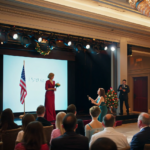
The ballroom was packed. Logan was backstage, running through his presentation. I was in the control booth with a technician. As the host of the summit walked on stage to introduce the keynote, he paused. “Before we hear from the brilliant Logan Walker,” he said, “we have a short tribute to the people who help make innovation possible—the mentors, the believers, the ones who see potential before anyone else.”
The lights in the ballroom dimmed. The giant screens on either side of the stage lit up. It started with photos of famous innovators with their mentors. Then, a photo of a young Sam Lee appeared on the screen, followed by a photo of me. Finally, a picture of Margaret Rhodess, smiling and strong. And then her voice filled the room. It was from an old interview I had recorded with her years ago for a business school project.
“Family,” her voice echoed through the massive speakers, clear and steady. “People get that word wrong. They think it’s about blood. It’s not. Blood is just biology. Family is who stands by you when you have nothing. Family is who lifts you up, not who tears you down. Family is a choice. It’s the people you choose to build your life with and the people who choose to build with you.”
As she spoke, a slideshow of photos played on the screen—me and Margaret in the hotel kitchen; me and Daniel in his first law office; me and Sam in her tiny startup garage; and then photo after photo of me and Logan—reading him a book as a toddler, helping him with a science project, standing beside him at his first robotics competition. Hugging him, laughing with him.
I scanned the audience and found them—my father, my mother, and Jason—sitting together three rows from the back. Their faces were frozen in shock. They had come expecting a fight. They had come to make a scene. Instead, they were forced to sit in a dark, silent room and listen to a ghost define the one thing they had never understood.
The video ended with Margaret’s final words: “You don’t get to discard people and then claim them when they become valuable. Family is not a stock you can buy when it’s low and sell when it’s high. It’s a bond, and it has to be earned.”
The screen went black. There was a moment of stunned silence, and then the room erupted in applause. They thought it was just an inspiring tribute, but I knew it was the first shot in the final battle. The trap had been set. Now it was time to snap it shut.
The morning after the tech summit, we held a press conference. We didn’t choose a fancy hotel or a corporate boardroom. We held it on the steps of the Margaret Rhodess Children’s Shelter—the first project my foundation had ever funded. The symbolism was intentional.
The media was in a frenzy. The emotional tribute at the summit, followed by the news of a lawsuit from my aranged parents, had created a story they couldn’t resist. Cameras flashed. Reporters shouted questions. I stood at the podium with Daniel on one side and Logan on the other. Logan had insisted on being there.
“I’m not a kid, Mom,” he had said last night. “This is my life too. I want to stand with you.”
Daniel stepped up to the microphone first. He was calm, professional, and methodical. “Good morning. We are here today to address the civil suit filed against my client, Ms. Hannah Walker, by Mr. Richard Walker, Ms. Elaine Walker, and their associate, Mr. Jason Miller. They are suing for grandparental rights based on their biological connection to Ms. Walker.”
He paused, letting the words hang in the air. “Their claim is based on a lie, and we have the evidence to prove it.”
On a large digital screen set up behind us, a document appeared. It was a legal agreement dated 22 years ago. “This is a document signed by Mr. and Mrs. Walker as part of a settlement with the Miller family at that time. In it, they formally and legally relinquished any and all parental rights, responsibilities, and future claims to Miss Walker and her unborn child. They did this willingly. They did this to protect their social standing.”
A collective gasp went through the crowd. The document, with their signatures clear as day, was undeniable. Their entire legal case had just evaporated. But Daniel wasn’t finished.
“Their motives for this lawsuit are not about family. They are about money.”
The screen changed. It now displayed a series of emails. The first was from Jason Miller to my father. It read, “Once we get the settlement, my cut is 20%. We need to present a united front.”
The next screen showed my mother’s Facebook posts—the ones filled with heartbroken pleas for her darling grandson—next to screenshots of her private messages to friends. One read, “Our lawyer says we can get millions. Logan is worth a fortune.”
The evidence was overwhelming. The trap had not just snapped shut. It had annihilated them. Daniel laid out the entire conspiracy—email by email, voicemail by voicemail. He exposed their greed, their lies, and their pathetic attempts at manipulation.
When he was done, a heavy silence fell over the crowd. The reporters were speechless, furiously typing notes. Then I stepped up to the microphone. I looked directly into the cameras. I knew they were watching. My voice was not angry. It was not emotional. It was the calm, steady voice of a woman who was simply stating facts.
“For 22 years,” I began, “I have lived with the choice my parents made. They chose their reputation over their daughter. They turned me out of their home when I was 17 and pregnant because I was, in their words, a disgrace. They erased me from their lives.”
I paused. “I accepted their choice. I built a new life—a better life. I found a new family, one built on love and loyalty, not biology. And I was blessed to become a mother.”
I put my arm around Logan, who stood tall and proud beside me. “The lawsuit filed by Richard and Elaine Walker is based on the claim that they are the biological grandparents of my son. This is the final lie I am here to correct today.”
I took a deep breath. This was the final blow, the truth I had guarded so carefully for 17 years. “My son, Logan Walker, is the greatest gift of my life. I love him more than words can say, and he is my son in every way that matters—but he is not my son by birth.”
The confusion on the reporters’ faces was visible. “Logan is adopted,” I said, my voice ringing with clarity. “He shares no blood with me, and he shares no blood with the people suing me for grandparent rights.”
The silence that followed was absolute. It was the silence of a truth so complete, so devastating, that it left no room for argument. Their entire case—legal, moral, and public—was not just lost. It was a fraud. They had no claim. They had no connection. They had nothing.
“They are not his grandparents,” I concluded, looking straight into the camera lens, speaking directly to them. “They are strangers. Not his blood. Not his claim. They have no rights here. This ends today.”
The fallout was immediate and catastrophic. For them, the press conference was a public execution. The story of the greedy fake grandparents who had tried to sue their abandoned daughter for access to her adopted son went national. My parents became villains in a story they could no longer control. Their perfect, respectable lives crumbled to dust. The community they had cared so much about turned on them. Their friends stopped calling. Their country club membership was revoked. My father’s small consulting firm lost all its clients overnight.
They were forced to sell their house—the house they kicked me out of—to pay their legal bills. I read in the paper that they moved to a small town in Florida, disappearing into a quiet, shame‑filled obscurity. They had finally achieved what they had done to me 22 years ago. They had been erased.
Jason Miller faced even worse. The evidence of his attempt to conspire for a fraudulent settlement was handed over to the district attorney. He was charged with conspiracy and wire fraud. His desperate grasp for my money ended with him facing federal charges.
I felt nothing watching them fall. No satisfaction. No joy. Just a quiet, final sense of closure. They were no longer characters in my story. They were just a footnote in the preface. My story was about what came next.
With the lawsuit over, a profound peace settled over my life. The fortress I had built no longer felt like a defensive structure. It felt like a home. Logan and I grew even closer. The ordeal had been difficult for him, but he had seen firsthand the strength of the family we had built—a family of choice, not of chance. He went off to college, not as the boy wonder from the tech magazines, but as a confident, kind young man who knew he was loved unconditionally.
I poured my energy into the Margaret Rhodess Foundation. We expanded our mission, opening shelters for homeless teens and funding scholarships for single mothers. I was becoming Margaret—using my resources to give other scared young girls the one thing they needed most: a chance, an unexpected ally.
Daniel was by my side through it all. Our friendship, forged in late‑night study sessions and hardened in legal battles, had deepened into something more. He was my partner in every sense of the word. He was quiet, steady, and he saw me for exactly who I was. He had seen my scars, and he had helped me turn them into armor.
One evening, a year after the press conference, we were at the grand opening of a new youth center the foundation had built. It was a beautiful building, full of light and hope. As we stood watching a group of teenagers laughing and painting a mural, Daniel took my hand.
“Look what you built, Hannah,” he said quietly. “From all that pain, you built this.”
I looked at him—at his kind eyes and the gentle smile that had been a constant in my life for two decades. I thought of the long, lonely road I had traveled—the betrayals, the loss, the struggle—and I realized it had all led me here, to this moment of peace and purpose.
“We built it,” I corrected him.
And right there, surrounded by the hopeful sounds of the future I was helping to create, I did something I had never planned. I proposed to him. I asked him to be my partner, my husband, my family.
Officially, his answer was a simple, heartfelt yes. There was no grand, dramatic moment. It was quiet. It was certain. It was real. It was a choice.
My life, once defined by the choices others had made for me, was now a testament to the power of my own. I had reclaimed my name, my future, and the very definition of family. I had faced the ghosts of my past not with anger but with truth. And in the end, I had found something far greater than victory.
News

At My Brother’s Wedding, Dad Mocked Me “Just a Soldier” — Then an SUV Pulled Up “President Awaits You”. What happens w
At My Brother’s Wedding, Dad Mocked Me “Just a Soldier” — Then an SUV Pulled Up “President Awaits You” What…

When I Came Home from NATO Duty, I Didn’t Expect My Own Father to Drag Me Into Court. He stood b
When I Came Home from NATO Duty, I Didn’t Expect My Own Father to Drag Me Into Court He stood…

My Younger Brother Texted In The Group: “Don’t Come To The Weekend Barbecue. My New Wife Says You’ll Ruin The Whole Party.” My Parents Spammed Likes. I Just Replied: “Understood.” The Next Morning, When My Brother And His Wife Walked Into My Office And Saw Me…
My younger brother texted: “Don’t come to the BBQ.” Until my brother and wife step into my office… When your…

At the family party, my sister called me “the family failure.” Her boss only smiled and said… Skyler, the golden c
At the family party, my sister called me “the family failure.” Her boss only smiled and said… A shocking family…
At The Inheritance Meeting, My Daughter-In-Law Shouted Proudly: ‘My Father-In-Law Left Us The Seven Miami Houses. Ella, Too Bad, You Only Got The Shed In Mississippi.’ Everyone Applauded. I Just Smiled And Said: ‘Son… You Really Don’t
During the Inheritance Split My Daughter-In-Law Celebrated But I Smiled: “Son, You Still Don’t Know?” The words hit me like…
My Dad Said: “STOP TREATMENT — WE WON’T APPROVE THE SURGERY.” He Signed a DNR to Take Control of My $15M Inheritance
Some fathers protect their daughters—mine tried to sign my life away. A DNR, a $15M trust, and a coma became…
End of content
No more pages to load