My Family Left Me Dying In The ER—Then My Billionaire Husband’s Helicopter Landed Outside
My family left me dying in the ER while they argued about the hospital bill. When my heart stopped for the third time, they walked out to grab dinner. But when the thunderous roar of rotor blades shook the windows at Mercy General, and my billionaire husband’s helicopter landed in the parking lot, everything changed. My name is Celeste Ravencrest. And if you think you know how this story ends, you’re about to discover that some betrayals run deeper than blood, and some love stories are written in the sky.
Before we jump back in, tell us where you’re tuning in from, and if this story touches you, make sure you’re subscribed—because tomorrow, I’ve saved something extra special for you!
What do you call family when they treat your life like a line item on a receipt?
The fluorescent lights in Room 314 hummed the same tune they’d been playing for eighteen hours. Eighteen hours of watching my oxygen levels drop, watching my blood pressure spike, watching machines beep warnings that everyone seemed determined to ignore. Everyone except the nurses, bless them, who kept checking on me every few minutes with increasingly worried expressions.
My mother, Patricia Thornfield, sat in the corner chair scrolling through her phone, occasionally sighing loud enough to let everyone know she was inconvenienced. My father, Richard Thornfield, paced by the window, checking his watch every thirty seconds like he had somewhere more important to be. My sister, Delphine, had claimed the comfortable reclining chair and was live-tweeting about her “dramatic hospital vigil” to her twelve thousand followers.
My family left me dying in the ER while they argued about the hospital bill.
When my heart stopped for the third time, they walked out to grab dinner. But when the thunderous roar of rotor blades shook the windows at Mercy General and my billionaire husband’s helicopter landed in the parking lot, everything changed. My name is Celeste Ravenrest. And if you think you know how this story ends, you’re about to discover that some betrayals run deeper than blood. And some love stories are written in the sky.
Before we jump back in, tell us where you’re tuning in from. And if this story touches you, make sure you’re subscribed because tomorrow I’ve saved something extra special for you.
What do you call family when they treat your life like a line item on a receipt?
The fluorescent lights in room 314 hummed the same tune they’d been playing for 18 hours. 18 hours of watching my oxygen levels drop, watching my blood pressure spike, watching machines beep warnings that everyone seemed determined to ignore. Everyone except the nurses, bless them, who kept checking on me every few minutes with increasingly worried expressions.
My mother, Patricia Thornfield, sat in the corner chair, scrolling through her phone, occasionally sighing loud enough to let everyone know she was inconvenienced. My father, Richard Thornfield, paced by the window, checking his watch every 30 seconds like he had somewhere more important to be. My sister, Deline, had claimed the comfortable reclining chair and was live tweeting about her dramatic hospital vigil to her 12,000 followers.
I’d been rushed to Mercy General Hospital in Willowbrook Heights at 2 in the morning with what the paramedics suspected was a severe allergic reaction. But as the hours crawled by, it became clear this wasn’t just hives or difficulty breathing. My throat was closing, my airways were swelling, and my heart was working overtime to pump blood through a system that was essentially shutting down.
Dr. Amelia Cross, the attending physician, had explained it to my family in terms so simple a fifth grader could understand. “Celeste is having a severe anaphylactic reaction to something. We’ve administered epinephrine, but her body isn’t responding the way we’d hoped. We need to keep her under observation and potentially move to more intensive interventions.”
But my family wasn’t focused on the medical emergency unfolding before their eyes. They were focused on the growing stack of forms, the mounting bills, and the inconvenience of having their Sunday brunch disrupted.
“How much is this going to cost?” was the first question out of my father’s mouth. Not is she going to be okay or what can we do to help, just dollars and cents, as if my life could be calculated on a spreadsheet.
“Does insurance cover this?” my mother chimed in, looking at me like I’d deliberately chosen to have a life-threatening allergic reaction just to reun.
Deline didn’t even look up from her phone. “Can’t she just take some benadryil and call it a day? I mean, how bad could it really be?”
Dr. Cross’s expression shifted from professional concern to barely concealed disgust. “Mrs. Thornfield, your daughter’s airway is compromised. This isn’t something we can treat with over-the-counter medication. We’re talking about potential respiratory failure.”
That’s when the real show began. My family didn’t rally around my bedside with love and support. They huddled in the corner, having heated, whispered conversations about co-pays and deductibles while I fought to breathe.
They debated whether the ambulance ride was really necessary while my heart rate spiked on the monitor. They questioned whether I actually needed to be in the hospital while alarms kept going off from my bedside equipment.
“She’s always been dramatic,” I heard my mother tell a nurse. “Ever since she was little, every little ache and pain became a production. Are you sure this isn’t just anxiety?”
I wanted to laugh, but laughing required breathing, and breathing had become a luxury I couldn’t afford. Dramatic. The woman who once called 911 because she thought a spider bite might be life-threatening was calling me dramatic while I was literally fighting for my life.
The worst part wasn’t their obvious annoyance at having their day disrupted. It wasn’t even their transparent concern about money over my well-being. The worst part was their complete inability to see me as a person worth saving. I was a burden, an expense, an inconvenience that had disrupted their carefully planned Sunday brunch.
When my heart stopped for the first time around hour 12, they barely looked up from their phones. The crash team rushed in. Dr. Crush shouted orders. Nurses moved with practic. And my family sat there like they were waiting for a delayed flight.
When my heart started again, when the room filled with the beautiful sound of steady beeping, my mother’s first words were, “How much extra is the crash cart going to cost?”
The second time my heart stopped, around hour 15, Delphine actually left the room to take a phone call. My father stood by the window, not watching the medical team work to restart my heart, but staring out at the parking lot like he was planning his escape route.
By the third cardiac event at hour 17, they had had enough of the drama. My heart flatlined for almost two full minutes while Dr. Cross and her team worked to bring me back. The sound of that endless piercing alarm should have terrified them. Instead, it irritated them.
“You know what?” my father announced as the medical team finally got my heart beating again. “I’m starving. We’ve been here all day and there’s nothing we can do anyway. Let’s go grab something to eat.”
My mother stood up immediately, gathering her purse like she’d been waiting for permission to leave. “Finally. I saw a nice beastro on the way in. We can be back in an hour.”
Deline was already halfway to the door. “Thank God. I’m literally dying of boredom. Plus, I need better lighting for my Instagram story about this whole ordeal.”
And just like that, they left. While I lay there attached to machines that were keeping me alive. While Dr. Cross looked at them with absolute horror. While nurses whispered among themselves about the worst family behavior they’d ever witnessed, my blood relatives walked out of the hospital to grab dinner.
I was alone, truly, completely alone, dying in a hospital bed while my family argued over appetizers at some trendy restaurant downtown.
The nurses kept checking on me, their expressions growing more concerned with each visit. Dr. cross pulled up a chair beside my bed and held my hand, which was more comfort than my own family had provided in 18 hours.
“Is there anyone else we can call? Anyone who might want to be here with you?”
I thought about it through the haze of medication and oxygen deprivation. There was someone. Someone who’d been traveling for business. Someone I hadn’t even thought to contact because he was supposed to be in meetings on the other side of the country. Someone who didn’t even know I was in the hospital because my family had insisted on handling everything themselves.
My husband, Damon Blackthornne.
But he was 3,000 m away in Seattle, closing a deal that would add another billion to his already massive fortune. What could he possibly do from there?
That’s when I heard it. A sound that didn’t belong in a hospital. A sound that made the windows rattle and the nurses look up from their stations with confused expressions. The thunderous, rhythmic beating of helicopter blades growing closer and louder until it seemed like the aircraft was about to land right on top of the building.
And then, through the window of room 314, I saw it. A sleek black helicopter with gold accents bearing the Blackthornne Industries logo settling down in the hospital parking lot like a metal bird of prey.
The rotor wash sent cars rocking and people running for cover.
Dr. Cross stared out the window in amazement.
“Is that—” I managed to whisper through my swollen throat.
“My husband.”
My family thought they could abandon me to die alone. They thought I was just another burden they could walk away from when things got inconvenient. They had no idea that while they were choosing wine pairings for their dinner, Damon Blackthornne was commandering his personal helicopter and flying across the country because one of his assistants had called to check on me and couldn’t reach anyone.
They had no idea that some people don’t measure love in dollars and cents. They had no idea that I hadn’t just married a billionaire. I’d married a man who would move mountains to make sure I never faced anything alone. And they definitely had no idea that their little dinner break was about to become the most expensive meal of their lives.
Preparing and narrating this story took us a lot of time. So, if you are enjoying it, subscribe to our channel. It means a lot to us. Now, back to the story.
The helicopter’s rotors were still spinning when the elevator doors at the end of the hall burst open. Even through my medication induced haze, I could hear the rapid footsteps echoing down the corridor, moving with the kind of purposeful urgency that cuts through hospital noise like a blade.
Damon appeared in my doorway like something out of a movie. Still in his thousand suit from the Seattle boardroom, hair disheveled from the helicopter ride, eyes wild with the kind of panic I’d never seen on his face before.
He took one look at me, pale, struggling to breathe, connected to more machines than I could count, and his entire world seemed to shift.
“Jesus Christ, Celeste.” His voice cracked as he rushed to my bedside, his hands hovering over me like he was afraid I might break if he touched me. “Baby, I’m here. I’m here now.”
Dr. Cross looked up from my chart with relief evident in her eyes. “Mr. Blackthornne, I presume? I’m Dr. Cross. We spoke on the phone.”
“How is she?” Damon’s voice was steady now, but I could see his hands trembling slightly as he finally took mine. “Tell me everything.”
“Your wife is experiencing severe anaphilaxis. We believe it was triggered by something she ingested yesterday evening, though we haven’t identified the specific allergen yet. Her body has been fighting this reaction for nearly 19 hours now, and we’ve had three cardiac events.”
The color drained from Damon’s face. “Three cardiac events. Her heart stopped three times?”
“We managed to revive her each time. But Mr. Blackthornne, I have to be honest with you. This is extremely serious. We’re doing everything we can, but the next few hours are critical.”
Damon’s grip on my hand tightened. “What do you need? Specialists, equipment. I can have the best cardiac team in the country here within hours. I can have her airlifted to John’s Hopkins, Mayo Clinic, wherever you think she’d get the best care.”
Dr. Cross shook her head. “Moving her right now would be extremely dangerous, but there is something.” She hesitated, glancing around the room. “Mr. Blackthornne, where is your wife’s family? When I spoke to them about her condition, they seemed very concerned about being here.”
Damon’s expression darkened. “What do you mean, where are they? Aren’t they here?”
“They left about an hour ago. Said they were going to get dinner and would be back later.”
For a moment, the only sound in the room was the steady beeping of my heart monitor and the soft whoosh of the oxygen machine. Damon stared at Dr. Cross like she’d just told him the earth was flat.
“They left.” His voice was dangerously quiet. “She flatlined three times and they left to get dinner.”
“Sir, I don’t think it’s my place to—”
“Doctor, I’m asking you a direct question. My wife nearly died multiple times today and her family abandoned her to go eat.”
Dr. Cross nodded reluctantly. “The last cardiac event happened about 30 minutes before they left. They seemed frustrated by the situation.”
I watched something change in Damon’s face. The panic was replaced by something colder, more calculating. This was the expression that had built a billiondoll empire. The look that made seasoned business executives tremble in boardrooms.
“Frustrated,” he repeated slowly. “My wife is fighting for her life and they were frustrated.”
He turned back to me, his face softening immediately. “Sweetheart, can you hear me? Can you squeeze my hand?”
I managed the smallest pressure, and his entire body sagged with relief.
“I’m not going anywhere. I promise you, I am not leaving this room until you’re better. Do you understand me?”
Dr. Cross cleared her throat gently. “Mr. Blackthornne, there are some forms we need to discuss. Insurance authorizations, treatment decisions—”
“Whatever she needs, authorize it. Cost is not a factor.”
“Sir, you might want to review the—”
“Doctor.” Damon’s voice cut through her explanation like steel. “I’m worth approximately $4.2 billion. My wife’s life is worth more to me than every penny of it. Authorize whatever treatment will save her life and send the bills to my office.”
Dr. Cross blinked in surprise. In her years of practice, she’d clearly never encountered someone who could say those words and mean them completely.
“There’s something else,” she continued carefully. “Your wife’s family was very insistent about being the primary decision makers for her care. They have her listed as their dependent for insurance purposes, and legally—”
“Legally, I’m her husband and next of kin. Whatever authority they think they have ends now. I want them removed from any medical decisions and I want her transferred to private care immediately.”
“Mr. Blackthornne, that’s—that’s quite a significant change. Your wife’s parents seemed very involved in her care decisions.”
Damon looked at Dr. Cross with an expression that could have frozen hell.
“Doctor, let me be very clear about something. People who are very involved don’t abandon their daughter when she’s dying. They don’t leave to get appetizers while she flatlines. Whatever involvement they think they had in my wife’s life ends right now.”
He pulled out his phone and made a call that I could hear despite my compromised state.
“Marcus, it’s Damon. I need you to call Hartwell Steinberg and Associates immediately. I want a restraining order filed against Richard, Patricia, and Deline Thornfield. They are not to come within 500 ft of my wife or make any decisions regarding her medical care. I don’t care what time it is. Wake them up. Because they abandoned her while she was dying. That’s why.”
He watched this exchange with fascination and growing respect.
“I also need you to call Dr. Harrison Whitmore at Mount Si. Tell him I need a consultation on severe anaphilaxis and I need it within the hour. Charter whatever jet is necessary. Yes, I’m aware it’s Sunday evening. Make it worth his while.”
He hung up and turned back to Dr. Cross. “Dr. Whitmore is one of the leading specialists in allergic reactions on the East Coast. He’ll be here within 3 hours to consult on Kst’s case.”
“Mr.—Dr. Blackthornne, I appreciate your concern, but—”
“Doctor, I’m not questioning your expertise. I’m ensuring my wife has every possible advantage. If that means flying in specialists, if that means building a new wing on this hospital, if that means buying the entire building, that’s what we’re going to do.”
He sat down in the chair beside my bed, still holding my hand, and looked at me with an expression so full of love and determination that it almost broke my heart.
“Celeste, I don’t know if you can hear me clearly, but I need you to know something. I got a call from my assistant checking on you because she couldn’t reach your family. Couldn’t reach them because they weren’t answering their phones while you were dying. I was in the middle of closing a $2 billion merger and I walked out of that boardroom the second I heard you were in the hospital.”
His voice grew softer, more intimate, like we were the only two people in the room.
“I commandeered the company helicopter and flew here at speeds that probably violated several FAA regulations. I left 20 executives sitting in a conference room in Seattle because nothing, and I mean nothing, is more important to me than you being okay.”
Dr. Cross quietly stepped back, giving us privacy while monitoring my vitals from a respectful distance.
“Your family measured your life in dollars and cents,” Damon continued. “They weighed your survival against their dinner plans. But baby, you need to understand something about the man you married. I would burn down every dollar I’ve ever made if it meant keeping you alive. I would sell every company, every investment, every piece of property I own if it meant you got the care you needed.”
I felt tears running down my cheeks. Though whether they were from emotion or medication side effects, I couldn’t tell.
“So, here’s what’s going to happen,” Damon said, his voice growing stronger. “We’re going to get you the best medical care money can buy. We’re going to figure out what caused this reaction and make sure it never happens again. And then, when you’re better, we’re going to have a very serious conversation about the people who thought it was appropriate to abandon you when you needed them most.”
Through the window, I could see the hospital parking lot where his helicopter sat like a monument to the difference between conditional love and unconditional devotion. Where my family saw burden, Damon saw treasure. Where they saw expense, he saw priceless.
The elevator doors chimed softly down the hall, and I heard familiar voices approaching. My family was back from their dinner, probably expecting to find me alone, probably prepared to discuss discharge options and cost cutting measures. They had no idea that while they were gone, the entire game had changed.
Damon heard the voices, too, and his expression shifted back to that dangerous, calculated look.
“Doctor,” he said quietly. “I believe my wife’s former caregivers are returning. This should be interesting.”
The sound of expensive heels clicking against lenolium announced my family’s return before I could see them. Through my partially closed eyelids, I watched Deline round the corner first, phone still glued to her ear mid conversation about some influencer drama that was apparently more pressing than her sister’s near-death experience.
“Oh my god, you should have seen the duck confi,” she was saying into her phone. “Absolutely divine. Sometimes you just need to step away from negative energy and nourish yourself, you know.”
My parents followed behind her, looking refreshed and satisfied in the way people do after a good meal and wine. My mother was even touching up her lipstick as if she’d been on a pleasant social outing rather than abandoning her daughter during a medical crisis.
They stopped dead in their tracks when they saw Damon sitting beside my bed.
“Oh,” my mother said, her voice carrying that particular tone she used when encountering something inconvenient. “Damon, what are you doing here?”
Damon didn’t stand up, didn’t smile, didn’t engage in the polite social theater that usually governed family interactions. He simply looked at them with the kind of cold assessment usually reserved for hostile corporate takeovers.
“Taking care of my wife,” he said quietly. “Someone needed to.”
My father stepped forward, immediately going into damage control mode. “Now, Damon, I know how this might look, but we’ve been here all day. We just stepped out for a quick bite because we haven’t eaten since—”
“Since when?” Damon’s voice cut through my father’s explanation like a scalpel. “Since before your daughter’s heart stopped beating three times. Since before she nearly died while you were debating appetizers.”
Deline finally looked up from her phone, sensing the tension in the room. “Okay, why is everyone being so dramatic? She’s obviously fine. I mean, she’s breathing, right?”
The silence that followed was so complete, I could hear the oxygen machine cycling in the background. Damon stared at my sister with the kind of expression that had made Fortune 500 CEOs resign on the spot.
“Fine,” he repeated slowly. “Your sister has been in severe anaphylactic shock for 20 hours. Her heart has stopped beating three separate times. The medical team has administered enough epinephrine to kill a horse, and she’s currently on life support, but she’s fine because she’s breathing.”
My mother jumped in quickly, her voice taking on that soothing, gaslighting tone she’d perfected over the years.
“Damon, honey, you’re clearly upset and we understand that. But you have to realize we’ve been dealing with Celeste’s health issues her entire life. She’s always been delicate. We know how to handle these situations.”
“Handle these situations?” Damon’s voice was getting quieter, which anyone who knew him would recognize as a very bad sign. “Is that what you call abandoning her during cardiac arrest? Handling the situation?”
“We didn’t abandon her,” my father protested, his face flushing red. “We were here for 18 hours straight. 18 hours, Damon. We’re exhausted. We haven’t eaten, and frankly, there was nothing more we could do. The doctors had everything under control.”
“The doctors,” Damon said, standing up slowly, “were fighting to save her life while you complained about hospital bills. They were administering CPR while you argued about co-pays. They were bringing her back from clinical death while you planned your dinner reservations.”
Deline rolled her eyes dramatically. “Oh, come on. It’s not like she actually died. I mean, if it was that serious, don’t you think the doctors would have told us not to leave?”
Dr. Cross, who had been quietly observing from the corner, finally spoke up.
“Actually, I did advise against leaving multiple times. I specifically told your family that the next few hours were critical and that someone should remain with the patient.”
My family turned to stare at Dr. Cross like they’d forgotten she was there.
“What I told them,” Dr. Cross continued, her professional composure barely containing her obvious disgust, “was that Mrs. Blackthornne was in extremely critical condition and that family support during this time was crucial for her recovery. What they heard apparently was that they had permission to go wine tasting.”
“Wineet tasting?” Damon’s voice had dropped to barely above a whisper.
My mother’s face went pale. “It wasn’t wine tasting. It was just—we needed to eat something. We had to keep our strength up to be here for Celeste. You ordered a bottle of Chateau Margo,” Deline said helpfully, apparently oblivious to the nuclear bomb she’d just dropped. “The 2015. Mom said it was a celebration because the worst was probably over.”
The heart monitor beside my bed began beeping faster as my blood pressure spiked. Even in my medicated state, the betrayal hit like a physical blow. They had celebrated. While I was fighting for my life, they had toasted to my survival being probably behind them.
Damon’s control finally snapped.
“Get out.”
“Damon, now, wait just a minute,” my father started.
“Get out of this room. Get out of this hospital and get out of my wife’s life.”
“You can’t speak to us like that,” my mother said, drawing herself up to her full height. “We’re her family. We have rights here.”
“Actually, you don’t.” Damon pulled out his phone and showed them something on the screen. “As of 45 minutes ago, you have been legally removed from any medical decision-making authority regarding my wife. You also have a restraining order that prohibits you from coming within 500 ft of her.”
“You can’t be serious,” my father sputtered. “She’s our daughter.”
“She’s my wife,” Damon shot back. “And wives don’t abandon each other when they’re dying. They don’t calculate the cost of love or measure devotion in insurance deductibles.”
Deline was staring at her phone screen, frantically typing. “Oh my god, this is going to make such great content. Family drama in the ER when billionaires attack. My followers are going to eat this up.”
Damon turned to her with an expression that could melt steel.
“If you post one word about my wife’s medical condition on social media, I will sue you for everything you’re worth, and then I’ll sue you for everything you’re not worth, and then I’ll buy the platforms you’re posting on and delete your accounts permanently.”
“You can’t do that,” Deline said. But her voice had lost its confident edge.
“I’m worth $4.2 two billion dollar,” Damon said conversationally. “I can do pretty much anything I want. The question is whether you’re stupid enough to test me.”
My mother tried a different approach, her voice taking on the manipulative sweetness that had controlled family dynamics for decades.
“Damon, sweetheart, I think you’re misunderstanding the situation. We love Celeste more than anything. She’s our baby girl. But sometimes love means knowing when to step back and let the professionals handle things.”
“Step back?” Damon laughed, but there was no humor in it. “Is that what you call it? Because what I saw was three people who were more concerned about their dinner plans than their daughter’s survival. What I saw was a family who treated a medical emergency like an inconvenience.”
“That’s not fair,” my father protested. “We were here all day. We missed church. We missed our commitments. We put our lives on hold.”
“You put your lives on hold,” Damon’s voice rose again. “Your daughter’s life was actually on hold. Her heart literally stopped beating and your response was to order wine and celebrate that the inconvenience was probably over.”
Dr. Cross stepped forward diplomatically. “Perhaps this conversation would be better held in a more private setting. Mrs. Blackthornne needs rest and the stress in this room isn’t helping her recovery.”
“You’re absolutely right,” Damon said. “Which is why they’re leaving now.”
“We have every right to be here,” my mother insisted. “No court order can change the fact that she’s our daughter.”
“Actually,” a new voice said from the doorway. Everyone turned to see a distinguished man in an expensive suit carrying a briefcase. He looked like he’d been pulled away from something important, which given the hour, he probably had.
“Mr. Blackthornne, I’m James Hartford from Hartford Steinberg and Associates. The restraining order has been filed and approved by Judge Morrison. Mrs. Thornfield, Mr. Thornfield, Miss Thornfield, you are hereby ordered to maintain a distance of no less than 500 ft from Mrs. Celeste Blackthornne, née Thornfield, effective immediately.”
He handed each of them official looking documents. “Violation of this order is punishable by immediate arrest and contempt of court charges.”
“This is ridiculous,” my father said. “You can’t separate a family like this over a simple misunderstanding.”
“Simple misunderstanding?” Damon repeated. “Your daughter nearly died three times today, and you call it a misunderstanding.”
“We’re calling our lawyer,” my mother announced, pulling out her phone.
“Please do,” Damon said pleasantly. “I’m sure they’ll be fascinated to hear about how you abandoned your daughter during multiple cardiac events to go wine tasting. I’m particularly interested in what they’ll think about your celebration toast.”
Delphine was still staring at her phone. “Wait, are you saying I can’t even post about this? Because technically, it’s my experience, too. And I have freedom of speech.”
“You have the freedom to remain silent,” the lawyer said dryly. “I’d recommend exercising it.”
Security appeared in the doorway as if summoned by telepathy. Two large professionallook men in hospital uniforms.
“These individuals are no longer authorized to be in this area,” Damon told them. “Please escort them from the building.”
As my family was led away, my mother turned back one last time.
“So last, honey. When you’re feeling better, you’ll realize this was all a mistake. Family, forgive, sweetheart. We’ll be waiting for you to come to your senses.”
But I wasn’t waiting for anything anymore. Through my medication haze, one thing had become crystal clear. I finally understood the difference between people who love you and people who love the idea of you.
My family loved the idea of me. The compliant daughter, the grateful patient, the manageable problem. Damon loved me. The woman worth flying across the country for, worth abandoning billion dollar deals for, worth fighting the world for.
As the room finally fell quiet, I felt Damon’s hand in mine again, warm and steady and completely devoted. Some people measure love in convenience. Others measure it in commitment. I finally knew which kind I deserved.
The silence after my family’s departure felt different from the oppressive quiet that had filled the room during my crisis. This silence was clean, purposeful, like the calm after a storm has finally passed. But as the hours ticked by and my condition began to stabilize under Dr. Whitmore’s expert care, something else began to emerge from the medication fog. Questions.
Dr. Harrison Whitmore had arrived exactly 3 hours after Damon’s call, looking like he’d stepped out of a medical journal despite being roused from his Sunday evening. Within minutes of examining me, he’d made adjustments to my treatment that seemed almost miraculous. The swelling in my throat decreased noticeably. My breathing became less labored and for the first time in nearly 24 hours, the machines around me began producing the steady, reassuring rhythms of stability rather than crisis.
“Mrs. Blackthornne is responding much better to the modified treatment protocol,” Dr. Whitmore explained to Damon as they stood near my bed. “However, I’m quite puzzled by the severity and duration of this reaction. In my 30 years of treating anaphilaxis, I have rarely seen a case this extreme from an unknown allergen.”
Damon’s grip on my hand tightens slightly. “What are you saying, doctor?”
“I’m saying that this level of reaction typically occurs when there’s either a massive exposure to a known allergen or when there’s been some kind of enhancement to the allergic response.”
“Enhancement.”
Dr. Cross looked up from her notes with interest.
“Certain medications when combined with allergens can create what we call a cascade effect. The body’s immune response becomes exponentially more severe than it would be naturally.”
Dr. Whitmore paused, seeming to choose his words carefully.
“Has Mrs. Blackthornne been taking any new medications recently? Anything that might not be in her regular medical records?”
I tried to speak, but my throat was still too swollen for clear words. Damon leaned closer, his ear near my lips as I managed to whisper something that made his entire body go rigid.
“She says she’s been taking herbal supplements,” he told the doctors. “Her family convinced her to try some health program about 2 months ago.”
“Dr. Whitmore and Dr. Cross exchanged a look that sent cold fingers of suspicion crawling up my spine.”
“What kind of herbal supplements?” Dr. Whitmore asked.
Damon looked at me again and I whispered as clearly as I could manage. “Energy boosters, immune system enhancers, my mother said would help with my chronic fatigue.”
“Do you have these supplements with you?” Dr. Cross asked.
I shook my head slightly, then whispered to Damon again.
“She says they’re at home. Her mother brings them to her weekly and supervises the dosing.” Damon’s voice was getting that dangerous quiet tone again.
“Supervises the dosing of herbal supplements.”
Dr. Whitmore frowned. “That’s unusual. Most herbal supplements don’t require supervision unless they’re quite potent.”
“Mrs. Blackthornne, can you remember what these supplements looked like, what they were called?”
Through considerable effort, I managed to describe the small brown bottles with handwritten labels, the bitter taste that my mother said meant they were working, and the way I’d started feeling more tired and foggyheaded over the past few weeks, not less energetic as promised.
“I’d like to have those supplements tested,” Dr. Whitmore said immediately. “Mr. Blackthornne, would it be possible to retrieve them from your home?”
“Absolutely.” Damon was already reaching for his phone. “I’ll have my security team collect everything from our medicine cabinet within the hour.”
But as I lay there listening to them discuss logistics, pieces of a puzzle I hadn’t realized I was solving began clicking into place. The timing of my family’s health intervention coincided almost exactly with my announcement that Damon and I were planning to start a family. The way my mother had insisted on personally delivering the supplements, always with detailed instructions about when and how to take them. The gradual increase in my fatigue and confusion over recent weeks, symptoms that I had attributed to work stress, but that had made me increasingly dependent on my family’s help and guidance.
Most disturbing of all was the memory surfacing through the medication haze, yesterday’s dinner at my parents house, where my mother had prepared my favorite meal and insisted I take my evening wellness dose before eating. The supplements had tasted more bitter than usual, and she’d explained that they’d been concentrated for enhanced effectiveness.
I tried to communicate this to Damon, but speaking was still difficult. Instead, I squeezed his hand in the pattern we developed during our dating days. Three short squeezes, three long ones, three short ones again. S O S.
He immediately understood something was wrong beyond what the doctors already knew.
“Celeste, what is it? What are you trying to tell me?”
I mouthed words slowly, and he read my lips with the same intense focus he brought to billion-dollar negotiations.
“Last night, dinner, parents.”
“You had dinner with your parents last night?” When I nodded, he continued, “And you took the supplements there?”
Another nod, but I kept mouththing words. “Different, stronger, bitter.”
Damon’s face went completely white.
“You’re saying the supplements you took at dinner last night were different, stronger than usual.”
When I confirmed this with another nod, he turned to the doctors with an expression I’d never seen before. Part rage, part horror, part cold calculation.
“Doctors, I need you to run a comprehensive toxicology screen on my wife. Everything. I want to know every single substance in her system, natural or otherwise.”
“Mr. Blackthornne,” Dr. Cross said carefully. “We did run standard talk screens when she was admitted. They came back clean for common drugs and poisons.”
“Run them again. Run extended panels. Test for everything you can think of and then test for things you wouldn’t normally think of.” Damon’s voice was steel wrapped in silk. “Because I’m starting to suspect this wasn’t an accidental allergic reaction.”
Dr. Whitmore studied Damon’s face for a long moment.
“You’re suggesting this might have been intentional.”
“I’m not suggesting anything yet. I’m asking for facts. Complete comprehensive facts about what’s in my wife’s system and how it got there.”
While they discussed testing protocols, I found myself remembering other details that hadn’t seemed significant at the time. How my mother had started visiting more frequently after Damon and I announced our pregnancy plans. How she’d become obsessive about my health, constantly worried that I wasn’t strong enough for pregnancy, that my delicate constitution might not handle the stress of childbearing.
I remembered her comments about how wonderful it was that Damon was so successful, but how important it was that I not trap him with children before he was truly ready. Her suggestions that we should wait, that I should focus on getting healthier first, that maybe adoption would be more practical given my health issues.
Most chilling of all, I remembered the conversation I overheard between my parents 3 weeks ago when they thought I was napping upstairs. My father’s voice saying something about trust funds and inheritance laws, and my mother responding that some problems solve themselves if you’re patient enough.
At the time, I assumed they were talking about some distant relative or family friend. Now, with clarity that felt like ice water in my veins, I realized they might have been talking about me. A wife who died before producing heirs would leave everything to her grieving family, especially if that husband could be convinced that her death was due to her lifelong health problems and delicate constitution.
A wife who died from an allergic reaction during a health improvement program supervised by her loving devoted family would be a tragedy, not a suspicious death.
But a wife who survived that attempt and married to a man with unlimited resources and absolutely no tolerance for threats to his family—that was a problem that required a much more permanent solution.
The realization hit me like a physical blow. This wasn’t just about money or inheritance or family dynamics. This was about elimination. They hadn’t just abandoned me during a medical crisis. They’d created the medical crisis. They hadn’t just failed to protect me. They’d actively tried to kill me.
And when their plan failed, when Damon arrived and disrupted their carefully orchestrated tragedy, they still had the audacity to act like victims, to demand sympathy for their difficult day and understanding for their emotional exhaustion.
I squeezed Damon’s hand again, more urgently this time, and when he leaned down, I managed to whisper four words that changed everything.
“They tried to kill me.”
Damon go completely still. For a moment, I thought he hadn’t heard me. Then he straightened up slowly. His face transformed into something that would have terrified anyone who didn’t know him as well as I did.
“Doctors,” he said with deadly calm. “I want those test results as soon as possible, and I want samples preserved for law enforcement analysis.”
“Law enforcement?” Dr. across looked startled.
“Because,” he said, pulling out his phone again, “I’m starting to suspect we’re dealing with attempted murder.”
The word hung in the air like smoke from a fire that was just beginning to burn.
Murder, not negligence, not abandonment, not even criminal indifference. Murder.
And somewhere out there, three people who thought they’d gotten away with it were about to discover that trying to kill a billionaire’s wife was the most expensive mistake they’d ever made.
The next 72 hours transformed my hospital room into something resembling a war room. Damon had called in not just medical specialists, but a team of forensic experts, private investigators, and attorneys who moved with the quiet efficiency of people accustomed to handling billiondoll problems that couldn’t be solved with money alone.
Detective Sarah Montenegro from the Willowbrook Heights Police Department arrived Tuesday morning. Her noonsense demeanor immediately putting me at ease despite the circumstances. She’d worked financial crimes and family disputes before, but as she explained to Damon and me, potential poisoning cases required a delicate touch and absolute precision in evidence collection.
“Mrs. Blackthornne,” she said, settling into the chair beside my bed. “I need you to walk me through everything you remember about these supplements, starting from the very beginning, every detail, no matter how small it might seem.”
My voice was getting stronger each day, and I found I could speak for longer periods without the crushing fatigue that had plagued me for weeks. It was as if whatever had been systematically draining my energy was finally leaving my system.
“It started about 8 weeks ago,” I began, the timeline becoming clearer as my head cleared. “Right after Damon and I announced we were going to start trying for a baby. My mother called the next day saying she’d been researching fertility and women’s health and that she’d found this amazing naturopathic doctor who specialized in preparing the body for optimal pregnancy outcomes.”
Detective Montenegro took notes in shorthand that looked like its own language.
“Did you ever meet this naturopathic doctor directly?”
“No. My mother said Dr. Dr. Holloway only worked through family consultations to maintain privacy for her high-profile clients. Everything was coordinated through my mother, who would meet with Dr. Holloway weekly and bring me the customized supplement regimen.”
Damon’s jaw tightened. He’d been pacing the room during this conversation, his controlled energy barely contained.
“Celeste, did you ever think to ask for Dr. Holloway’s credentials, her practice information?”
I felt heat rise in my cheeks. “I trusted my mother. She seemed so knowledgeable, so concerned about my health. She even had documentation, printed papers with letterhead, detailed explanations of each supplement’s purpose, charts tracking my progress.”
“Do you still have any of this documentation?” Detective Montenegro asked.
“It should all be in my desk at home. My mother insisted I keep detailed records of everything. What I took, when I took it, how I felt afterward. She said Dr. Holloway needed the feedback to optimize my treatment.”
What I didn’t mention immediately was how those feeling reports had become increasingly negative over recent weeks. I documented growing fatigue, brain fog, occasional nausea, and what I described as emotional sensitivity. My mother had explained that these were normal detox symptoms as my body purged years of accumulated toxins and prepared for the demands of pregnancy.
Dr. Rachel Chen, the forensic toxicologist Damon had flown in from Boston, had been running tests on the samples retrieved from our home. Tuesday afternoon, she returned with results that made everyone in the room go very quiet.
“Mrs. Blackthornne,” she said, spreading lab reports across the rolling table. “These supplements contain several concerning compounds. Most significantly, they contain progressively increasing doses of substances that would enhance allergic reactions and suppress immune function.”
She pointed to a series of charts that meant nothing to me, but clearly alarmed Detective Montenegro.
“What we’re seeing here is a sophisticated poisoning protocol. The early supplements were relatively benign. Some actual vitamins, herbal extracts that might genuinely support health. But beginning about 4 weeks ago, the composition changed dramatically.”
“Changed how?” Damon’s voice was deadly quiet.
“Someone began introducing immunosuppressants and compounds that would sensitize the body to allergens. It’s actually quite clever, medically speaking, by gradually weakening Mrs. Blackthornne’s immune system, while simultaneously making her more vulnerable to allergic reactions. They created conditions where exposure to almost any significant allergen could trigger severe anaphilaxis.”
Detective Montenegro looked up from her notes. “You’re saying this was a long-term plan, not just the final dose that nearly killed her?”
“Oh, absolutely. This was months in the making. The final dose, the supplements she took Saturday night before Sunday’s reaction, contained massive amounts of shellfish protein powder along with compounds that would guarantee her body couldn’t fight off the allergic response.”
I stared at Dr. Chen in horror. “Shellfish protein? But I’m not allergic to shellfish. I eat it all the time.”
“You weren’t allergic to shellfish,” she corrected gently. “But after weeks of immune suppression and sensitization therapy, your body had been primed to react catastrophically to allergens it would normally process without issue. Combined with the dose of antihistamine blockers you receive Saturday night, your system had no defense against the allergens.”
The pieces were falling into place with sickening clarity. My mother had specifically recommended the restaurant where we had dinner Saturday night, insisting that their seafood was the freshest in the city. She’d ordered for me, choosing the lobster special that the waiter had described in elaborate detail, and she’d insisted I take my enhanced evening dose of supplements right before the meal, explaining that the combination would maximize nutrient absorption.
“There’s something else,” Dr. Chen continued. “The sophistication of this poisoning protocol suggests someone with significant medical or pharmaceutical knowledge. This isn’t something you could research on Google. Someone with professional training designed this progression.”
Damon stopped pacing. “What kind of professional training?”
“Pharmacy, toxicology, possibly advanced nursing with pharmarmacology specialization. Someone who understands drug interactions, dosing protocols, and how to mask symptoms while achieving specific physiological outcomes.”
I felt something cold settle in my stomach.
“Detective Montenegro, I need to tell you something about my family’s background.”
She looked up expectantly.
“My mother, Patricia, was a registered nurse before she married my father. She specialized in cardiac care and later worked in pharmaceutical research for about 15 years before becoming a full-time mother.”
The room went completely silent.
“She used to joke about knowing more about drugs and their interactions than most doctors,” I continued, the words feeling like lead in my mouth. “She still has friends in the medical field, still gets professional journals, still attends conferences.”
“I always thought she was just interested in staying current.”
“Now, Mrs. Blackthornne,” I know this is asking a lot, but would you be willing to help us gather additional evidence? With your cooperation, we might be able to document enough evidence to ensure they never get the chance to try something like this again.”
I thought about the restraining order that was keeping my family away, about the legal barriers Damon had constructed around me. They probably thought they were safe, that their plan had simply been disrupted by bad timing and would be written off as a family misunderstanding. They had no idea that their intended victim was now working with a team of the best investigators money could hire or that every conversation, every move they made was about to become evidence in a criminal case.
“Detective Montenegro,” I said, my voice stronger than it had been in months. “What do you need me to do?”
By Thursday morning, I was stable enough to be moved to a private suite that Damon had arranged on the hospital’s executive floor. The room looked like a luxury hotel than a medical facility. But more importantly, it had enhanced security and communication systems that would allow our investigation team to work without attracting attention from hospital staff or potential observers.
Detective Montenegro had been coordinating with federal agencies since Wednesday evening. The sophistication of the poisoning protocol and the interstate elements involved when Damon flew in from Seattle caught the attention of the FBI’s white collar crime division. Agent Patricia Reeves arrived Thursday afternoon with a team of specialists who treated our hospital suite like a field office.
“Mrs. Blackthornne,” Agent Reeves said, setting up recording equipment while Detective Montenegro watched. “We’ve been monitoring your family’s communications since the restraining order was filed. What we’ve discovered is quite illuminating.”
She activated a laptop that displayed phone records, credit card transactions, and digital communications going back several months.
“Your mother has been in contact with someone calling himself Dr. Marcus Holloway. However, our investigation shows that no Dr. Marcus Holloway is licensed to practice naturopathic medicine in this state or any surrounding states.”
The cold feeling in my stomach intensified.
“So, who was she talking to?”
Agent Reeves pulled up another screen showing financial transactions.
“We’ve also discovered some interesting patterns in your family’s recent financial behavior. Beginning about 3 months ago, there were several large cash withdrawals from accounts controlled by your parents totaling approximately $85,000.”
I stared at the numbers in disbelief.
“$85,000 for what?”
“We’re still investigating, but the timing coincides with some very expensive purchases that don’t appear anywhere in their normal spending patterns. Professionalgrade laboratory equipment, rare pharmaceutical compounds, and what appears to be consultation fees paid to someone with expertise in toxicology.”
Detective Montenegro added, “We’ve also been monitoring their communications since Tuesday. Your family has been busy.”
She played an audio recording that made my blood run cold.
It was my mother’s voice talking on the phone with someone whose voice had been electronically altered.
“The plan failed,” my mother was saying, her voice tight with anxiety. “Damon arrived before she died, and now they have the supplements. They’re running tests.”
The electronically altered voice responded, “How much do they know?”
“Too much. They have a forensic toxicologist and that detective has been asking questions about my nursing background. They’re treating this as attempted murder.”
“Then we need to accelerate the timeline.”
“Accelerate what timeline?” my mother asked.
“Plan B. If Celeste won’t die from allergic reaction, she’ll die from something else. Something that looks like a complication from her recent medical trauma.”
My mother’s voice became uncertain. “I don’t know if I can.”
“You don’t have a choice. The life insurance policy alone is worth $5 million. And that’s just the beginning. Once she’s gone, you’ll have access to everything through the grieving widowerower. Men like Damon Blackthornne don’t think clearly when they’re consumed with grief.”
The recording ended, leaving the room in stunned silence.
“When was this recorded?” Damon’s voice was barely controlled.
“Yesterday evening, about 6 hours after you upgraded your wife’s security detail.”
I realized that while I’d been recovering and building strength, my family had been plotting my death from the distance. The restraining order hadn’t stopped them. It had simply forced them to find more creative approaches.
“There’s more,” Detective Montenegro said grimly. She pulled up surveillance footage from various locations around the hospital. “We’ve identified at least three separate attempts by individuals to gain unauthorized access to the hospital over the past 2 days.”
The footage showed people in medical scrubs, delivery uniforms, and even someone dressed as a technician trying to enter the building through different entrances. None of them were successful, but the pattern was clear.
“They’re not giving up,” I said, the reality hitting me like a physical blow. “They’re still trying to kill me.”
Agent Reeves nodded, “Which is why we’re going to give them the opportunity to try again under carefully controlled circumstances.”
Damon stood up so quickly his chair nearly toppled. “Absolutely not. You are not using my wife as bait.”
“Mr. Blackthornne, with respect, it may be the only way to catch them in the act and build a case that will result in life sentences rather than plea bargains.”
“I don’t care about plea bargains. I care about my wife’s safety.”
“So do we,” Agent Reeves said calmly, “which is why the operation would be completely controlled. Mrs. Blackthornne would never actually be in danger.”
I held up my hand to stop the argument. “What exactly are you proposing?”
“We create the appearance that you’re being transferred to a different facility for specialized treatment. During the transfer, we provide opportunities for them to make their move while ensuring you’re completely protected.”
“Mrs. Blackthornne,” I know this is asking a lot, but would you be willing to help us gather additional evidence? With your cooperation, we might be able to document enough evidence to ensure they never get the chance to try something like this again.”
I thought about the restraining order that was keeping my family away, about the legal barriers Damon had constructed around me. They probably thought they were safe, that their plan had simply been disrupted by bad timing and would be written off as a family misunderstanding. They had no idea that their intended victim was now working with a team of the best investigators money could hire or that every conversation, every move they made was about to become evidence in a criminal case.
“Detective Montenegro,” I said, my voice stronger than it had been in months. “What do you need me to do?”
By Thursday morning, I was stable enough to be moved to a private suite that Damon had arranged on the hospital’s executive floor. The room looked like a luxury hotel than a medical facility. But more importantly, it had enhanced security and communication systems that would allow our investigation team to work without attracting attention from hospital staff or potential observers.
Detective Montenegro had been coordinating with federal agencies since Wednesday evening. The sophistication of the poisoning protocol and the interstate elements involved when Damon flew in from Seattle caught the attention of the FBI’s white collar crime division. Agent Patricia Reeves arrived Thursday afternoon with a team of specialists who treated our hospital suite like a field office.
“Mrs. Blackthornne,” Agent Reeves said, setting up recording equipment while Detective Montenegro watched. “We’ve been monitoring your family’s communications since the restraining order was filed. What we’ve discovered is quite illuminating.”
She activated a laptop that displayed phone records, credit card transactions, and digital communications going back several months.
“Your mother has been in contact with someone calling himself Dr. Marcus Holloway. However, our investigation shows that no Dr. Marcus Holloway is licensed to practice naturopathic medicine in this state or any surrounding states.”
The cold feeling in my stomach intensified.
“So, who was she talking to?”
Agent Reeves pulled up another screen showing financial transactions.
“We’ve also discovered some interesting patterns in your family’s recent financial behavior. Beginning about 3 months ago, there were several large cash withdrawals from accounts controlled by your parents totaling approximately $85,000.”
I stared at the numbers in disbelief.
“$85,000 for what?”
“We’re still investigating, but the timing coincides with some very expensive purchases that don’t appear anywhere in their normal spending patterns. Professionalgrade laboratory equipment, rare pharmaceutical compounds, and what appears to be consultation fees paid to someone with expertise in toxicology.”
Detective Montenegro added, “We’ve also been monitoring their communications since Tuesday. Your family has been busy.”
She played an audio recording that made my blood run cold.
It was my mother’s voice talking on the phone with someone whose voice had been electronically altered.
“The plan failed,” my mother was saying, her voice tight with anxiety. “Damon arrived before she died, and now they have the supplements. They’re running tests.”
The electronically altered voice responded, “How much do they know?”
“Too much. They have a forensic toxicologist and that detective has been asking questions about my nursing background. They’re treating this as attempted murder.”
“Then we need to accelerate the timeline.”
“Accelerate what timeline?” my mother asked.
“Plan B. If Celeste won’t die from allergic reaction, she’ll die from something else. Something that looks like a complication from her recent medical trauma.”
My mother’s voice became uncertain. “I don’t know if I can.”
“You don’t have a choice. The life insurance policy alone is worth $5 million. And that’s just the beginning. Once she’s gone, you’ll have access to everything through the grieving widowerower. Men like Damon Blackthornne don’t think clearly when they’re consumed with grief.”
The recording ended, leaving the room in stunned silence.
“When was this recorded?” Damon’s voice was barely controlled.
“Yesterday evening, about 6 hours after you upgraded your wife’s security detail.”
I realized that while I’d been recovering and building strength, my family had been plotting my death from the distance. The restraining order hadn’t stopped them. It had simply forced them to find more creative approaches.
“There’s more,” Detective Montenegro said grimly. She pulled up surveillance footage from various locations around the hospital. “We’ve identified at least three separate attempts by individuals to gain unauthorized access to the hospital over the past 2 days.”
The footage showed people in medical scrubs, delivery uniforms, and even someone dressed as a technician trying to enter the building through different entrances. None of them were successful, but the pattern was clear.
“They’re not giving up,” I said, the reality hitting me like a physical blow. “They’re still trying to kill me.”
Agent Reeves nodded, “Which is why we’re going to give them the opportunity to try again under carefully controlled circumstances.”
Damon stood up so quickly his chair nearly toppled. “Absolutely not. You are not using my wife as bait.”
“Mr. Blackthornne, with respect, it may be the only way to catch them in the act and build a case that will result in life sentences rather than plea bargains.”
“I don’t care about plea bargains. I care about my wife’s safety.”
“So do we,” Agent Reeves said calmly, “which is why the operation would be completely controlled. Mrs. Blackthornne would never actually be in danger.”
I held up my hand to stop the argument. “What exactly are you proposing?”
“We create the appearance that you’re being transferred to a different facility for specialized treatment. During the transfer, we provide opportunities for them to make their move while ensuring you’re completely protected.”
“Mrs. Blackthornne,” I know this is asking a lot, but would you be willing to help us gather additional evidence? With your cooperation, we might be able to document enough evidence to ensure they never get the chance to try something like this again.”
I thought about the restraining order that was keeping my family away, about the legal barriers Damon had constructed around me. They probably thought they were safe, that their plan had simply been disrupted by bad timing and would be written off as a family misunderstanding. They had no idea that their intended victim was now working with a team of the best investigators money could hire or that every conversation, every move they made was about to become evidence in a criminal case.
“Detective Montenegro,” I said, my voice stronger than it had been in months. “What do you need me to do?”
“Detective Montenegro,” I said, my voice stronger than it had been in months. “What do you need me to do?”
She held my gaze. “Help us prove this wasn’t an accident. And help us catch the people who want you dead.”
By Friday at dawn, the plan was in motion.
To anyone casually watching Mercy General’s executive floor, it looked like a quiet, sad scene. A young woman in recovery being wheeled out for transfer to a cheaper rehab facility outside the city, because her husband “couldn’t afford” the round-the-clock private care anymore.
The rumors had been planted carefully.
A “budget meeting” staged at the nurses’ station where an overworked administrator sighed about how expensive private security was. A phone call, just a little too loud, complaining that the insurance company was refusing to cover another week at Mercy General. A care coordinator mentioning—within earshot of a janitor who just happened to be one of the FBI’s informants—that “Riverside Rehabilitation Center” would have to do.
Riverside didn’t exist.
What did exist was an armored medical transport van disguised as a standard hospital shuttle, three unmarked SUVs, a surveillance helicopter, and more federal agents than most people will ever see in one place.
They were all there for me.
I wore soft leggings, a loose T-shirt, and a zip-up hoodie to hide the thin wireless sensors taped to my chest and ribs. The pulse ox clipped to my finger was not only sending my vitals to Dr. Cross’s monitors upstairs; it also transmitted my GPS location every second. The medical ID bracelet on my wrist contained a hidden panic button. Even my wheelchair had cameras in the footrests.
To the world, I was a pale, exhausted woman barely strong enough to sit upright.
To the FBI, I was bait wrapped in Kevlar.
Agent Luis Martinez, playing the role of transport medic, tightened the safety strap across my lap and leaned in like he was checking my IV.
“You good?” he murmured, voice low enough that only I could hear. “Remember—you’re groggy, out of it, compliant. Let us handle everything.”
I nodded. My heart was pounding, but my hands were steady.
Detective Alex Wong took the driver’s seat. He looked like any other tired EMT about to fight highway traffic, not a state police undercover with ten years of tactical experience.
Damon stood just outside the ambulance bay doors, playing his part with an Oscar-level performance. His jaw was tight, his eyes red-rimmed, his suit rumpled as if he’d slept in it.
“I don’t like this,” he muttered, loudly enough for the two “orderlies” at the open double doors to hear. “There has to be another way.”
“Mr. Blackthornne, we’ve gone over this,” Agent Reeves said, now wearing a hospital administrator badge that had fooled everyone on the executive floor. “Your wife is stable. This is the best facility we can approve with your current coverage.”
The word coverage came out crisp, sharp, carrying just the right flavor of bureaucracy and indifference. Somewhere in the hospital, one of my mother’s old coworkers—who thought she was passing along juicy gossip to a friend—was already texting that line to Patricia’s phone.
Damon bent down and kissed my forehead. The act was part performance, part raw truth.
“If anything feels wrong,” he whispered against my skin, “you hit that button. I don’t care if it blows the speakers out of their helicopter. You hit it.”
“I will,” I whispered. “I promise.”
The doors to the van shut with a heavy thunk. The world narrowed to the pale interior, the faint diesel rumble, and my own breathing.
“Transport en route,” Wong said over the radio as we rolled down the ramp and out into the gray morning. “ETA to ‘Riverside’ thirty-five minutes.”
In my ear, a small speaker nestled under my hair crackled.
“Surveillance One, eyes on,” came the pilot’s voice from the helicopter. “No unusual movement leaving Mercy General. All tails clear for now.”
I closed my eyes, willing my body to imitate the boneless limpness of someone doped on painkillers. In reality I was more present than I’d been in weeks, every nerve tuned to the slightest change in the van’s movement, every muscle ready to flinch at the sound of a door opening.
The first fifteen minutes were uneventful. Highway 47 stretched ahead, the traffic light this early. I heard Wong humming tunelessly to some pop song on the radio, part of the act. Martinez pretended to scroll a chart on his tablet.
“Black sedan, three car lengths back,” Surveillance One reported. “Tag matches plate registered to Richard and Patricia Thornfield. Maintaining distance.”
My pulse jumped. Martinez squeezed my ankle, a silent Don’t move.
“Second vehicle, dark blue SUV, joining formation,” came another voice—Agent Collins, from one of the trailing SUVs. “Registered to Deline Thornfield. Both vehicles matching our speed, hanging back.”
“Copy,” Martinez said. Out loud he added, “You’re doing great, Celeste. Just keep resting. We’ve got you.”
They’d always said that about my mother’s circle: nurses talk, especially off-shift. The Bureau had bet—correctly—that news of a sudden, poorly funded transfer would make it to Patricia’s phone in under an hour.
They’d bet correctly that greed wouldn’t let her wait.
“Additional van ahead,” Surveillance One said ten minutes later. “White panel, unmarked, parked on the shoulder near the construction zone at mile marker twenty-three. No company logos.”
“That’s our stage,” Wong muttered. “Showtime.”
Up ahead, orange cones funneled traffic into one lane. A big ROAD WORK AHEAD sign flashed yellow. The white van we’d been warned about suddenly pulled off the shoulder and drifted diagonally across both lanes, blocking the road completely.
Wong hit the brakes.
“Dammit,” he said, a little too convincingly. “What now?”
The black sedan slipped in behind us, bumper closer than any sane driver would dare. The blue SUV rolled up to our right, just off the shoulder, forming a crude box around us.
Through the tinted rear windows, I could make out figures getting out of the vehicles.
“Medical emergency!” a familiar voice called, muffled through the van doors. “We’re with county mobile crisis. We have orders to intercept this patient for psychiatric evaluation.”
My mother. I would have known that brisk, faux-authoritative tone anywhere.
Agent Martinez slid the side door open a crack and stepped out. His body blocked most of the view, but through the gap I saw glimpses: pale green scrubs, a surgical mask, a hospital ID badge that looked real enough to fool anyone who didn’t know what to look for.
Behind her stood my father in similar scrubs. Beside them, a younger woman in tight scrub pants and pristine white sneakers was practically vibrating with nerves.
Delphine.
And next to her, slightly behind, stood a stranger.
Tall. Lean. Early fifties. His hair was iron gray, cut short. He wore the same cheap scrub set as the others, but it hung on him like a costume, not a uniform. His eyes were flat and pale and very, very calm.
If evil had a favorite anesthesiologist, it would look like him.
“I don’t have any notification of a psych hold,” Wong said through the driver’s window, playing confused. “This patient’s going to rehab.”
“The orders came through after you departed,” the stranger replied smoothly. His voice carried the casual authority of someone used to barking orders in trauma bays. “Her family provided evidence she’s been making false accusations under medication-induced psychosis. She’s considered a danger to herself and others.”
I felt my jaw clench.
“Which facility?” Martinez asked.
“Clearwater Psychiatric Institute,” my mother chimed in. “They specialize in patients like Celeste. It’s all been arranged. We just need you to release her into our custody.”
“The husband will have to authorize any transfer,” Wong called back. “He’s primary on file.”
“The husband is emotionally compromised,” my father said, as if reciting from a script. “He’s been manipulated by her delusions. We have medical power of attorney for emergency psychiatric intervention.”
Paper rustled outside—fake forms, carefully prepared by Harrison and printed on stolen hospital letterhead.
From my angle I could see Delphine peering around my mother’s shoulder, trying to catch a glimpse of me inside the van.
“She looks out cold,” Del said. “Perfect. She won’t fight.”
I heard Martinez’s voice, tight but steady. “I need to confirm this with dispatch.”
The stranger’s tone sharpened. “Verification isn’t possible. This is a time-sensitive mental health crisis. Any delay could result in her harming herself or her family.”
“Sir, I still need—”
There it was. The tiny mechanical sound that changed everything: the click of a safety coming off a handgun.
In my ear, Agent Reeves’s voice stayed calm. “All units, suspect is armed. Stand by for go. Celeste, stay down, eyes closed.”
“Now,” the stranger said quietly. “You’re going to release the patient, or this becomes a much more serious problem.”
“Copy, Surveillance One, positions confirmed,” another agent said over the channel. “On your mark, Agent Reeves.”
For a heartbeat, everything held its breath.
Then the world exploded.
“FBI! Weapons down! Everyone on the ground, now!”
The voice boomed from a bullhorn overhead. The helicopter that had been a tiny hum in the distance dropped into view, rotor wash whipping gravel and dust into the air. Unmarked trucks surged out from behind construction vehicles. Men and women in tactical vests seemed to grow out of the asphalt.
The stranger with the gun spun, trying to locate the most immediate threat.
Too late.
He was tackled from the side by two agents in plain clothes who had been posing as road workers. The gun skidded across the pavement and stopped inches from Delphine’s sneaker. An agent scooped it up.
“Hands where we can see them!” another shouted. “Down on your knees, now!”
My mother froze, eyes wide, hands halfway up. My father’s face went slack, years of entitlement and control draining all at once. Delphine’s phone slipped from her fingers and shattered on the asphalt, her mouth hanging open in stunned disbelief.
“Dr. Michael Harrison, a.k.a. ‘Marcus Holloway,’” Agent Reeves called out as she strode into view, badge out. “You are under arrest for conspiracy to commit murder, attempted murder, fraud, and unlawful practice of medicine.”
The stranger’s composure cracked for the first time. “You have no idea what you’re interfering with,” he snarled.
“Oh, we do,” Reeves said pleasantly. “We have your files. All forty-seven of them.”
Agents moved in to cuff my parents and my sister, reading them their rights in clear, measured tones. A camera on my wheelchair footrest caught every second.
“Celeste,” Reeves called, coming to the van and sliding the door open the rest of the way. “Are you okay?”
For the first time since I’d been wheeled out of my room, I sat up under my own power.
“I’m perfect,” I said, voice steady. “How many people did we just save?”
“From this man?” She glanced over her shoulder at Harrison being shoved into the back of a cruiser. “At least a dozen who were currently in his pipeline. From the families listed in his files? We’ll never know the full number. But it’s a lot.”
As the vans pulled away, taking my parents, my sister, and the man they’d paid to engineer my murder, I realized something that hurt more than the IV lines and bruises ever had: they still looked offended. Like this was something being done to them.
They’d tried to erase me completely.
Instead, they’d just given me a front-row seat to their own undoing.
The federal courthouse in downtown Willowbrook Heights was all marble and glass and echoes—a building designed to make people feel small. It worked.
Three weeks after the arrests, I sat at a polished conference table in a room overlooking the courthouse steps while Assistant District Attorney Rebecca Santos and Agent Reeves walked us through the charges.
Harrison had been arraigned separately. The evidence against him was staggering: lab equipment, custom compound orders, client files, handwritten protocols labeled with surnames and insurance policy numbers.
“He turned murder into a consulting business,” Santos said, sliding a thin stack of photos toward me. Each image was a different face: a woman in her thirties holding a toddler. A middle-aged man with a dog. An older woman in a church choir robe. “These are the ones we’ve confirmed so far. Seventeen deaths formally charged. We suspect at least thirty more.”
My stomach twisted.
“And my family?” I asked.
“Conspiracy to commit murder. Attempted murder. Wire fraud. Insurance fraud. Racketeering,” Santos answered. “Because this wasn’t just one act, Mrs. Blackthornne. They bought into a criminal enterprise.”
She flipped open another folder. Bank statements, text messages, call logs.
“Your parents withdrew a total of one hundred and twenty thousand dollars over three months. That money went into accounts tied to shell companies controlled by Harrison. In return, he provided them with your protocol.”
I stared at the neat columns of numbers. $120,000 to get rid of me.
“I wasn’t even their most expensive job,” I murmured, tone somewhere between disbelief and bitter humor.
“No,” Agent Reeves said quietly. “But you’re the first to survive long enough to help us shut it down.”
The plea negotiations with my family moved faster than I would have thought possible. Faced with Harrison’s notes, Dr. Chen’s toxicology results, and recorded calls, their options were limited.
They could roll the dice in front of a jury that had seen the photo of me in a hospital bed, tubes everywhere.
Or they could plead guilty and hope for mercy.
My mother went first.
In court, stripped of her designer wardrobe and status, she looked smaller. Her hair was pulled back in a plain ponytail. The orange jumpsuit didn’t match her lipstick.
“Mrs. Thornfield,” Judge Williams said, peering at her over his glasses, “you are pleading guilty to conspiracy to commit murder in the first degree and attempted murder in the first degree. Do you understand that this plea carries a mandatory minimum sentence of twenty years in federal prison?”
“Yes, Your Honor,” my mother whispered.
“And you understand that by accepting this plea, you are admitting that you intentionally and systematically poisoned your daughter with the intent to cause her death?”
There was a long, awful pause.
“Yes, Your Honor.”
The words hit me harder than the flatline alarm ever had. I’d known. On some level, seeing the lab reports and listening to the calls, I’d known. But hearing her say it… that was different.
My father and Delphine followed. Same charges. Slightly different sentencing ranges based on their roles. Same whispered yes, Your Honor when asked if they understood what they were admitting to.
I kept waiting to feel triumphant.
I never did.
Harrison’s trial was a different kind of horror. Where my family hung their heads and pretended to feel shame, he felt nothing at all.
On the stand, he talked about “case outcomes” and “risk mitigation” like he was presenting a quarterly report.
“I provided a service,” he said once, when Santos asked if he felt any remorse. “Families had problems. I provided solutions. The fact that those solutions resulted in deaths was simply the most efficient way to resolve complex inheritance disputes.”
“You turned murder into a business model,” Santos shot back.
“I turned inefficient family conflict into efficient resolution,” he corrected, almost bored. “My clients received the outcomes they desired. The victims died believing they were surrounded by loving family members. From a humanitarian perspective, it was far more compassionate than many other ways people die.”
In the gallery, someone quietly swore under their breath.
The jury didn’t deliberate long. Six hours later they came back with guilty on every count. Judge Williams sentenced him to life without parole plus three hundred and forty years on top.
“You have perverted medical knowledge into an instrument of death,” the judge said. “You monetized betrayal. This court will ensure that you never again walk free to sell your skills to anyone else.”
My family’s sentencing came a week later.
My mother: twenty-five years. The judge cited her medical expertise as an aggravating factor.
“As a nurse, you swore to do no harm,” he said. “Instead, you weaponized that knowledge against your own child.”
My father: twenty-eight years, thanks to his central role in financing and planning.
Delphine: twenty-two. Youngest, but deeply involved. The court showed her more mercy than I felt.
As marshals led them away, my mother turned once, as if searching my face for something. Anger. Forgiveness. Recognition.
All she found was distance.
We could have faded into anonymity after that. Changed our names. Moved somewhere far away. Pretended it had all been a nightmare.
But the story didn’t end with their convictions. If anything, that was the midpoint.
The lawsuits came next. Damon’s lawyers—some of the sharpest in the country—filed civil actions that stripped my parents of nearly everything they owned. The money they’d paid Harrison. The assets they’d hoped to inherit from me. The fake medical equipment they’d bought through shell companies.
Every dollar we recovered went somewhere else.
To a fund we created, in quiet partnership with Agent Reeves and ADA Santos, dedicated to supporting victims of family-based medical abuse and funding training for ER doctors and nurses to spot poisoning patterns like mine.
We called it the Ravencrest Initiative.
It felt right that something with my name on it existed in the world that wasn’t about death. Something they’d never wanted me to have: a legacy.
The FBI’s cases against the other families stretched across a dozen states. Courtrooms from California to Maine heard stories like mine: children poisoned by parents, spouses slowly weakened by partners, siblings killed by siblings.
In each case, Harrison’s notes and protocols told the truth the murderers tried to bury: how they’d chosen greed over love, control over care.
Some cooperated. Some didn’t. Many went to prison for a very long time.
It didn’t bring anyone back. But it made it much harder for anyone to ever build a business like Harrison’s again.
Two years later, I adjusted the mic on the podium and glanced down at the little girl sleeping in the front-row chair, head on Damon’s shoulder, thumb half in her mouth.
Emma had his hair and my eyes.
She’d never know my parents as grandparents. She’d grow up with stories about them, yes—but not the ones they would have wanted.
She’d learn that family is a word you earn, not a title you’re owed.
The ballroom lights were warm, not harsh like the ER. The faces looking up at me were strangers and friends and colleagues and survivors—people from hospitals, law enforcement, advocacy groups. Above the stage, a projected logo glowed: a stylized heartbeat line changing into a rising skyline.
The Ravencrest Initiative Annual Summit.
Two years ago, I began, I learned that the people I trusted most in the world had spent months planning my death.
The room went absolutely still.
I learned that a mother’s love can be bought for the right price. That medical knowledge can be twisted into a weapon. That family bonds are not sacred to everyone who claims them.
I let that sit for a beat, feeling the old hurt without letting it drown me.
But I also learned that surviving betrayal is only the beginning of the story. What matters is what you build from the rubble. What matters is what you do with the knowledge that evil can wear familiar faces and speak in gentle voices.
I saw heads nodding—ER nurses, social workers, a couple of FBI jackets in the back. They all knew.
My family tried to erase me so they could profit from my absence. Instead, their attempt on my life exposed a network that had killed dozens of people. It led to new training protocols in hospitals. It created the data set that now helps doctors, cops, and advocates recognize patterns of systematic poisoning.
Their greed created the evidence that’s saving lives today.
On the screen behind me, photos appeared: not of me, not of my parents, but of survivors. People who had caught their abusers in time. People rescued from “detox” programs that were quietly killing them. People whose doctors had recognized something was wrong because they’d read our alerts, attended our seminars.
I glanced at Damon. He was watching me with that same look he’d worn in Room 314, only now it was tempered with pride instead of terror.
Some of you have lost people you loved to family violence, I said. Some of you have survived attempts on your own lives. All of you have learned that trust, without boundaries, can be dangerous. And that love, without accountability, can become a weapon.
I thought about my mother’s hands, so gentle when I was little, so steady when she drew up syringes meant to hurt me. I thought about my father’s lectures on responsibility, his meticulous financial planning—skills he’d turned toward killing his own daughter. I thought about Delphine’s endless hunger for attention, how Harrison had turned that into a tool.
The people who tried to kill me taught me that love without boundaries becomes enabling. Trust without verification becomes vulnerability. But they also taught me something they never intended:
That survival isn’t just about staying alive. It’s about deciding who you’re going to be afterward.
The applause that followed wasn’t explosive. It was steady, grounded. The kind of applause you give when you understand the cost of the story you’ve just heard.
Afterward, people came up one by one.
A resident from Mercy General, teary-eyed, telling me that because of our training, she’d flagged a case that turned out to be a husband poisoning his wife with “vitamin shots.” A detective from another state who’d closed two “mysterious illness” cases after seeing our checklists. A young man who simply said, “My stepmother tried something like this. Your story helped my doctor believe me.”
On the drive home, Emma snored softly in her car seat, fingers still curled around the stuffed wolf Damon had insisted she bring.
“Do you ever wish,” Damon asked as we turned into our driveway, “that we’d just walked away after the sentencing? No press. No initiative. No speaking tours. Just…quiet.”
I thought about it. There had been days when I’d wanted nothing more than to be anonymous, to never see my family’s faces on news graphics again, to never say the word poisoning out loud.
“I regret that any of it had to happen,” I said honestly. “I regret that people like Harrison exist. I regret that my parents made the choices they did. I wish I could have had a normal family and a boring life.”
He reached over and took my hand.
“But I don’t regret fighting back,” I finished. “I don’t regret making sure that what they tried to do to me could never be done so easily to anyone else.”
We got Emma out of the car, her head lolling sleepily against my shoulder as we carried her inside.
In the quiet of our living room, with its mismatched furniture and photos of trips and friends and Emma’s messy finger paintings, it hit me fully: my blood family was gone from my life, but I had a new one. Damon. Our daughter. The nurses and detectives and lawyers who’d stood between me and the people who were supposed to love me.
My family had tried to kill one person.
In response, I’d helped build something that would save hundreds.
Some revenge stories end with ruin. Mine didn’t.
Mine ended—with helicopters and handcuffs and courtroom speeches—but it continued in every life that didn’t end the way mine almost did.
Sometimes the greatest revenge isn’t destruction.
It’s transformation.
Not erasing what was done to you, but multiplying what you do with it.
My family left me to die in the ER. My husband landed a helicopter outside and refused to let go of my hand. The people who tried to take everything from me turned themselves into a cautionary tale.
And me?
I’m still here.
Still breathing.
Still building.
And I’m just getting started.
When the people who share your blood walk away while you’re at your weakest, but someone you chose shows up and fights for your life, how do you decide who truly counts as family from that moment on? I’d love to hear your story in the comments below.
News

At My Brother’s Wedding, Dad Mocked Me “Just a Soldier” — Then an SUV Pulled Up “President Awaits You”. What happens w
At My Brother’s Wedding, Dad Mocked Me “Just a Soldier” — Then an SUV Pulled Up “President Awaits You” What…
When I Came Home from NATO Duty, I Didn’t Expect My Own Father to Drag Me Into Court. He stood b
When I Came Home from NATO Duty, I Didn’t Expect My Own Father to Drag Me Into Court He stood…

My Younger Brother Texted In The Group: “Don’t Come To The Weekend Barbecue. My New Wife Says You’ll Ruin The Whole Party.” My Parents Spammed Likes. I Just Replied: “Understood.” The Next Morning, When My Brother And His Wife Walked Into My Office And Saw Me…
My younger brother texted: “Don’t come to the BBQ.” Until my brother and wife step into my office… When your…

At the family party, my sister called me “the family failure.” Her boss only smiled and said… Skyler, the golden c
At the family party, my sister called me “the family failure.” Her boss only smiled and said… A shocking family…
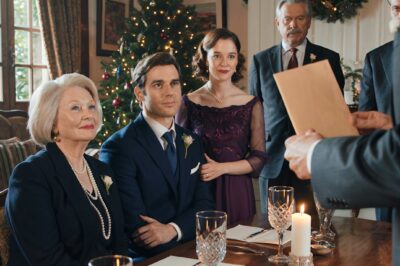
At The Inheritance Meeting, My Daughter-In-Law Shouted Proudly: ‘My Father-In-Law Left Us The Seven Miami Houses. Ella, Too Bad, You Only Got The Shed In Mississippi.’ Everyone Applauded. I Just Smiled And Said: ‘Son… You Really Don’t
During the Inheritance Split My Daughter-In-Law Celebrated But I Smiled: “Son, You Still Don’t Know?” The words hit me like…
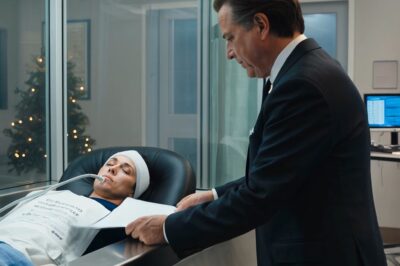
My Dad Said: “STOP TREATMENT — WE WON’T APPROVE THE SURGERY.” He Signed a DNR to Take Control of My $15M Inheritance
Some fathers protect their daughters—mine tried to sign my life away. A DNR, a $15M trust, and a coma became…
End of content
No more pages to load