At My Brother’s Wedding, Dad Humiliated Me — Then Choked on His Wine When They Saluted: ‘Admiral…
He thought it was just another chance to laugh at me.
At my brother’s wedding, my father raised his glass, called me “the biggest screw-up in the family,” and the whole hall erupted in laughter.
But then… silence fell. A guest in uniform stood. Recognition spread.
And in that instant, the story flipped.
The same people who mocked me rose to their feet and saluted.
The stem of my wine glass was cool in my hand when my father tapped his spoon against crystal and bright as a stadium announcer said, “Ladies and gentlemen, here’s the biggest screw-up in our family.” He didn’t hide the smile. He wanted the whole church hall to hear it. Every aunt from Abalene, every high school friend in boots, every former football buddy of my brothers. Laughter came quick ricocheting off wood paneling. Near the sheetcake, a chair scraped, a guest half rose. Wait,” he said, voice catching. The air tightened the way it does before a storm. I let the glass touch my lip, but didn’t drink. I have learned the value of silence. I have learned the mercy of timing.
The organist had packed up her hymns, but the hall still smelled like coffee and polished barbecue. Drifting from the parking lot, roses crushed on a sticky floor. The Texas evening pressed its warmth against the windows. Fairy lights made halos out of strangers. My brother, in a rented tux, swaggered between tables, collecting pats as though he’d scored one more fourth quarter touchdown. My sister glowed beside her new mother-in-law, church, smile, perfect.
Dad loved a microphone. He didn’t need one. His voice carried like a coach’s after years of Friday nights. He raised his glass, nodded toward the bride and groom. The groom hushed. He gave them nine words of sentiment, and because the shape of his joy required a sacrifice, he turned to me. “This one,” he said, pointing with his glass. “My youngest, she’s always been well.” The pause was theater. He gathered an audience that was already his. Bless her heart, he grinned. The biggest screw-up in our family.
My brother’s friend’s braided. A cousin covered her mouth. Someone whistled. I could have stood and read the citations, named the ship’s counted deployments against the quiet that follows each homecoming. I could have set rank on the table beside the plastic forks. But there is a way to win that leaves everyone smaller and a way to win that changes the air. I kept my seat. I let my jaw unclench. The AC kicked on that familiar August clatter. Condensation crawled down dad’s glass.
He was still a handsome man. Square shoulders coach’s stance. a belly that meant well. Growing up, he’d carted us through Sonic drive-throughs to football games to the same pew every Sunday. He believed in effort and in winning. He believed in telling a story out loud until it became the only one people remembered. He told a great many stories about me.
Y’all remember sophomore year he boomed jogging a step like he might run a play. This girl tried out for track, tripped the first hurdle, popped right back up, and finished dead last. Bless her heart,” laughter. He was rewriting it as he spoke. In my memory, I finished middle of the pack, but narratives are rivers, and he held the damn keys.
Mom’s mouth tightened into the shy smile she used when she didn’t agree, but wouldn’t ruin things. My sister angled her bouquet like a shield. A deacon’s wife slid her gaze from me to the tablecloth, as if kindness were contagious, and she might catch it at the wrong time. I set my wine glass on the white cloth blue corn flowers printed along the edge and noticed a water ring bleeding outward. I moved the glass. Old habits contain the spill contain the situation.
He kept going because a crowd as a furnace and he’d found dry wood. She left town on a whim. He said signed up for god knows what like it was summer camp. We figured she’d be back in 2 weeks asking for her room. He wagged his head, benevolent in the way men are benevolent when they’re sure they’re right. But hey, she’s here tonight. That counts for something. He made it sound like I’d wandered home with empty pockets in a suitcase of mistakes.
The man by the cake stood straighter now, hand on his chair mouth, parting for a word he hadn’t chosen. He wore dress whites. Even at the edge of my vision, I knew the weight of that fabric, the way it sits on your shoulders like truth. My spine knew before my eyes did what was about to happen to the room.
“Dad,” my brother said, half laughing, tugging his sleeve. He was enjoying the show, but he’d learned mom’s etiquette of ceilings. There is a height to cruelty that respectable people observe. Dad swatted him off with the easy affection reserved for sons who never have to apologize.
“Listen,” he said over the murmur. “I love all my kids, even this one.” The buffoonery gave him cover. She just never figured out what she wanted to be. My pulse slowed. That old feeling like the seconds before a blast when the world tightens to a pinhole and then widens to the horizon spread across my chest. I thought of sand like ground glass in Fallujah, of engine rooms hot as sin of charts with contested lines and briefings that read like weather for tempests. I thought of the names I carry under my sternum, unseen when I’m in a dress.
And then the man in whites cleared his throat. “Wait,” he said, not loudly, but in a tone that opens doors. Another man beside him turned. A silvered shoe glinted beneath his chair. Outside, a train horn sounded lonely. Dad glanced over, irritated at the interruption, then faced the room to finish his bit. He had a closing line. I could see it forming. He would bless the couple, wrap the insult in a ribbon, call it a joke, and go home to sleep like an honest man.
I raised my glass, and finally took a sip. The wine was church budget sweet, but it steadied my hand. I caught Mom’s eye. She gave me a faint nod. Permission apology prayer. The room was listing a ship caught by a new wind. “Wait,” the man repeated, and chairs began to scrape. I put my glass back on the corn flowers and folded my napkin a tidy square. My hands which have held lives and signatures and flags did not shake. I didn’t speak. Not yet. Sometimes the holiest thing you can do is let a moment hear itself.
I had grown up in that same town, the one with a single high school where football games were the heartbeat of Friday nights, where the Dairy Queen was both a landmark and a gathering place. I can still hear the echo of cleats on the metal bleachers. My brother’s name booming from the loudspeaker as quarterback dad standing proud in the stands with both arms raised like he’d thrown the touchdown himself.
For me, childhood was a different kind of stadium. I was the girl who tried. Every sport tripped on hurdles, slid into bases, fouled out of basketball games. At home, those moments never ended. Dad retold them at barbecues. Family picnics, church potlucks, spinning each stumble into comedy. Bless her heart, he’d say, shaking his head with mock pity. My little screw-up, always trying, never quite making it.
The grown-ups laughed. I laughed, too, back then. Because children learn early that laughing along is safer than standing apart. But in bed at night, I stared at the ceiling fan and whispered promises to myself. I wasn’t going to be the joke forever. I wasn’t going to be the shadow trailing behind my brother’s glory and my sister’s perfection.
Thanksgiving dinners were rehearsals for humiliation. Dad carved the turkey, poured himself a glass of sweet tea, and launched into stories. My brother’s football trophies, my sister’s perfect GPA, the boy she was dating, whose family owned half the town. Then his gaze would land on me. This one, she’s well, she’s still figuring it out. a pause, a smirk, but we love her anyway.
The table chuckled like it was all good fun. My cheeks burned hotter than the oven. Once when I was 13, I tried to show him my science project. Carefully wired circuits that lit up bulbs in sequence. He tapped the board, barely looking. That’s fine, honey, but you’ll never beat your brother’s trophies. I carried the project back to my room, the bulbs flickering in my hands, and swore that one day I’d build something brighter than any stadium light he’d ever cheered under.
At church, the preacher spoke of talents and gifts. My talent people assumed was resilience. I was the girl who took it on the chin, who could laugh at herself. No one noticed that every laugh carved a deeper groove. I wore those grooves like metals no one else could see.
High school brought more of the same. Teachers adored my sister, who was polite, pretty, and destined for homecoming court. Coaches adored my brother, who could throw a ball 50 yards under pressure. Me, I was the one they put in when the score was already decided. Dad clapped hard anyway, but it was the clap of obligation, not pride.
I remember standing outside the gym after a game, the night air, cool neon buzzing overhead. My brother emerged with teammates slapping backs, laughter spilling into the parking lot. Dad rushed to him, draped an arm over his shoulder, beaming. I lingered by the door, sneakers, scuffing pavement waiting. Dad turned, eventually caught sight of me and said, “You’ll find your thing, honey. Maybe cheerleading.”
My throat tightened. I wanted to scream that I’d already found my thing, that I was working harder than anyone, but the words never made it past my lips. It wasn’t that I hated my family. I loved them in the way children are wired to love even those who bruise them. But love tangled with disappointment, resentment, longing. I wanted my father’s approval more than oxygen. And every laugh he earned at my expense was another withheld breath.
By 17, I had mastered silence. I let jokes roll past me. Let nicknames screw up clumsy our little lost cause stick like burrs to my sleeves. Outwardly I smiled. Inwardly I sharpened each word into a blade. I began running before dawn, not for track but for myself. I pushed push-ups until my arms quivered. I read about military history when others flipped through fashion magazines. Somewhere between laps around the football field and the biographies of Navy admirals, I felt a compass click into place.
Still, I kept that secret. Dad would have laughed. The military, you honey, you can’t even keep your room clean. So, I folded the dream into silence, a seed waiting in dry soil. Years later, when I signed those enlistment papers, the recruiter asked why. I thought of the ceiling fan spinning over a girl’s whispered promises. I thought of Thanksgiving tables and jokes that tasted like ash. I thought of neon buzzing above a gym of dad’s proud arm around someone else.
I didn’t tell the recruiter all that. I just said because I need to prove something. But those childhood nights, those small town humiliations never left me. They rode with me like silent passengers shaping the steel in my spine. Every laugh that once bent me down would one day lift me higher. I just didn’t know how high yet.
Boot camp did not care who your father was or whether you were the family screw-up. It cared about sweat, about whether your body obeyed when shouted at, about how much grit you could dredge up when your arms were jelly and your lungs burned like fire. The first morning I stood in line at 0500 with a buzz cut still prickling my scalp, watching the sun bleed over the horizon, and I thought, “At last, here’s a place where no one laughs when you fall. They just make you get back up.”
I got back up again and again. Push-ups on asphalt until the skin of my palms felt like rawhide. Laps around the barracks until blisters split. You’ll never make it. Dad’s voice replayed in my head every time I thought about quitting. And it drove me harder than any drill instructor could.
The Navy became my forge. I learned to carry weight that wasn’t mine alone. Packs gear the lives of the sailor next to me. I learned that silence wasn’t weakness, it was control. And when orders came down for my first deployment, I signed without hesitation.
Iraq, 2004. Fallujah. Sand so fine it crept into your teeth, your boots, the folds of your soul. The first firefight cracked the air like gods snapping kindling. I wasn’t infantry, but combat doesn’t always respect lines. I held pressure on a Marine’s leg while bullets chipped concrete. Blood was slick warm. His eyes locked on mine. He lived. That night, under the noise of distant artillery, I wrote his name in a small notebook I kept folded into my pocket. That book would grow heavier with time.
From the desert heat to the sting of salt spray, South China Sea patrols followed. The sea has its own kind of menace. Quiet, endless, dotted with shadows on radar that make you wonder which wave hides an enemy. Long nights I stared at the chart table, coffee cold, tracing contested lines with my finger, knowing any misstep could ignite something larger than all of us. It was there in that gray tension that I earned trust. Not because I spoke loud, but because I spoke true decisions made under pressure that held orders that protected lives. By then, I had learned how to make my voice cut through noise without raising it. Respect grew slowly, but it rooted deep.
Joint operations with the seals were another crucible. Men built like oak trees, eyes sharp, testing every newcomer with the weight of silence. I didn’t try to impress. I simply worked. I carried gear until straps dug trenches in my shoulders. I studied maps until dawn. One night after a successful op, a seal clapped me on the back. Solid work haze. Just three words, but they landed heavier than any cheer I’d ever begged for in high school.
Rank came not as a gift, but as a ledger, balanced. Lieutenant, commander, captain. Each step a scar stitched over with discipline. Metals gathered in drawers, ribbons in neat rows. My notebook of names thickened. Some survived, some didn’t. They were the true weight of rank, heavier than any bar or star.
Back home, phone calls with dad were short peruncter. You still over there? He’d ask tone distracted. When you coming back for Thanksgiving, I’d answer politely, never mentioning the medals. never explaining what the stars on my shoulder meant. Once I hinted, “I’m up for a big promotion.” He chuckled. “That’s good, honey, but when are you getting a real job?”
The words lodged like shrapnel. I carried them with me through storms at sea, through the thunder of aircraft lifting off decks through memorial services where folded flags pressed against widows chests. His dismissal became another kind of fuel. I wasn’t looking for revenge in those years. I was building something steadier. Yet each time I stood at attention, hearing my name attached to responsibility, I thought of that small town gym parking lot where he’d slung an arm around my brother and told me to try cheerleading. And I knew my path wasn’t theirs to define.
By the time the orders came, by the time the uniform gleamed with the weight of command, I was no longer the girl who tripped hurdles. I was an officer trusted to steer through storms. And still back home, dad introduced me as the one still figuring it out. That’s why sitting at that wedding table years later, his laughter rolling over me like it always had, I didn’t flinch. Because beneath the sting was steel. Beneath his joke was everything I had already overcome. And when a guest in navy whites turned and froze, recognition dawning in his eyes, I knew the reckoning had finally come.
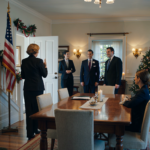
The organ’s last notes had barely faded when dad sees the room the way he always did. Shoulders square chest out glass raised high. The church hall smelled of brisket and buttercream. The kind of mix only a small town Texas wedding could brew. Paper lanterns swung overhead, scattering light across folding tables draped in rented cloth. People leaned back in metal chairs, plates still sticky with barbecue sauce.
Dad cleared his throat with a coach’s authority. “Ladies and gentlemen, let’s give it up for my boy,” he boomed, gesturing to my brother in his tux. “Applause burst forth.” My brother beamed, soaking in the sound like a quarterback basking in stadium cheers. Dad slapped him on the back, adding from Friday night lights to a business empire still making his old man proud. More applause whistles.
He shifted to my sister who stood by her new mother-in-law bouquet in hand. And this one, dad announced, “Beautiful, smart, and married into a fine family. Always knew how to make the right choices.” The room murmured approval. My sister flushed pink eyes, dropping practiced modesty.
Then his gaze turned to me. I felt it before it landed. The way you sense lightning about to strike. He grinned, glass still raised and the pause was deliberate. He wanted the silence the crowd leaning forward the stage set for his punchline. “And this one,” he said, his voice dropping into mock somnity. “My youngest, bless her heart,” he shook his head with exaggerated pity. “This is the biggest screw-up in our family.”
The words landed like a slap. The crowd erupted. My brother’s friends gaued, slapping the table. A cousin whistled. An uncle nearly choked on his beer. Even the deacon’s wife covered her mouth as though laughter were an obligation. I sat still, hands folded on my lap. The stem of my wine glass pressed cool into my palm. Inside the steel I’d built over years at sea, held firm. Outwardly, I let the insult wash over me like surf against a hull.
Dad wasn’t done. The crowd’s laughter was oxygen and he inhaled deep. Y’all remember her track try out? He went on panamiming, a runner’s fall, first hurdle. Bam! Flat on her face. Finished dead last. We called it the Haye family highlight reel. Laughter doubled over. My brother shook his head, smirking. He glanced at me as though expecting me to laugh along. I met his eyes without flinching lips, still offering no relief. The silence between us was louder than the laughter.
Mom shifted in her seat, her smile tight as a drawn bowring. She reached for his sleeve once subtle, but he brushed it off too busy feeding his audience. Truth is, Dad continued, “We never knew what this girl was going to do. Never settled down. Never had a plan. Off chasing some kind of adventure like it was summer camp. But hey, she showed up tonight.” He chuckled, raising his glass. That counts for something.
The laughter rang hollow now, a little strained, but still enough to carry. I let my gaze drift over the tables. Football buddies in bolo ties. Neighbors from our culde-sac. Women from the church choir, people who had known me since childhood who had chuckled at these stories for years. They thought they knew me still. I thought of the names in the notebook tucked into my dress uniform miles away. Names of men who’d bled into my hands. names of sailors buried at sea. They weren’t here to clap or to laugh. They were part of the steel in my spine.
The air shifted. A chair scraped near the back. A man in navy white straightened his ribbons, catching the lantern light. He froze, eyes locked on me. The laughter tapered curiosity, replacing it. He spoke voice measured, but certain, “Wait, aren’t you Admiral Hayes?” The words rippled across the hall. forks stillilled against plates. Glasses paused midair. Even the organist halfway through packing her hymn stopped moving.
I met his gaze, then the eyes of everyone else turned on me. Slowly, I rose, smoothing the skirt of my dress, letting the silence stretch taut. I nodded once. “Yes, I am.” Dad, still midsip sputtered. Wine sprayed across the tablecloth, darkening the cornflour print into bruised petals. His eyes widened, the flush of laughter draining into something paler. The room held its breath. In that moment, the power shifted. No need for shouting, no need for defense. The truth stood on its own, gleaming sharper than any insult.
The silence after the guest’s question stretched like the space between thunder and lightning. For years I had imagined a moment like this, never knowing when it might come, never daring to script it too neatly. But here it was unfolding in the quiet of a small town church hall dressed with fairy lights and barbecue smoke.
The man in whites repeated firmer. This time you’re Admiral Hayes, aren’t you? His voice carried not loud but undeniable the tone of someone accustomed to truth. Heads turned as though pulled on invisible strings. I stood, not hurried, not defensive. My chair legs scraped softly against the wood floor. The fabric of my dress whispered as I smoothed it down. My heartbeat steady each thud, a drum I’d marched to across oceans.
Yes, I said my voice even. I am. The words hung in the air clean and final. A woman near the cake gasped. Someone dropped a fork with a metallic clatter. My brother’s grin faltered as if he’d misheard. My sister’s bouquet trembled slightly in her hands. Dad froze mid swallow. Then it happened. Wine spurting from his lips, a choking cough, his free hand slapping at his chest. The tablecloth bore the stain, a red bloom spreading across cornflowers. His laughter, the sound that had always drowned me out, was gone.
The hall was still. My title weighed more heavily than any insult he had ever cast. and everyone knew it. The man in whites straightened his spine saluting before decorum even demanded it. Admiral on deck, he said instinctively. The words ignited recognition. A ripple ran through the room. Veterans at tables shifted, rising slowly to their feet. One by one, men who had once worn uniforms themselves came to attention. They knew what the stars on a shoulder meant. They knew what it cost.
I did not smile. I didn’t need to. My silence was louder than any speech. Dad lowered his glass fingers, trembling. His mouth opened, closed, opened again. He looked at me the way a man looks at the scoreboard when the game is lost. Disbelief turning to something harsher. Fear maybe, or shame. For once, he had no story ready, no joke, no easy laugh to win the crowd.
The guests shifted unease, buzzing through them like static. People who had chuckled at Dad’s words minutes earlier now avoided my eyes. My mother dabbed at her napkin, her gaze lowered, but a sheen of pride flickered across her face before she could hide it. I remained standing, shoulders square posture, automatic from years of command. Every muscle remembered what to do to project calm, to anchor chaos. I let them see me. The daughter they had dismissed, the woman they had overlooked, the admiral they had laughed at without knowing.
No one spoke. The hum of the air conditioner filled the void. The clink of ice melting in glasses. I could almost hear the names in my notebook, the voices of those I carried. “You’ve earned this,” they seemed to say. Dad cleared his throat as though preparing to recover. But there was nothing left to recover. His authority had cracked, his narrative shattered. The man who had coached entire towns into laughter now faced silence that would not bend to him.
I didn’t gloat. I didn’t need to. Revenge, I had learned sometimes requires no fire, no fury. Only truth revealed at the right time. And so I stood, watching the faces shift, watching recognition bloom until the weight of the moment settled into everyone’s bones. Then I sat again, slow and deliberate, my wine untouched before me. The hall remained hushed. The taste of power inverted, the joke reversed. The reckoning had arrived, and it spoke in mystead.
Silence can be a blade if you hold it right. I didn’t raise my voice. I didn’t stand on a chair or list my tours like trophies. I let the hush work, let the air settle heavy until even the paper lantern seemed to stop swaying. Somewhere near the kitchen passrough, a timer beeped twice and quit. The smell of brisket had cooled into something sweet and smoky, but no one reached for seconds.
The man in whites kept his posture, the crease of his trousers, like a rule underlined. A few older men, Korean war caps, Vietnam pins, struggled up and straightened as if their knees remembered obedience better than comfort. Admiral, one of them said softly and gave me a nod that weighed more than any plaque on a church wall. I inclined my head. It was enough.
Dad brushed at the wine staining the corn flowers as if tidiness could reverse time. His hands coach’s hands that had once signaled plays across fields trembled. The glass clicked against the table. He looked at me the way men look at strange seas measuring depth and current trying to find purchase where there isn’t any. For decades, he’d held the microphone. Now, the room had rewired itself around a frequency he couldn’t hear.
Mom folded her napkin into a triangle and set it carefully beside her plate. Her eyes were wet, but steady. “Maybe we should cut the cake,” she suggested, voice thin, offering the room a ladder out of its embarrassment. No one moved. The bride reached for my sister’s hand. My sister whispered, “Oh my God, not as gossip, not as judgment, but like prayer.”
My brother attempted a laugh. “Well, hey, learn something new every day,” he said, aiming for charm and hitting the wall between us. He looked to dad for rescue. None came. The deacon’s wife stood smoothed her skirt and faced me. “We’ve been proud of your brother for years. She said words, careful eyes, kinder than I remembered. I’m sorry we didn’t see you right.” She held my gaze long enough to make apology a real thing, not a courtesy.
Then she sat and in her wake others found their words. I had no idea, said a neighbor who’d loaned us jumper cables and sugar over the years, as if the idea me a woman in a uniform of stars had been hidden under a tarp in the garage. Thank you for your service, he added. But it wasn’t wrote, it was raw.
Ma’am, one of my brother’s friends said, cheeks flushed above his bolo tie. We I laughed. I’m sorry. He sounded like a man admitting he’d taken the easy road too many times and found it didn’t lead where he thought. I didn’t do magnanimous speeches. I didn’t absolve or accuse. I let them have the dignity of their own reckonings. “Thank you,” I said when it fit. A nod, a breath, silence like clean water washing a wound.
Dad found his voice thin at first, then louder out of habit. “Now hold on,” he said like a referee stepping into a pileup. “We’re making too big a deal of this,” he tapped the table. “I was joking. Y’all know that a little fun. We raz each other in this family.” He gestured toward my brother, grasping at the old rhythm. “Don’t we?”
My brother didn’t answer. He looked at me instead, and in that look, I saw a boy again. The one who shared a bedroom wall with me, who had passed notes under the door when dad’s expectations flattened the air. He shrugged helpless. It wasn’t a joke, I said. Not scolding, just the truth placed on the table between us like a plain loaf of bread. It never was.
Dad flinched. You could have told us he tried, but even he heard the thinness. He didn’t understand that some things are not told. They’re born and then one day they arrive fullgrown and undeniable. The man in whites, his hair closecropped, his face open, stepped closer. “Sir,” he said to dad polite to the end. Decorum asks that we recognize what’s in front of us. Then to me, ma’am, permission to offer proper honors.
I saw the question behind the words, “Do you want this here now?” The church hall, the brisket, the fairy lights, the football town that had measured me in yards I never chose. “Keep it simple,” I said. He nodded once turned and with a voice that carried to every corner called attention to he caught himself scaled it back out of respect for the setting, then raised two fingers to his brow. The veterans followed. A handful of younger men who had never served stood awkwardly than straighter, finding the line through imitation. It was not a ceremony. It was a correction.
Dad remained seated, hands flat on the tablecloth as if pinning down a story that wanted to fly. “Congratulations on your marriage,” I told my sister, finally giving the room a second rope to hold. The bride startled, then laughed on a breath. “Thank you,” she said. “We’re honored you’re here. She meant it. It softened something in the air.
A woman from the choir came to my mother with a stack of fresh napkins. For the spill, she murmured, but her hand touched mom’s wrist in a way that said, “For other things, too.” They cleaned the wine together. The stain lightened, but did not disappear. Dad watched jaw working. You should have told me, he said again, but quieter. Meant for me alone this time.
All those years I did, I answered, not unkindly, just not with words you listen for. His eyes found the stars that weren’t on my shoulder tonight, but might as well have been. He swallowed. The coach, the storyteller, the man who filled rooms, it all sat there suddenly, too heavy for the chair. “I thought I was pushing you,” he said, searching for absolution he had not earned. “Making you tough. You made me quiet,” I said. The rest I made myself.
We held there, not forgiveness, not yet, but truth standing, where laughter had lived. From the foyer came the shuffle of feet, the low murmur of new arrivals. The reception coordinator peaked in flustered. They’re here, she whispered to the bride. Your friends from base. My sister blinked, confused. The man in white smiled at me as if to say, “The tide keeps its own calendar.” I shook my head slightly. Not yet. Another moment to let the room breathe, to let dad taste the flavor of a world that would not bend back into his favored shape.
I rose again, not to command, but to release. Enjoy the night I said to no one and everyone. There’s a couple to celebrate. I touched my mother’s shoulder. Mom. Her fingers closed around mine for an extra beat. The squeeze of a woman who has survived her own quiet wars. I looked at my brother. Take care of her. He nodded solemn now. My sister mouthed, “Thank you again, eyes bright.”
As I turned to go, Dad stood too quickly, chair legs screeching, knocking the table so the forks chimed. “Where are you going?” he asked the question raw with something that sounded like loss. “For air,” I said. “For honesty.” Then because mercy is a discipline, not a mood, I added, “I’ll be outside.”
He took a step, stopped, swallowed pride like a bitter pill, and didn’t follow. The man in whites fell in half a pace behind me without being asked. In the vestibule, the night waited full of crickets and late summer humidity, the parking lot lamps buzzing haloed cones into the darkness. I pushed the door and stepped through the change in temperature, a hand across my face.
Behind me, the church hall began to move again, cutlery chatter and organ flourish as someone tried to tilt the evening back towards celebration. It would never be the same. That was the point.
On the steps, I breathed. The brick was warm under my palm. Somewhere far off, a freight train moaned. The air tasted like mosquite and redemption. “Ma’am,” the man in white said quietly, as if careful not to wake the town. There are some folks who’d like a word. I nodded. The night had work left to do.
The night air outside the church hall carried the smell of cut grass and mosquite smoke thick with late summer humidity. Cricket sang in the fields and the parking lot buzzed with sodium lamps casting amber halos. I stood on the steps, letting the warmth settle into my bones, the cool brick beneath my palm grounding me after the storm inside. My breath came steady. The silence here was not the silence of humiliation. It was the silence of release.
The man in white stood half a step behind posture, respectful eyes forward. He didn’t speak until I looked at him. Admiral, he said softly. There are some folks who’d like a word.
I turned and from the shadowed edge of the lot, figures emerged. Men and women in uniform, navy dress whites and khaki shoulders squared. Some I recognized instantly. Seals from joint ops sailors from deployments long past. They must have driven from bases hours away, slipping quietly into town just to be present tonight. The fairy lights inside had nothing on the gleam of their brass.
They formed a line at the foot of the steps, boots crunching gravel. For a heartbeat, no one moved. Then, as if on quue, they raised their hands in salute. Admiral on deck, the man beside me, called his voice ringing clear in the Texas night. The world slowed. I had been saluted countless times before, but never here. Never, with the childhood church hall at my back and the echo of my father’s laughter still in my ears.
These were not ceremonial motions. This was recognition deliberate and undeniable in the very town that had called me lost cause. I returned the salute hand, crisp at my brow. The gesture felt less like ritual and more like reclamation. Every laugh I had swallowed, every dismissal I had endured forged into this moment.
Behind me, the church doors creaked open. Conversations faltered. Guests spilled out onto the steps, drawn by the sudden stillness by the sight of uniforms under yellow lamps. I heard whispers. “Oh my god, she really is.” A cousin muttered. “That’s Admiral Hayes.” The bride clutched my sister’s hand, eyes wide.
Dad appeared in the doorway, shoulders hunched as though the frame itself had shrunk him. His face was pale, his jaw slack. He looked at the line of salutes at me standing before them, and for the first time in my life, I saw him without a story to tell.
The salute ended. The sailors dropped their hands in unison, and the sound of it was sharper than any applause. One step forward, a seal with weathered lines carved deep into his face. “Ma’am,” he said, voice rough but steady. “We don’t forget leadership. We don’t forget who we’d follow into hell and back. We came here to remind you of that and to let them see it.”
The words landed like a bell toll across the parking lot. No rebuttal, no laugh could erase them. I caught Dad’s eyes. His mouth opened, but nothing came out. His glass was gone, his prop taken from him. He stood bare, exposed, not by my anger, but by truth he had never thought possible.
“I never needed your approval,” I told him quietly, my voice carrying farther than I intended. “But I did deserve your respect.” His lips trembled. I thought he began and stopped. His throat worked around words that would not form. For once, the coach, the storyteller, the man who always had the last line, was silent.
The veterans and sailors parted, leaving a path from the steps to the lot. The gesture was symbolic, unmistakable, a corridor of recognition, a gauntlet of dignity. I descended slowly, heels clicking against the concrete, each step punctuated by the echo of my own becoming. Guests spilled further out, murmuring, some clapped softly, some bowed their heads. A few, the same ones who had laughed the loudest at Dad’s joke, turned red with shame.
The church organist standing by the door, clutching her hymbook, whispered, “God bless you.” as I passed. At the end of the line, a young sailor saluted me again. His eyes shone with something like awe. I returned it. Then I turned, facing everyone, the uniforms, the town’s folk, my family frozen in the doorway.
He called me a screw-up, I said, voice calm, carrying over the hum of the lamps and the night. The world calls me admiral. The words were not vengeance. They were truth carved clean. The seal stepped forward again. We stand with you, ma’am. Always. I nodded, emotion thick in my chest. Thank you, I said, my voice rough.
The crowd held its silence. The night held its breath. And in that stillness, Dad’s legacy of laughter finally cracked for good. I turned to leave. My footsteps rang steady, the echo of command. Behind me, the sailors dispersed into shadows, their presence lingering like constellations you know are there even after clouds move in.
The parking lot lights flickered insects buzzing against the bulbs. I inhaled the warm night air heavy with mosquite and felt lighter than I had in decades. As I reached my car, I looked once more at the church hall. Through the open doors, I saw Dad still standing in the threshold, small against the glow of fairy lights. He didn’t raise his glass again. He didn’t speak. He just watched. And for once, I let him.
Sometimes revenge doesn’t roar, I thought. Sometimes it’s the silence left after truth has spoken. I slid into the driver’s seat, the uniform pressed crisp against me. Stars invisible to the crowd, but etched into every memory of those who knew. The ignition turned headlights swept the lot and I drove away. Not from shame, but toward a horizon I had already claimed.
He called me a screw-up. The world calls me admiral. If you’ve ever carried the weight of being underestimated, if you’ve ever borne laughter at your expense only to rise higher than they dreamed, you know the power of silence, of truth, of standing tall when the world finally sees you. If this story moved, you share it with someone who needs to hear it. Subscribe for more stories of dignity reclaimed of voices finally heard. And hold close this reminder. Respect is not given. It’s earned. And it can never be taken away once it’s yours.
That night, after I left the church parking lot and the glow of the sodium lamps, I didn’t drive straight back to base.
I checked into a roadside motel off the highway, the kind of place with humming ice machines and doors that open straight onto the parking lot. The clerk didn’t recognize me from town. He saw a woman in a simple dress, hair pinned back, ID card sliding across the counter. He glanced at the name and rank without understanding what they meant. That anonymity felt like clean water.
In the room, I sat on the edge of the bed, dress pooled at my knees, shoes kicked off in opposite corners like I’d come home from any long day. The air conditioner rattled in the window. Somewhere a truck’s engine idled. I stared at my hands for a long time. The same hands that had signed deployment orders now trembled, not from fear, but from the slow uncoiling of years.
My phone buzzed where I’d tossed it on the nightstand.
First came the messages from numbers I didn’t know—my sister’s friends, a couple of cousins, even the deacon’s wife. Short lines: I’m sorry.
Didn’t know.
Thank you for your service, ma’am.
The ones that punched the air out of my lungs were from my brother and my sister.
BROTHER:
I didn’t know how to stop him tonight. I’ve been a coward for a long time. I’m sorry.
SISTER:
I don’t know if you want to hear from me. But I want you to know—having you there meant more than the flowers or the cake or the dress. I’m proud you’re my sister. I always have been. I just didn’t say it out loud before.
I stared at the cursor in the reply box, thumb hovering. Years of training had made me efficient at drafting orders that sent people across oceans, but this—this felt harder.
I typed.
TO BROTHER:
I know what it’s like to be afraid of his voice. You can start by not laughing next time. That’s enough for tonight.
TO SISTER:
You were a beautiful bride. Love him well. And don’t ever let anyone make you smaller to make a room more comfortable. Not even Dad.
It took me a long time to hit send.
I set the phone down, lay back on the stiff motel pillows, and stared at the ceiling—cheap plaster instead of the metal and wiring I’d grown used to. The silence wasn’t the heavy, stunned quiet of the hall anymore. It was the silence of a ship after battle. Smoke clearing. Damage tallied. Course corrections considered.
My mind drifted, not to Iraq or open seas, but to another stage, another ceremony Dad had skipped.
The night I pinned on admiral.
It hadn’t happened the way little-girl me would have scripted it. No triumphant slow-motion entrance. No stadium of roaring approval. Just an auditorium on base, rows of uniforms, a handful of civilians in the back. The smell of polished brass and coffee. A flag that had seen more airports and hangars than parades.
Mom had flown out, hands clutched around the strap of her purse as if turbulence might still find us on the ground. She wore her nicest church dress, the one she kept in plastic at home, and shoes that pinched her feet—I could tell by the way she shifted from heel to heel when she thought no one was looking.
Dad was not there.
We’d invited him. Mom had asked twice, voice light, hopeful, as if she weren’t sure how to bring up the possibility that his daughter might be something more than a punchline.
“I’ve got the store to mind,” he’d said over the phone, meaning the car dealership he’d finally bought into with my brother. “And besides, all that military stuff, it’s your thing, honey. I’d just be in the way.”
He was never in the way for my brother’s championship games. Or my sister’s college signing day. But a daughter’s promotion to flag rank? That, apparently, was optional.
I remembered standing at attention as the citation was read. The words about leadership and courage and years of dedicated service rolled over me like distant surf. What I felt, standing there, wasn’t pride at first. It was a hollow ache where Dad’s presence should have been. Mom dabbed at her eyes with a tissue, her shoulders shaking. When she came forward to help pin the stars on my shoulder, her fingers trembled so much she dropped the small silver pin.
It hit the floor with a bright, traitorous ping.
Everyone pretended not to notice. I bent in one smooth movement, scooped it up, pressed it into her palm.
“Take your time, Mom,” I whispered, just loud enough for her. “I’m not going anywhere.”
She laughed then, a wet, shaky sound, and managed to fix the star in place. When she stepped back, she looked at me as if seeing me for the first time—not just as her youngest, not just the quiet girl trailing the family, but as a woman who’d carved a life out of steel and salt water.
After the ceremony, as people milled around with paper cups of punch, my phone buzzed in my pocket.
A text from Dad.
Heard you got a promotion. Don’t let it go to your head. Proud of you, I guess. When are you coming home for a real job?
I’d stared at the words, thumb hovering over the delete button. Instead, I’d saved the message, sliding it into the same mental drawer where I kept every quip, every laugh at my expense. Not as proof of his failure, but as a record of what I’d risen above.
Back in the motel, years and miles away from that day, I rolled onto my side and exhaled slowly.
At the wedding, Dad hadn’t just been confronted with my rank. He’d been confronted with the fact that his stories no longer ruled the room. Power, for him, had always been in who held the narrative. That night the narrative slipped from his hands like a fumbled football in the fourth quarter.
Sleep, when it came, was shallow and fractured. I woke to pale light slipping past the thin motel curtains, to the buzz of a lawnmower somewhere outside, to my phone blinking with a new notification.
A missed call from Mom.
A voicemail.
I sat on the edge of the bed, feet flat on the worn carpet, and pressed play.
“Hey, baby,” her voice came, thinner than I remembered, like it had been rubbed raw by the night. “I didn’t want to call too late. I know you’re… I know you’ve got people with you. I just—”
There was a pause. A rustle, like she’d covered the receiver to breathe.
“I’m sorry,” she said finally. “Not just for last night. For all the nights. I should have stopped him sooner. I should have stood between you and that microphone years ago. I’m… proud of you doesn’t cover it. I don’t know the right words. Maybe you can teach me sometime. I love you. Call me when you can.”
The message ended with a shaky inhale and the soft click of a woman who’d finally said something she’d swallowed for decades.
I showered, the motel water lukewarm and thin, and changed into jeans and an old Navy t-shirt. My dress went into a garment bag, the fabric still holding the faint scent of smoked meat and cheap wine and reckoning.
Instead of driving straight back to base, I turned toward town.
The diner sat on the corner of Main and 3rd, just like it had when I was sixteen, scraping together tip money from babysitting to buy my own pancakes. Same faded sign. Same bell over the door that jangled like a memory every time it opened.
Mom was already there, in a booth by the window, hands wrapped around a coffee mug like it might anchor her to the earth.
She stood when she saw me, nearly knocking over the cup. For a second, we just stared at each other, the weight of years and last night hanging between us. Then I crossed the space and she folded me into her arms. Her hug was smaller than I remembered, bones sharper under my hands.
“I didn’t know if you’d come,” she murmured into my shoulder.
“I didn’t know if I would, either,” I answered honestly.
We sat. The waitress poured coffee, and I watched Mom fish three sugar packets from the little metal caddy like she always had. She didn’t ask how I took mine; she knew. Black. No room for sweetness when you’d spent a lifetime learning to swallow bitterness.
For a while we just stirred and sipped and watched cars pass the diner window.
“Your father didn’t sleep,” she said eventually, eyes on the traffic. “He sat at the kitchen table all night. Just… sitting. I asked if he wanted to talk. He said no. I’m not sure he even knows what to say.”
“He always knows what to say,” I replied. “That’s the problem.”
Mom winced, the corner of her mouth tightening. “He comes from a long line of men who think teasing is love,” she said softly. “Your granddaddy was worse. He’d get half the congregation laughing at your daddy when he was a boy. Wrong plays, dropped passes, that time he fumbled the ball on the twenty-yard line. I watched your father swear he’d never be small like that again. I just didn’t see—” Her voice broke. “I didn’t see he’d rather make somebody else small than feel that way himself.”
I watched the steam rise from my coffee. “You saw enough to flinch every time he started in on me,” I said. There was no accusation in my tone, just fact. “You saw enough to grab his sleeve last night.”
She closed her eyes, lashes trembling. “I did. And I still didn’t stop him.”
“Stopping him isn’t a solo job,” I said. “Trust me. I’ve commanded units that were easier to steer than him. And they came with rank.”
She huffed out something like a laugh, then wiped under her eyes with the crumpled napkin.
“When you left,” she said, “when you signed up and didn’t come home for Christmas that first year, he told everyone you were ‘finding yourself.’ Like it was a joke. I think… I think it scared him. That you could build a life that didn’t revolve around his voice. I should have told him sooner that was his problem, not yours.”
“You were busy keeping the rest of us upright,” I said. “You can’t be a shield and a surgeon at the same time.”
We fell silent again as the waitress slid plates onto our table—scrambled eggs, toast, bacon curling at the edges. The kind of breakfast that had fueled a thousand small-town mornings and a lifetime of Friday nights.
“Do you hate him?” Mom asked at last, not looking up.
The question lingered between us, heavy as humidity.
“No,” I said, and felt the truth of it settle in my chest. “I don’t hate him. Hate is… active. Requires energy. I spent years giving him my energy. My choices. My silence. I’m done with that. I’m angry. I’m hurt. Those are mine to tend. But hate?” I shook my head. “I’ve seen what hate does. It blows holes in walls and people. It doesn’t change those who earned it. It only consumes the one who carries it.”
Mom exhaled like she’d been holding her breath for decades. “He doesn’t know how to apologize,” she said. “He’s never had to.”
“Then he gets to learn,” I replied. “Or he doesn’t. Either way, my life stays mine. That’s the difference now.”
She nodded, eyes shining. “Will you… give him a chance?”
I thought of the notebook in my sea bag, pages filled with names of men who never got another day, another conversation, another shot at making anything right. I thought of last night’s stunned silence, of veterans rising to their feet, of Dad’s glass slipping in his hand.
“I’ll give him a chance to speak,” I said slowly. “What he does with it is on him. What I do after is on me.”
We finished our breakfast, conversation weaving between safe topics—my sister’s honeymoon plans, my brother’s kids, the church’s new pastor—before circling back to the wound at the center.
“He keeps saying, ‘She made me look bad in front of everybody,’” Mom admitted, tracing a line in a stray puddle of coffee on the table. “I told him he did that all by himself years ago. He didn’t have much to say after that.”
Good, I thought. Let the silence he created finally hold up a mirror.
When we parted in the parking lot, Mom hugged me again, harder this time. “Don’t stay away another ten years,” she said. “But if you need to, I’ll understand. I’ll come to you instead.”
“There’s always a chair for you wherever I am,” I said. “Some of them even recline.”
She laughed, the sound lighter than it had been in a long time, and shuffled back to her car.
Days bled into weeks. I returned to base, to briefings and ship schedules, to the comfortable strictness of chain of command. Word of what had happened at my brother’s wedding traveled faster than I expected. Small towns are like ships—rumors move bow to stern in minutes.
Old teachers sent emails. A girl who’d once shared my locker row wrote a long message about watching me from a distance in high school and wishing she’d had the courage to stand beside me instead of beside the ones who laughed. Former teammates reached out with apologies decades late but not entirely unwelcome.
From Dad, there was nothing.
No calls. No texts. No emails.
For a while, the absence felt like an old bruise pressed too hard. Then, one evening, as I wrapped up a briefing on upcoming deployments, my phone buzzed with a number I recognized instinctively despite not having it saved.
The house phone. The one hanging on the kitchen wall beside Mom’s calendar and the framed cross-stitch that read As for me and my house, we will serve the Lord.
I let it ring twice before answering.
“Hayes,” I said out of habit, then corrected, “Hello?”
Silence at first. Then the sound of a throat being cleared.
“It’s your father,” he said, like I might not know his voice. It sounded older through the line, the edges sanded down. Or maybe I was just hearing it without the echo chamber of a laughing crowd.
“I know,” I replied.
Another beat of silence. “Your mother said I should call.”
“I’m glad you listened to her,” I said. “That’s new.”
He huffed a short, humorless breath. “Guess I had that coming.”
“Guess you did.”
There it was. The old rhythm. Setup, punchline, expectation of shared laughter. Only this time, I didn’t provide his cue.
He shifted. I could almost see him at the kitchen table, fingers drumming on the checked tablecloth, gaze fixed on the far wall.
“I didn’t… mean to hurt you,” he said finally. “Not the way it came out that night.”
I thought of every Thanksgiving, every barbecue, every church potluck where the “jokes” were rehearsed into me like a role I hadn’t auditioned for.
“Yes, you did,” I said gently. “That was the point. Hurt dressed up as humor is still hurt.”
He inhaled sharply, like someone had yanked a bandage off too fast.
“You made a room full of people feel small,” I continued, “so you could feel tall. You’ve been doing that my whole life. The only difference this time is the room saw you without the laugh track.”
He was quiet so long I wondered if the line had dropped. Then, softly, “I didn’t know.”
“You didn’t want to know,” I corrected. “There’s a difference.”
“I told that track story a hundred times,” he muttered, more to himself than to me. “Folks liked it. They laughed. Just… seemed like what fathers did. A little ribbing. Keep kids humble.”
“You didn’t tell those stories about my brother that way,” I said. “His mistakes were footnotes to his heroics. Mine were the whole book.”
The line hissed softly, the old house wiring carrying every breath.
“I was afraid,” he blurted then, the words surprising us both.
“Of what?” I asked.
“Of you leaving,” he said. “Of you getting hurt out there. Of not knowing what to say to a daughter who couldn’t be bribed with football or boyfriends or a place in the family business. It was easier to act like it was all a joke than to admit I didn’t understand any of it. Or you.”
Fear, I knew, came in many disguises. In combat, it could look like bravado, like rash decisions. At home, it often dressed up as cruelty. But understanding its shape didn’t excuse the damage it left.
“What you were afraid of happened anyway,” I said. “I left. I got hurt, in ways you can see and ways you can’t. I built a life you didn’t understand. The only part that didn’t have to happen was you standing between me and dignity.”
His next words were ragged. “I’m… sorry.”
I sat with that. The man who’d never apologized for anything more serious than missing a call during a game was now stretching his mouth around a word it had never properly formed.
“Okay,” I said. “That’s a start.”
“It’s all I’ve got,” he admitted.
“No,” I said quietly. “You’ve got more. You’ve got all the dinners where you can choose not to make me the punchline. All the conversations where you can ask about my life instead of making it smaller to fit your comfort. You’ve got grandkids who are watching you learn the difference between teasing and tearing down. That’s what you’ve got.”
He blew out a breath.
“Do you… want me at your next big thing?” he asked, and I realized with a jolt that he thought the admiral stars had been a finish line instead of a milestone. “Ceremonies. Speeches. Whatever admirals do.”
I stared at the wall of my office, at the framed photos of ships and sailors and seas, each one a chapter of a life he’d never read.
“I don’t know yet,” I said. “Respect isn’t an automatic invite. It’s earned. You said that to us a thousand times about football and grades. It applies to this, too.”
“Fair enough,” he whispered.
We didn’t solve decades on that call. He didn’t suddenly become a different man. I hung up with more questions than answers, more ache than ease. But something had shifted, a gear that had been grinding for years finally sliding into a new groove.
Time, as it tends to do, moved.
Deployments came and went. Crises flared and were managed. Somewhere between a hurricane response off the Gulf Coast and a tense joint operation in the Pacific, my hair picked up more silver at the temples. My step grew a fraction slower on steep gangways, but my voice, when needed, cut cleaner than ever.
Dad and I spoke occasionally. Stilted conversations at first, full of weather and church potlucks and how the team was doing this season. Every now and then, he’d ask about something in my world.
“How far out are you?”
“What’s it like, looking at a storm from the bridge?”
“Those boys under you, they listen when you talk?”
I’d answer, offering small stones he could use to build a bridge if he wanted. Sometimes he picked them up. Sometimes they just sat there, unclaimed.
Then, one winter, the call came not from him, but from my brother.
I was halfway through a meeting when my aide knocked once and cracked the door. “Admiral, sir, ma’am, it’s your brother. Says it’s urgent.”
My stomach dropped in that immediate, primal way no amount of training can erase. I took the phone in the hallway.
“Hey,” I said. “What’s wrong?”
“It’s Dad,” he said. His voice sounded like it had when he was eight, calling me out to the backyard because he’d found a hurt bird. “He had a heart attack. He’s stable but… they don’t know. You should—if you can—”
“I’ll be there,” I said, before he finished.
Red Cross messages exist for a reason. The military, for all its hardness, understands that some calls cut through rank. Strings were pulled. Schedules reshuffled. Within twenty-four hours, I was walking down a hospital corridor that smelled like bleach and stale coffee, the fluorescent lights too bright after the soft gray of the flight.
Dad looked smaller in the hospital bed, tubes sneaking under his nose, monitor beeping steadily. His hands, once so sure gripping a whistle or a microphone, lay limp atop the thin blanket.
Mom sat on one side, my brother on the other. My sister hovered near the foot of the bed, hands twisting the strap of her purse.
When they saw me in the doorway, something like relief and guilt flashed across their faces.
“Hey, Admiral,” Dad croaked, his voice thin but recognizable. It was the first time he’d said my title without mockery, and the last word came out on a fragile exhale.
“Hey, Coach,” I answered, because sometimes mercy is choosing a name that says I see the best part of you, even if you didn’t always show it to me.
The room emptied slowly, as if everyone understood we needed air that wasn’t crowded by their breaths. Mom kissed his forehead and touched my arm as she passed. My brother squeezed my shoulder. My sister paused, eyes glassy.
“Don’t be too hard on him,” she whispered. “He’s scared.”
“So am I,” I said. “But I’ve done scared before.”
When the door closed behind them, the beeping seemed louder.
We looked at each other, years layered between our gazes.
“I heard about that hurricane,” he said finally. “They showed you on the news. Standing on some ship, all those folks behind you. Looked like you knew what you were doing.”
“I did,” I said. “Most days.”
“How many people you got under you now?” he asked.
“Depends on the operation,” I said. “Thousands sometimes. Less other days. Enough.”
He nodded slowly, as if trying to imagine a stadium of lives whose scoreboard he didn’t control.
“I always thought I’d die with you mad at me,” he said softly.
“You still might,” I replied. His eyes widened, then crinkled at the edges, the ghost of his old grin.
“There’s that sense of humor your mama says I never let you show,” he murmured.
We sat in the space between jest and judgment for a moment.
“I don’t want to make you the villain in your own deathbed story,” I said. “That’s not what this is. But I’m not going to lie and say a few apologies fix everything.”
He swallowed, Adam’s apple bobbing.
“I was watching a game last week,” he said. “Before all this.” He flicked a finger at the monitor. “QB kept throwing to the wrong guy. Interceptions, sacks, the works. Coach yelled, crowd booed. Then, last quarter, he finally saw the field right. Started hitting the open man. Folks went wild. After the game, they stuck a microphone in his face and asked what changed. He said, ‘Nothing out there. I just finally listened.’”
He turned his head on the pillow, looking at me full-on.
“I ain’t got a fourth quarter left,” he said. “But I’ve got what I’ve got. And I’m finally listening.”
Something in my chest shifted. Not forgiveness—not yet, maybe not ever in the way movies sell it—but a loosening of a knot I’d carried so long I’d forgotten what it was like to breathe around it.
“I spent my childhood wanting you to see me,” I said, my voice steady. “To clap because I got back up, not because I fell in a way that made a good story. I spent my adulthood proving to myself I didn’t need that. Both things can be true.”
He blinked back moisture. “You did good,” he rasped. “Better than good. You did great. Not just ‘for a girl.’ Not just ‘for our family.’ For any damn body. I was too proud, too dumb, too… scared to say it. But I’m saying it now. You are the best thing I ever failed to understand.”
I let the words land.
“Thank you,” I said quietly. “That matters. It doesn’t rewrite everything. But it matters.”
We talked until he drifted to sleep, our conversation winding through safe memories—Christmas mornings, church plays, the time he let me steer the truck down the empty county road from his lap—and wading into waters we’d never dared before.
“I shouldn’t have told that track story so much,” he admitted at one point, eyes shining. “Truth is, I remembered it wrong. You didn’t finish last. You just didn’t win. That’s all it took for me to file it under ‘failure.’ That’s on me, not you.”
“Memories are like that,” I said. “They go where we point them.”
He dozed off with my hand wrapped around his, grip weaker than I remembered but still familiar.
He didn’t die that day.
He got a few more months—cardiac rehab, new medications, gentle walks up and down the driveway. In that time, we built something that wasn’t quite what I’d wanted as a girl, but was more honest than anything we’d had before.
He stopped telling the old stories. At gatherings, when he started to wind up, Mom or my brother or my sister would clear their throats gently, and he’d shift gears.
“You know,” he’d say, “my youngest, she runs ships now. Big ones.” And he’d leave it at that, like the fact spoke for itself.
The town learned alongside him. People still introduced me as “our local admiral” when I visited, but the tone changed. Less novelty, more respect. Kids at the high school would stop me in the parking lot to ask about ROTC, about the Navy, about getting out. Daughters and sons alike.
When he did go—a quiet evening, heart giving up after one final, gentle stutter—the church filled with black suits and floral dresses and men in service caps. Photos lined a table near the entrance: Dad as a boy, Dad in his letterman jacket, Dad at the dealership, Dad holding each of his grandkids.
One picture, tucked near the end, showed him standing beside me in the backyard the last time I’d visited. I wore a simple uniform that day, nothing flashy. His arm was around my shoulder, hand resting just shy of the star on my collar. His smile was small but real. He hadn’t told a joke that afternoon. He’d just asked questions.
The pastor asked if anyone wanted to speak. A few did—old teammates, longtime customers, a neighbor who’d benefited from his habit of plowing driveways after snowstorms. They told the stories he’d always wanted told: the wins, the generosity, the booming laughter that, in the right context, could fill a room with warmth instead of sting.
Then the pastor looked at me.
“Would you like to say a few words, Admiral?” he asked.
The room turned, expectant.
Once, that kind of attention would have made my throat close. Now, I walked to the front with steady steps, the hem of my dress grazing the tops of my polished shoes. I stood at the podium and rested my hands on its edge.
“My father loved three things out loud,” I began. “Football, this town, and a good story.”
A ripple of chuckles, gentle, affectionate.
“For a long time,” I continued, “I thought there was no room in those stories for the version of me that didn’t fit his plays. The girl who tripped more than she scored. The woman who left not to escape this place, but to become something she couldn’t inside the lines he’d drawn.”
I looked out at the faces—teachers, neighbors, men who’d played under his whistle, women who’d baked casseroles for his post-game dinners.
“He wasn’t an easy man,” I said. “He could be hard in ways that left marks you couldn’t see. He learned from people who thought humiliation was a seasoning you sprinkled on love to make it stick. He carried that forward longer than he should have.”
Mom’s eyes glistened in the front row. My brother and sister sat straight-backed, listening.
“But he also loved fiercely,” I said. “He showed up. On bleachers. At job sites. In hospital rooms. He didn’t always know how to say, ‘I’m proud of you’ in a language that didn’t sound like a joke. But before he died, he tried. And trying late is different from not trying at all.”
I paused.
“On the field, he used to tell his boys, ‘The scoreboard doesn’t lie. It tells you what you earned, not what you wanted.’ Life isn’t a game—no matter how many metaphors he squeezed out of it—but in this, he was right: at the end, we all stand in front of the sum of what we’ve done and left undone.”
I took a breath.
“My father left behind wins and losses, like any man,” I said. “He left behind hurt and healing. He left behind stories—some that will keep making people laugh, some that should never be told again. And he left behind children who are learning to carry the best of him forward and put down the rest.”
I looked at the coffin, at the flag folded with military precision across its top, a symbol of a country he’d never served in uniform but had loved in his own flawed way.
“I am who I am in part because of him, and in part despite him,” I finished. “Both of those truths can stand together. Today, I choose to honor the part that coached boys into men, that cheered from cold bleachers, that got up at 5 a.m. to drive a rusty truck across town so no kid walked home in the dark after practice. The rest… I lay down here, with him.”
I stepped back, heart steady. The pastor nodded, eyes damp. The organist began to play, soft and familiar.
After the burial, as people milled around the gravesite, a teenage girl in a letterman jacket approached me, toe of her shoe digging into the grass.
“Ma’am?” she said, voice barely above a whisper. “My dad jokes about me being clumsy. Says I’ll never be as good as my brother. It… doesn’t feel like a joke.”
I looked down at her, seeing every version of myself folded into that unsure stance.
“You get to decide which voices you carry and which ones you lay down,” I told her. “Sometimes, even good dads get it wrong. That doesn’t mean you’re wrong. It just means they’ve got work to do.”
She nodded, eyes wide. “I want to do something like you,” she said. “Not exactly. I don’t like boats.” She wrinkled her nose. “But… big. Important. I don’t want to be someone’s punchline.”
“Then don’t,” I said. “Start with that promise. The rest you can figure out on the fly.”
She smiled, small but real, and jogged back to her friends.
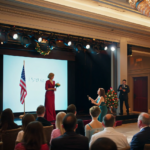
Years later, standing at a podium in front of a hall full of officer candidates, I told a version of that story—not with names, not with small-town specifics, but with the bones intact.
“I’m not here because I’ve never been underestimated,” I said, scanning the faces upturned toward me. “I’m here because I learned that other people’s misjudgments don’t get the final say. I had a father who loved to make a room laugh at my expense. I had a town that measured worth in touchdowns and prom courts. I had my own doubts, loud as any crowd.”
I let the silence settle for a beat.
“And one night,” I continued, “I stood in a hall where those same people saw me as I had been all along. Not because I shouted them down. Not because I listed my medals like receipts. But because I stood still in who I was while the truth caught up to the room.”
I saw recognition in their eyes. Different details. Same ache.
“He called me a screw-up,” I told them. “The world calls me admiral. Neither of those titles defines me completely. What does is the work in between—the nights in the desert, the storms at sea, the conversations where I chose honesty over comfort.”
When I finished, they filed out in twos and threes, murmuring, making their own private promises about who they’d be when the world tried to hand them a smaller story.
And somewhere, in a small town in Texas, a football field’s lights flicked on for another Friday night. Kids ran plays. Parents filled bleachers. Men told stories. I knew some of those stories would still carry barbs. Change is slow in places where tradition feels like oxygen.
But I also knew there would be girls and boys in those stands who’d heard of a hometown admiral, who’d seen a woman walk out of that town and come back standing taller, not smaller. They’d know there was more than one way to win.
So when I say respect is not given, it’s earned—and it can never be taken away once it’s yours—I’m not just talking about titles and salutes. I’m talking about the quiet choices, the crowded rooms, the moments when you hold your ground while the narrative shifts.
If you’ve ever sat at a table and listened to someone turn your life into a joke, if you’ve ever been told you’re the screw-up, the afterthought, the one who’ll come crawling back, hear me: their scoreboard is not the final one.
You get to write your own stats.
And one day, maybe in a church hall or a hospital room or a quiet kitchen at midnight, the truth of who you are will stand up, clear its throat, and say, Wait.
When it does, let the moment hear itself.
Stand there.
Breathe.
You don’t have to roar. Sometimes, the most powerful revenge is the life you built while they were busy laughing.
When did you let truth—not anger—turn a family humiliation into respect, and what changed for you afterward?
News
At My Brother’s Wedding, Dad Mocked Me “Just a Soldier” — Then an SUV Pulled Up “President Awaits You”. What happens w
At My Brother’s Wedding, Dad Mocked Me “Just a Soldier” — Then an SUV Pulled Up “President Awaits You” What…
When I Came Home from NATO Duty, I Didn’t Expect My Own Father to Drag Me Into Court. He stood b
When I Came Home from NATO Duty, I Didn’t Expect My Own Father to Drag Me Into Court He stood…
My Younger Brother Texted In The Group: “Don’t Come To The Weekend Barbecue. My New Wife Says You’ll Ruin The Whole Party.” My Parents Spammed Likes. I Just Replied: “Understood.” The Next Morning, When My Brother And His Wife Walked Into My Office And Saw Me…
My younger brother texted: “Don’t come to the BBQ.” Until my brother and wife step into my office… When your…
At the family party, my sister called me “the family failure.” Her boss only smiled and said… Skyler, the golden c
At the family party, my sister called me “the family failure.” Her boss only smiled and said… A shocking family…
At The Inheritance Meeting, My Daughter-In-Law Shouted Proudly: ‘My Father-In-Law Left Us The Seven Miami Houses. Ella, Too Bad, You Only Got The Shed In Mississippi.’ Everyone Applauded. I Just Smiled And Said: ‘Son… You Really Don’t
During the Inheritance Split My Daughter-In-Law Celebrated But I Smiled: “Son, You Still Don’t Know?” The words hit me like…
My Dad Said: “STOP TREATMENT — WE WON’T APPROVE THE SURGERY.” He Signed a DNR to Take Control of My $15M Inheritance
Some fathers protect their daughters—mine tried to sign my life away. A DNR, a $15M trust, and a coma became…
End of content
No more pages to load