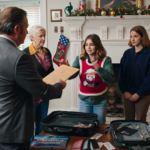
Family Lied To Me They Cancelled Christmas So That I Wouldn’t Go. When They Called Me Next Day…
“Catherine, everyone’s staying home due to the ice storm. Christmas dinner is cancelled. Stay safe,” my mom’s text read.
I stared at my phone in disappointment but understood. After all, Nashville winters can be dangerous. What I didn’t know then was that this simple text would unravel years of family deception and change my life forever.
My my name is Catherine, and I’m 32. I’m an accountant, and until last Christmas I thought I was just the different one in my family—the quiet, career‑focused sister who didn’t quite fit in with their loud social gatherings. My younger sister Anna was always the star, the one who could do no wrong in our parents’ eyes.
That Christmas morning, I settled in for a quiet day alone. I made myself hot chocolate, turned on some holiday movies, and tried to stay positive despite the loneliness. Around 3 p.m., I was scrolling through Instagram when my heart stopped. There it was—a fresh post from my cousin Nina: “Perfect family Christmas at Anna’s. So blessed to have everyone together. Family traditions. Christmas dinner.”
The photo showed my entire family—Mom, Dad, aunts, uncles, cousins, even my grandmother—gathered around Anna’s elegant dining table. They were all smiling, wearing festive sweaters, clearly enjoying the celebration they had deliberately excluded me from. Through the windows in their photos I could see clear, sunny skies. There was no ice storm. There never had been.
My hands shook as I scrolled through more photos. There was my dad carving the turkey, my mom arranging her signature Christmas cookies, my little nieces and nephews opening presents. The ice storm excuse was a complete fabrication, a convenient lie to avoid telling me I wasn’t welcome at their perfect family gathering.
I felt sick to my stomach as the truth sank in. All those times they’d told me events were cancelled, all those intimate gatherings I hadn’t been invited to—how many of them had actually happened without me? How long had they been coordinating behind my back to exclude me while pretending to care?
The next morning, my phone rang. It was my mother, acting as if nothing had happened. “Hi, honey, hope you had a nice quiet Christmas. We missed you.”
The casual cruelty of her words made my hands clench into fists. This was the moment everything would change, though I didn’t know it yet.
Growing up in our family home, I always tried to be the good daughter. I helped my mom with chores, maintained straight A’s in school, and even gave up my dream of attending art school to pursue accounting because my parents insisted it was more practical. Meanwhile, my sister Anna could do whatever she wanted. When she dropped out of college to become a yoga instructor, my parents called her brave. When I worked overtime to help them pay off their mortgage, they barely acknowledged it.
I remember one particular incident that should have opened my eyes sooner. Three years ago, when my dad needed surgery, I took three weeks off work to help care for him. I cooked, cleaned, drove him to appointments, and managed his medications. Anna showed up once, stayed for an hour taking selfies with him for social media, then left claiming she had a yoga retreat. Yet somehow, in my parents’ retelling of that time, Anna was the supportive daughter while I was just doing the bare minimum.
My extended family wasn’t much better. At every gathering, my aunts would praise Anna’s free spirit while asking me when I was going to loosen up and learn to enjoy life. My accomplishments at work were dismissed as boring, while Anna’s latest adventure—teaching yoga in Bali—was the talk of every family dinner. I kept telling myself it didn’t matter, that family was family and they loved me in their own way.
Even last month, I spent hours helping my mom prepare for Thanksgiving only to hear her tell everyone that Anna had done all the work while I just sat around. I swallowed my hurt and kept quiet—just like always. When Anna announced she’d be hosting Christmas this year, I offered to help with the planning and cooking. She brushed me off, saying she wanted it to be perfect. I should have seen the signs then, but I was still trying so hard to believe in the fiction of our happy family.
The truth is I’ve spent my entire life trying to earn their approval—making excuses for their behavior and pretending not to notice when they excluded me from spontaneous family gatherings that everyone else somehow knew about. I convinced myself that if I just tried harder, worked longer, gave more, they would finally see me as worthy of being part of their perfect family picture.
“Hi, honey, hope you had a nice quiet Christmas. We missed you.” My mother’s fake cheerfulness made my stomach turn. I gripped my phone tighter, staring at the Instagram photos still open on my laptop, evidence of their perfect family gathering that I’d been deliberately excluded from.
“Really?” I managed to keep my voice steady. “Because Nina’s social media posts show everyone had a wonderful time at Anna’s house. Everyone except me.”
The silence on the other end was deafening. I could almost see my mother’s face—that familiar expression when she’s been caught in a lie but is already formulating excuses.
“Oh… well,” she stammered, “Anna organized it last minute, and you know how you can be at gatherings—always so quiet and making everyone uncomfortable. We just—”
“Thought what?” I pressed. “That it would be better to lie to me, to make me spend Christmas alone while pretending everyone else was doing the same?”
“Don’t be so dramatic,” my mother sighed. “We were trying to avoid any awkwardness. You know how Anna wanted everything to be perfect.”
That’s when it hit me. All the past cancelled events, the times plans had mysteriously fallen through, the family photos I’d see later on social media—this wasn’t a one‑time thing. This was a pattern.
“How many times?” I asked, my voice barely a whisper. “How many other gatherings have you lied to me about?”
Another telling silence. Then: “Catherine, you’re being oversensitive. This is exactly—”
“Exactly why what?” I cut her off. “Why you exclude me? Why you pretend I don’t exist unless you need something? Why Anna gets to be the perfect daughter while I’m treated like an inconvenience?”
“That’s not fair,” my mother protested. “We love you both equally. It’s just… Anna puts in the effort to be part of the family. You’re always so busy with work.”
I laughed bitterly. “Busy with work? You mean busy helping pay your mortgage? Busy taking care of Dad after his surgery? That kind of busy?”
“Listen,” my mother’s voice turned stern, “if you’re going to be like this, maybe it’s better if we give each other some space. Call me when you’re ready to be reasonable.”
The line went dead. I sat there staring at my phone as 32 years of memories suddenly shifted into sharp, painful focus. Every excuse, every dismissal, every “misunderstanding”—it had all been intentional. I wasn’t the problem. I never had been.
That was the moment I stopped making excuses for them, the moment I finally saw the truth: I didn’t have a family. I had people who shared my DNA but treated me like an afterthought.
After that phone call, something inside me snapped. I was done being the family doormat. I opened my laptop and started writing an email to my entire family—parents, sister, aunts, uncles, cousins—everyone who had been at that Christmas dinner. My fingers flew across the keyboard as years of pent‑up feelings poured out.
“I’ve seen the photos from Christmas dinner,” I wrote. “The dinner I was told was cancelled due to an imaginary ice storm. I want you all to know exactly what you’ve done. You didn’t just exclude me from a family gathering—you coordinated an elaborate lie to make me spend Christmas alone.”
I attached screenshots of my mom’s “Stay home, everyone’s doing the same” text messages alongside the social media photos showing their celebration. I hit send before I could second‑guess myself.
The responses started flooding in almost immediately. My Aunt Marie claimed they “forgot” to tell me the plans had changed. Uncle Robert suggested I was overreacting. My cousin Nina—whose posts had exposed their lie—quickly deleted all the Christmas photos and sent me a message saying I was causing unnecessary drama.
Then came Anna’s response—a long, condescending email about how I never make an effort at family events and how she just wanted one perfect holiday. She even had the audacity to suggest that excluding me was for my own good because I obviously don’t enjoy family gatherings.
But it was my parents’ reaction that truly showed me who they were. Instead of apologizing, they went on the offensive. My mother started calling mutual family friends, spinning a story about how I was having some sort of breakdown. My father sent me a stern email about respecting family privacy and how airing our dirty laundry was unacceptable.
“You’ve really done it now,” Anna texted me. “Mom’s crying. Everyone’s upset, and it’s all because you couldn’t just accept that maybe you’re the problem. This is exactly why we didn’t want you at Christmas.”
I felt like I was living in an alternate reality. They had deliberately excluded and lied to me—yet somehow I was the villain for exposing their behavior. The more I stood up for myself, the more they twisted the narrative. When I refused to back down and apologize, they escalated.
My mother started showing up at my workplace unannounced, causing scenes in the lobby. Anna began posting vague social media updates about “toxic people” and “choosing peace over family.” My father threatened to cut me out of his will if I didn’t “get in line.” Instead of intimidating me, their actions only confirmed what I had finally realized: this wasn’t a loving family protecting itself from a difficult member. This was a toxic system desperately trying to maintain control over someone who had finally stopped playing by their rules.
I decided then that I needed to do more than just expose their lies. I needed to completely break free from their manipulation. Little did they know, I was already forming a plan that would show them exactly what happens when you push away the one person who had always been there for them.
A week after my confrontational email, I received an unexpected message from Rachel—an old family friend who had retired from managing my parents’ finances years ago.
“Catherine, I’ve been seeing what’s happening with your family on social media. There’s something you need to know. Can we meet?”
I agreed to meet her at a quiet café downtown. When I arrived, Rachel looked nervous, clutching a manila envelope.
“I’ve been carrying the guilt of this for years,” she said, sliding the envelope across the table. “Your father swore me to secrecy, but after seeing how they’re treating you now, I can’t stay quiet anymore.”
Inside the envelope were bank statements and legal documents dating back fifteen years. As I read through them, my hands began to shake. According to these records, my grandfather had left a significant inheritance specifically for my education and future—nearly $300,000. Money I had never known about.
“Your father was the trustee,” Rachel explained quietly. “He was supposed to give you access when you turned twenty‑five. Instead, he transferred everything to Anna’s accounts—using it to fund her lifestyle and her failed business ventures.”
The revelation hit me like a physical blow. All those years I’d worked overtime to pay for my accounting degree, the student loans I was still paying off, the times I’d helped them with their mortgage—they had been sitting on my inheritance the whole time, spending it on Anna.
“There’s more,” Rachel continued. “Your grandfather also left properties that were meant to be split equally between you and Anna. Your parents sold them all using your power of attorney they had you sign when you were eighteen. Remember when they said it was for emergency medical decisions?”
I felt sick. The document I’d trustingly signed had given them complete control over my financial interests. They had systematically robbed me of my inheritance while watching me struggle, accepting my help with their expenses, and making me feel guilty for not contributing enough to the family.
Even worse, the statements showed regular transfers to Anna labeled as “business investments”—money taken from my inheritance to fund her yoga studios, her retreats in Bali, all those adventures they’d praised her for while criticizing my “boring” accounting career.
“Why tell me now?” I asked Rachel, my voice barely steady.
“Because I saw your mother’s social media posts painting you as unstable and ungrateful,” she said. “They’re trying to discredit you before you can discover the truth. They’ve been embezzling from you for years, Catherine. What they’ve done isn’t just morally wrong—it’s illegal.”
Everything suddenly made horrible sense—their escalating attempts to paint me as unreasonable, the threats to cut me out of the will when they’d already stolen my inheritance, their desperate need to maintain the narrative that Anna was the successful sister while I was the difficult one. I carefully packed the documents back into the envelope, my mind racing.
“Thank you, Rachel. I know exactly what I need to do now.”
This wasn’t just about a ruined Christmas anymore. This was about years of calculated deception and theft—and I, an accountant with years of experience tracking financial fraud, was uniquely qualified to make them face the consequences.
With Rachel’s documents in hand, I spent the next week meticulously building my case. As an accountant, I knew exactly how to trace the money trail—every unauthorized transfer, every misused power of attorney, every fraudulent document. I tracked it all. I also hired Sarah Chen, a lawyer specializing in estate fraud, to review everything.
“This is a clear case of financial exploitation,” Sarah confirmed. “We can file criminal charges if you want to pursue that route.”
I considered my options carefully. A criminal case would destroy my family’s reputation, but they had already destroyed our relationship. Still, I decided to give them one last chance to make things right. I emailed my parents and Anna, requesting a family meeting to resolve our differences. They jumped at the chance—probably thinking they could manipulate me back into line. We agreed to meet at my apartment the following Saturday.
The morning of the meeting, I arranged three folders on my dining table—one for each of them. Inside each folder was a complete record of their fraud, along with a letter from my lawyer outlining their options: either transfer all remaining funds back to me and sign a confession, or face criminal charges.
They arrived looking smug, clearly expecting me to apologize. My mother started in immediately. “Katherine, we’re so glad you’ve come to your senses—”
I cut her off by sliding the folders across the table. “Before anyone says another word, I suggest you read these.”
The color drained from my father’s face as he scanned the documents. Anna’s hands started shaking. My mother tried to maintain control. “This is ridiculous. You’re trying to blackmail your own family.”
“Blackmail?” I laughed coldly. “No. I’m giving you a choice: return my inheritance with interest and admit what you did—or I’ll let the police handle it. Rachel’s already agreed to testify.”
“Rachel had no right—” my father started.
“You had no right,” I interrupted. “You stole from me for years while watching me struggle. You used my power of attorney to sell property that was rightfully mine. You funded Anna’s lifestyle with my inheritance.”
Anna burst into tears. “I didn’t know. They told me the money was from their savings.”
“Don’t lie,” I replied calmly. “The transfers went directly to your accounts. You knew exactly what you were doing.”
My mother tried a different approach. “Think about what this will do to the family. What will people say?”
“You should have thought about that before stealing hundreds of thousands of dollars from your own daughter,” I responded. “You have forty‑eight hours to decide. Either sign the confession and arrange the transfers, or I’m going to the police.”
They left in a panic—my father practically dragging my hysterical mother and sister out the door. Within hours, the family group chat exploded with messages from relatives, all taking their side, of course. But I remained calm. I had truth and evidence on my side.
“The ball’s in their court now,” I told Sarah over the phone that evening, “but something tells me they’re not going to make the right choice.”
I was ready for whatever came next. After all, they had already given me the greatest gift: freedom from their manipulation.
The forty‑eight‑hour deadline came and went. Just as I expected, my family chose pride over honesty. They didn’t sign the confession or arrange any transfers. Instead, they tried to destroy evidence—closing accounts, shredding documents, and even attempting to pressure Rachel into retracting her statement. What they didn’t know was that I had already submitted everything to the authorities.
The morning after the deadline passed, I formally filed charges. By afternoon, the police were at their doors with search warrants. I watched from my office as the story unfolded. My father was escorted from his workplace in handcuffs. Anna’s yoga studio was seized as an asset purchased with stolen funds. My mother’s carefully curated social media facade crumbled as she was arrested during one of her charity committee meetings.
The family group chat exploded again—but this time with a different tone. Relatives who had dismissed my claims were suddenly quiet as the evidence became public record. The local newspaper ran a story about the prominent family’s fall from grace. All their years of maintaining perfect appearances ended in a single day.
My phone buzzed with a text from Rachel. “You did the right thing. Your grandfather would be proud.”
She was right. This wasn’t about revenge anymore. It was about justice.
As I watched my family’s carefully constructed lies unravel, I felt no joy—only relief. The truth was finally out, and I was finally free.
One year later, I sat in my new home in Denver watching snow fall outside my window. The court case had concluded months ago. My father and mother both took plea deals, agreeing to pay restitution. Anna’s yoga empire had crumbled, and she’d finally gotten a real job as a receptionist. The perfect family image they’d worked so hard to maintain was gone forever.
Most of the relatives who had enabled their behavior for years stopped speaking to me. But surprisingly, I found I didn’t miss them. Instead, I had built a new support system—genuine friends who valued honesty over appearances, colleagues who respected my work ethic, and even a few distant cousins who reached out to apologize for their past behavior.
Rachel came to visit me last week. Over coffee, she handed me an old photo album she’d found while cleaning out her office. Inside were pictures of my grandfather and me—moments I’d almost forgotten. In one photo, he was teaching me to fish, both of us laughing at something long forgotten.
“He always said you were the strong one,” Rachel told me. “He knew they favored Anna, but he believed you would overcome it.”
I touched the photo gently, remembering his kind smile. He had tried to protect my future through that inheritance, and though it had taken years, his final gift had ultimately given me something more valuable than money—the courage to stand up for myself and the freedom to build a life on my own terms.
Sometimes the best revenge isn’t about getting even. It’s about getting free.
Part 2 — After the Headline Fades
The headline did its damage in a day. By the second morning, the paper with my family’s fall from grace wrapped someone else’s cinnamon roll, and the city moved on. I didn’t. The word “restitution” had entered my life like weather—cold, unavoidable, and something to dress for.
I kept everything the way any good accountant does when the temperature drops: in labeled folders, cross‑indexed, with a backup drive sitting on a high shelf like a shepherd. My lawyer, Sarah Chen, promised me that the system moves slowly but remembers. “It’s not a sprint,” she said over the speakerphone while I made eggs I didn’t taste. “It’s scaffolding. We build, we climb, and every so often we stop to check that it holds.”
That week, the district attorney’s office called to schedule my victim impact statement. The woman on the line, Keisha, sounded like she could read a room without walking into it. “You can speak in person or submit in writing,” she said. “Either way, use plain words. Juries understand plain words.”
“I’m an accountant,” I said. “That’s what I do.”
She laughed. “Then you’ll be fine.”
I wrote at the dining table I had bought with the first honest money that ever felt like mine. The lamp pooled yellow light on paper that had learned to keep secrets. It wasn’t complicated. I wrote about Christmas, the fake storm, the text, the Instagram photos with captions that lied. I wrote about the envelope Rachel slid across a café table, about the trust my grandfather built and my father dismantled. I wrote about hours of overtime and student loans and groceries in my trunk while the inheritance intended for me paid for a retreat on a beach whose name I couldn’t pronounce. I wrote about choosing accounting because my parents said art was impractical, not knowing that numbers would become my railings.
Keisha called back the next day. “Plain,” she said. “Good. Bring a copy for the record.”
At night, the house was quieter than it should have been. I bought a radio that played old jazz because it sounded like memory without the obligation. I also bought a second deadbolt, because safety is a verb.
Rachel came over with ginger tea and the kind of apology that makes you want to forgive the piece of the world that hurt you on purpose. “I’m sorry it took me so long,” she said, straightening a stack of coasters that didn’t need straightening. “I told myself I was protecting you. It wasn’t protection. It was fear.”
“You put the truth in an envelope and pushed it across a table,” I said. “That counts.”
She stared down at her hands. “I kept thinking of your grandfather. He set that trust up because he knew how your parents chose. He hoped paper would teach them what love hadn’t.”
“Paper did,” I said. “Eventually.”
The first time I saw my parents after the arrests was a week later at the DA’s office. It wasn’t a confrontation; it was logistics. A hearing, a calendar, a hallway with fluorescent lights and chairs that had surrendered any hope of being comfortable. My father looked smaller. Pride is a suit that fits worse after a fall. My mother’s hair was pulled back tight, the way women wear it when they are trying to hold their faces in place.
She didn’t speak to me in the hall. She watched me, and I watched the water fountain, and nobody became anyone else.
The arraignment that followed was five minutes of words I’d read in textbooks and never expected to hear with my name attached: embezzlement, exploitation, misuse of power of attorney, fraud. Anna didn’t look at me either, but she cut a figure in the second row—tan faded, posture wilted. Her lawyer whispered at her shoulder and she nodded like someone discovering that nodding is not a plan.
Afterward, I didn’t go back to work. Numbers would wait. I walked three blocks until I found a bench that tolerated grief. Nashville sang traffic around me; I listened to cars instead of my own blood. I had no script for a life where the thing that freed me also filled me with a quiet, exact sadness. The city kept moving anyway.
Sarah called. “You did well,” she said.
“I said nothing,” I answered.
“Sometimes that’s the point,” she said. “You stopped performing for people who taught you that love lives in their applause.”
I went home and opened a sketchbook for the first time since I was seventeen. It had lived at the bottom of a box like a breath someone had put there on purpose. I sharpened a pencil and drew a square. Then I drew another inside it. I kept drawing squares until it looked like a maze that led back to itself. It wasn’t art. It was a confession: I still wanted the thing I’d denied because the people I’d trusted called it impractical. I set the book on the coffee table where it could accuse me until I answered it.
Two days later, Anna texted for the first time since the arrests. The message was short. “Please meet.” It came from a number I didn’t recognize, which meant she’d burned through phones like excuses. I stared at the text until the dog across the street finished drinking from a puddle and shook itself into weather.
I said yes and chose a coffee shop with loud milk steamers and no corners for secrets. She was already there when I arrived, curls collected in a messy knot, sweater that had once matched a life and now didn’t. Her hands were clean; I noticed because I wanted to. Some people reserve their kindnesses for later. I am not some people anymore.
“Catherine,” she said, and started crying the kind of tears that expect to be useful.
“Don’t perform,” I said. It came out without malice. “Say what you need to say and let it cost what it costs.”
She took a breath that belonged in a yoga class and failed to make meaning. “I didn’t know everything,” she began. “I knew some. I thought it was… pooled money. Family money. They told me Grandpa left things to the family. I like to think I believed that.”
“The transfers had my name on them,” I said. “The statements had dates.”
“I know,” she said, quieter. “I know. I knew enough to ask fewer questions.”
We waited for the foam on her latte to choose a shape and fail. “I’m getting a plea deal,” she said finally. “The studio goes. The accounts go. I take the job the lawyer’s friend found me. I will staple forms in an office with beige carpet. I will go to a meeting twice a week where they tell me my brain is addicted to applause and spending. I will do it. I… don’t know how to be useful without being adored.”
“Start by not asking me to adore you,” I said.
Her laugh wasn’t a laugh. “I know. I’m sorry. That’s why I texted. I owe you money I can’t pay yet and apologies I can’t spend. I wanted to say I’m going to work at learning. That’s it. Not for a performance. Not for Christmas.”
“Good,” I said. “Because Christmas is fully booked.” I stood. “My conditions haven’t changed. No money. No stories about me written by anyone but me. If you show me your work a year from now, I’ll read it.”
“Okay,” she said, and let me leave without trying to make it cinematic.
The DA offered plea agreements to my parents a month later. Restitution schedule, probation terms, community service at organizations that would accept contrition spilled into spreadsheets. The DA’s office asked if I wanted to speak at the hearing where the judge would nod and the court reporter would follow like a metronome.
“I do,” I said.
In court, I carried paper like armor. I didn’t read the whole statement. I read one line. “You built a life on an inheritance that wasn’t yours and told me to be grateful for the walls it built around me.” I looked at the judge when I said it, because I didn’t owe my parents my face.
The judge nodded and looked at my parents the way you look at a fence that fell over the wrong lawn. She accepted the plea, banged the gavel like a sentence with a period, and told them to report to a counseling program for financial offenders if they wanted even one entry in the ledger to accrue interest in mercy.
On the sidewalk outside, a man I barely recognized as Uncle Robert walked past and said, “You didn’t have to do this.” I let him keep walking with his sentence, because some people only learn math when the numbers become public.
I went back to work. My manager, Elise, called me into a room with bad art and good lighting. “I’m giving you the new audit,” she said. “You seem to like asking the questions people are tired of hearing, and you do it without raising your voice. That’s a skill we don’t teach.”
After work, I went to a community center off Nolensville Pike because I wanted to sit in a room where nobody had any reason to lie to me. I volunteered for their Tuesday night budgeting class, and the director, a woman named Joy who wore a lanyard like a throne, said, “So you can do ledgers. Can you do boiled hot dogs?”
“I can do both,” I said. “That’s what families are for.”
She cackled. “All right, Catherine. Welcome to Tuesday.”
The first night, I learned the names of mothers and grandmothers and women who were tired of paying for men who called them “babe” and then called their debt “ours.” I taught a fifteen‑year‑old how to open a custodial savings account because he’d been hiding tips in a shoebox and needed a better vault. We printed a flier that said “Receipts Are a Love Language” and taped it to a bulletin board that sagged like every system we were trying to hold up anyway.
Some nights after class, Joy and I sat in the alley back by the dumpster that refused to make anyone feel small. She smoked exactly one cigarette and told me about the time her sister sold a car that wasn’t hers out from under her and how she forgave it by forgiving the urgency, not the theft. “People try to spend their way out of loneliness,” she said. “The receipts keep coming. So we offer a different kind of proof.”
I started drawing again the week the first restitution payment posted. It wasn’t about the money. It was about the confirmation number. I bought charcoal and a stack of cheap paper and drew the underside of bridges—girders and bolts, the way strength looks from below. The sketchbook filled with angles and dark smudges and lines that kept wanting to become something softer and did not. I taped one drawing above the sink so I would have to look at it while I made coffee. It looked like an apology I owed to a teenager I had been taught to correct.
My mother wrote for the first time in six months in a card with hydrangeas that seemed to know what they were doing there. “Community service is humbling,” she scrawled. “I stock shelves at the food pantry on Wednesdays. Yesterday a girl picked cereal and called me ma’am, and I wanted to cry because I used to think I knew what people needed.” The rest of the note was about weather, which is a sentence older women write when they want to say they love you without pretending they earn the right.
I wrote back one line: “Keep stacking.”
My father’s letter came later. The handwriting had learned a tremor. “I am training twenty‑year‑olds to not crush their feet with pallets,” he wrote. “They call me Mr. Donovan and ask if I’ll come in on Saturdays because I am steady. I thought steadiness was an insult. I didn’t understand it’s a currency.” I folded the letter and put it in the folder labeled “Aftermath” because the whole point of a ledger is to keep track of what changes hands without losing the people in the numbers.
Winter rolled into Nashville like a rumor you decide to repeat because you’re bored. I hung lights I didn’t need and invited people who did not share my DNA for a dinner that deliberately had nothing to do with a calendar. I cooked roast chicken because I could, and Joy brought a salad with government cheese diced into perfect rebellion. Elise came with her wife and a pie she apologized for twice and then forgot to apologize for at all. We sat in a circle that didn’t ask for a prayer and said thanks with our forks.
I didn’t check Instagram once that night. I didn’t stand at the sink searching words like a child with a flashlight in the yard. We ate and then we washed dishes and nobody asked me whether I was dating or whether I planned on it. The next morning, I put a photo of the table on my fridge and titled it “Proof.”
Spring brought the preliminary restitution ledger from the court, stamped and clean. It looked like victory and sounded like work. Sarah warned me there would be months when the numbers arrived late and some when they did not arrive at all. “You can be steady without being a doormat,” she said. “Just call me before you call anyone else.”
Other things grew. The Tuesday class, for one. Word travels quicker when there’s soup and no shame. We added a second night and a childcare room that smelled like crayons and bananas. A woman named Marisela showed up with a three‑year‑old and a five‑year‑old and a ledger she had kept in a spiral notebook with stickers. “I don’t like banks,” she said without apology. “But I like numbers.” We talked about envelopes and goals and how to say no to people who call you at midnight using words that make you feel like a door. She came back the next week with a coffee cake and a chart she’d drawn that made my accountant heart purr.
Anna sent a photo of a sandwich on day ninety of her program. It wasn’t the one I expected. Rye, turkey, mustard that didn’t pretend, a lettuce leaf that had decided to be bright. Underneath she wrote, “Made by me. Paid by me. Not a performance.” I printed it and pinned it to my cork board next to a note from Joy that read, “A budget is a boundary with a job.”
I saw Anna in person at the courthouse elevator a month later. She wore scrubs, which meant the receptionist job had become hospital adjacent. Her hair was pulled back in the style of people who have nothing left to prove except that they will show up again tomorrow. “I’m on Step Nine,” she said when we ended up side by side. “Making amends.”
“Good,” I said.
“This is not the amends,” she added quickly. “I know you don’t owe me the work of receiving it yet. I just wanted to say that I made a payment on the restitution,” she looked down at her shoes, “and the money was not a favor. It was a bill.”
“That’s how bills work,” I said, and felt something inside me sit down.
At the one‑year mark, the court date no longer lived on my phone like a deadline. It sat in my memory like a rail. I took a day off work and drove to a state park an hour outside the city where the trees take their time and ask you to as well. I brought my sketchbook and a thermos and the envelope of old photos Rachel had given me. I drew my grandfather’s hands—big, practical, soft in the places that mattered—and wrote his name underneath like it belonged to both of us. I wrote, “He tried,” and then crossed it out and wrote, “He did.”
The next week, I bought a small bungalow with a front porch because interest rates had decided to be kind for once and I had learned to stop asking permission from ghosts. The house had floors that creaked in ways that suggested they were on my side and a kitchen where the light behaved itself in the afternoon. My realtor, a woman who could tell measurements by looking, said, “Do you have any requests for the contract addendum?”
“Yes,” I said. “Leave the old mailbox.” It was dented and had a sticker that said NO CIRCULARS PLEASE. I didn’t want circulars, either.
The night I moved in, I ordered a pizza with extra olives and set a plate for Rachel because she knew where the first story left off and this one began. She toasted with ginger beer. “To the quiet,” she said.
“To the receipts,” I answered, and we clinked bottles like proof.
Summer came back, because that’s what it does. The Tuesday class had to bring in more folding chairs, and Joy said she’d start charging admission in casseroles. My mother wrote again, a shorter note this time. “I stacked forty boxes in an hour,” she wrote, like a medal, like a confession. “I learned the names of the women who come for diapers because names are what you give when you see a person.” She enclosed a photo of daisies in a jar. She did not ask for anything. I sent back a photo of the old mailbox with the dent and wrote, “We still don’t do circulars.” She texted a laugh emoji that was somehow the most honest sentence we’d exchanged in a decade.
By fall, I’d started a weekend workshop at the community center: “Art for People Who Were Told It Was Impractical.” We bought cheap paper and nice pencils and scheduled it in a room where the sun showed up without RSVP. The first day, a woman with three kids drew the outline of a front porch and said, “I don’t know where the door goes.” We talked about doors for an hour and none of it had anything to do with houses.
Elise brought the audit to a close and sent a memo to the board that used the phrase “clean opinion” which in my line of work is better than roses. She took me to lunch at a place that calls salad bowls “boats” and said, “I want you to lead a new initiative—financial literacy for our entry‑level staff. I don’t want interns learning from Reddit. I want them learning from you.”
“Can I use soup?” I asked.
“You can use soup,” she said, and I started drafting a syllabus on a napkin.
In November, the DA’s office sent a notice: the restitution schedule was being extended due to “hardship.” I didn’t throw the letter away. I put it in the Aftermath folder and went for a walk until my breath stopped trying to make a point. When I got back, I wrote a new line in my ledger: “What I am owed is not the same as what I am owed today.” I highlighted it in blue and shut the folder and made dinner. The pasta boiled, the sauce thickened, and nobody argued.
On the second Christmas after the fake storm, I woke to an actual one. Ice slicked the porch; the ASL for “careful” would have been useful if anyone were there to see me do it. I made hot chocolate, turned on a movie that didn’t ask anything of me, and let the quiet be a room I had paid for in money and in years.
Around noon, my phone buzzed. A video from the community center: Joy wearing a Santa hat crooked like a joke, the Tuesday group singing off‑key and on purpose. They panned the camera to a folding table topped with casseroles and a handwritten sign: “EVERYONE EATS—INCLUDING THE TEACHER.” I cried a little, the way you do when the weather finally matches the story.
At 3 p.m., I answered a call from a number I hadn’t saved because sometimes you don’t save a thing until it earns a place. My father’s voice. “We’re… we’re staying home,” he said, because ice, because finally, truth. “Your mother made soup.” He cleared his throat and added, “I’m learning to be proud of the kinds of things that don’t get applause.”
“Good,” I said, looking at the window where the world held its breath. “Me too.”
We didn’t say “Merry Christmas.” We didn’t say “I love you.” We said, “Stay warm.” It was exactly enough.
The following spring, I got a call from a local reporter who’d covered the arrests the year before. “We’re doing a follow‑up on restitution enforcement statewide,” she said. “Would you speak on background?”
“Only if you include the part where the system works better for people who never have to use it,” I said.
She laughed. “You should be the one writing this.”
“I am,” I said, and hung up and went to Tuesday and boiled hot dogs and taught a boy how to enter his tips in a spreadsheet because math is a language he already speaks; he just didn’t know it could be used to say ‘enough.’
By the time the third year rolled around, the bungalow needed a new roof, which felt poetic in a way that doesn’t make a good poem. I wrote the check. I didn’t ask anyone to notice. The contractor sent a photo of the shingles like proof; I filed it under a folder labeled “Shelter,” because that’s what money is for when you tell it what to do.
Anna sent a picture of her first apartment without roommates—small, tidy, a fern doing its level best in a window, a coffee table she said she bought secondhand with a story included in the price. “I made rent today,” she wrote. “All by myself.” I sent back a thumbs‑up and nothing more, because sometimes love is letting a sentence be a sentence and not an opening for a speech.
My mother mailed a recipe card in my grandfather’s handwriting, which she had found in a box she swore had never been opened. “Cornbread,” it read, and under that, “Stir until it feels right.” I made it that night and ate it warm with butter and a silence that did not ache.
If I’m being honest in the ledger of the years since, there were still days when I typed “family” into a search bar as if the internet could show me how to spell it the way I’d wanted it spelled. There were still days when the envelope from the court contained a number smaller than the sentence it was supposed to pay for. There were still nights when I woke at 2 a.m. and opened my sketchbook and drew the underside of a bridge and whispered, “Hold.”
But there were more days when the mail held a card that said “thank you for Tuesday,” and a note from a teenager with a bank account and a plan, and a text from Joy that read, “We got a grant. Soup budget—doubled.” There were more nights when I ate at my table with people who learned my name without using it against me. There were more mornings when the house greeted me like a thing I had chosen on purpose and not a thing that had happened to me without my consent.
On a June afternoon that smelled like cut grass and forgiveness, I sat on the porch with my sketchbook and finally drew my grandfather’s face. I used the softest charcoal and took my time on the lines around his eyes, the ones that meant he’d laughed more than he’d wanted to admit. When I finished, I wrote beneath it: “Sometimes the best revenge isn’t about getting even. It’s about getting free.” Then I crossed out “revenge” and wrote “story.”
I taped the drawing above the mantle, next to a photo from the Tuesday class where we were all holding up our first bank deposit slips like diplomas. The room smelled like basil and ink and something else I couldn’t name that felt exactly like home.
This is the part where you expect me to say I forgave everyone and we gathered around a table and laughed like people in a commercial. We didn’t. We learned to send cards. We learned to answer texts with the weather and mean it. We learned to keep the porch light on for the people who came in kindness and to lock the door against the ones who came for the heater.
And on a December evening three years after the fake storm, I stood at my window and watched an actual one ribbon the street in silver. I stirred hot chocolate the way my grandfather would have—slowly, until it felt right—and I said aloud to nobody and to everyone, “Stay warm.”
It was exactly enough.
Part 3 — What We Keep, What We Set Down
By the time spring learned my street name, the city had stopped looking at me like a headline and started looking at me like a person who buys coffee and remembers her punch card. I learned all the ways light lands on my bungalow floor between 7 and 9 a.m. I learned which board on the porch announces me with a friendly creak and which one will betray me to the neighbor’s cat. Mostly, I learned how to be unremarkable on purpose—a pleasure nobody had ever recommended, probably because it doesn’t photograph well.
The restitution ledger started coming on thinner paper, government-stock that wrinkles if you sigh too hard. Keisha at the DA’s office told me not to read the comments section of my own life. “Numbers are shy,” she said. “They perform better if you don’t hover.” So I set auto-deposit, made a folder called AFTER, and built a ritual: open, review, record, close. Then I went for a walk until the brain that loved math remembered it was attached to legs.
On Tuesdays, Joy taught me the economy of boiled hot dogs (“they are generous; they don’t take offense to being ignored for a minute”) and the secret to kid rooms (“fresh crayons are a policy”). We added a whiteboard beneath the “Receipts Are a Love Language” sign and wrote Next Right Things in big letters. People filled it with verbs. Call the bank. Bring back the library book. Sleep eight hours. Tell him no. Tell yourself yes. Eat a piece of fruit. Eat another.
I put a mason jar on the community center counter and labeled it Granddad’s First Deposit Fund. I told the room the truth about a man who had tried to protect a future from the past. Nobody flinched. We started seeding first deposits for kids’ accounts with twenty-dollar bills and strangers’ encouragement. We clapped when papers got signed. We clapped louder when people came back a month later and the number had a friend.
At home, I moved the sketchbook from the coffee table to the kitchen. I drew bridges like some people pray. The undersides, mostly—where bolts and ribs do the work quiet. When I screwed up, I didn’t throw the paper away. I dated it. Joy said I was making a ledger out of lines. “Everything can be accounting if you love it enough,” she said, eating a pickle like she’d invented it.
Anna sent a photo on day 180 of her program: her first utility bill in her name, paid before the date with money she said felt heavy and good in her hand. Under it she wrote, No applause needed. I said nothing for a day, sat with the discomfort of not narrating, then sent a thumbs-up and a sticker of a fern because her apartment had one trying to live. She replied, I watered it today. Look at me doing miracle work. The joke was new, small, and the right size.
A week after that, she asked to meet. “Not amends,” she wrote. “Inventory. I need a witness who won’t let me turn it into theater.” I said yes and chose the church basement where Joy ran the winter coat drive. The floor was clean in the way floors are when they’ve earned it. I made coffee in an old percolator that sounded like a museum exhibit and listened while Anna read names off a paper and told the truth about each one. Landlord, paid back fifty dollars a month. Vendor, apologized for the yoga mats she never paid for, offered community hours. Friend, sent a check and a letter. “I don’t expect reply,” she said, “just receipts.” When she got to my name she folded her paper. “Not ready,” she said. “Not because of you. Because of me. I want to be able to say the sentence without adding any sparkle, and I’m not to that muscle yet.” I nodded, put another cup in front of her, and left the room when she asked for a five-minute cry with no audience. I stood in the hallway and read the community billboard instead: lost dog, found bike, AA Tues/Thurs, Yard Sale Saturday, Free—Box of Buttons. Nashville, transacting the soft economy.
The civil suit from investors in Anna’s studio arrived in a manila envelope with my name spelled right. Sarah took point, as she did. “You’ll be a fact witness,” she said. “You are not the protagonist here and thank God for that.” I told the court the same thing I tell myself when the story tries to get dramatic: keep the verbs clean. They settled before trial. I slept badly anyway.
In May, a reporter asked me to sit on a panel called Dignity in Enforcement. I wore a jacket that made me look like I knew where the microphones go and told a room full of suits that reminders read by humans should be written by them, too. “Stop saying ‘Failure to remit’ to single moms,” I said. “Say ‘We know you’re busy. Here’s the smallest step.’ If the sentence fits in a mouth, it has a better chance in a life.” After, a collections director shook my hand like it might give him a rash and said, “We’ll get sued.” I said, “Great. Change is working.” He did not laugh. The woman beside him did.
I drove to the Smokies that weekend and rented a cabin that had opinions about pine. I hiked a path my grandfather would have loved and sat on a rock that wasn’t trying to be godly about it. I drew a cedar until my hand stopped remembering the gavel. At the overlook, a couple in their seventies shared their oranges. “We saved for this retirement,” the woman said. “And then we learned to deserve it.” That stuck to my ribs all the way back to Nashville.
By June, the Tuesday group had a spin-off on Wednesdays—Neighbor Lines—run by Marisela (now in charge of the babysitter roster and the coffee cake). We partnered with a credit union that answered on the first ring and agreed to put the phone menu option “Talk to a Person” first. The day they changed it, Joy danced a small, uncoordinated victory dance and declared herself Director of Morale. No one contested.
Mom wrote again. “Is it normal,” she asked on a card with ducks, “to be proud of stacking boxes? Last week a woman asked for diapers and I didn’t think about who she wasn’t; I thought about how to get her what she needed. I’m learning to count to ten before I say anything that will cost me later.” I wrote back: Counting is a miracle when you weren’t taught numbers. She sent a photo of violets in a styrofoam cup. The caption read, No more centerpieces, but something like them.
Dad sent a list. He titled it What I Can Fix and then he wrote: pallets; the break room shelf; my tone; the habit where I make a joke when somebody tells the truth. At the bottom, he videotaped himself showing a kid how to lift with his legs and sent it with no commentary, which meant he was practicing the hardest thing I asked of him—no performance.
Cousin Nina (the one with the Instagram caption that tore the curtain) reached out like a person creeping into room they once vandalized. “I deleted for me, not you,” she wrote. “But I want to say okay, you were right to blow the whistle. I found the email where Aunt Pat told me to use the word ‘blessed’ and not to tag you; I read it three times and then I stopped following her.” It wasn’t penance, but it wasn’t nothing.
We held a “Ridiculously Practical Art Class” on Saturdays in the community room, for people told they were impractical. The supplies were cheap and the rules were strict: no apologies, no comparisons, no throwing anything out until you’ve stared at it for five deep breaths. A woman who does nails on Nolensville drew her mother’s hands with such care that the room got quiet like a church nobody was running. A teenager drew a basketball hoop with a net like lace and said, “I’m good at this,” and no one put him in a smaller sentence.
On the anniversary of the fake storm, an actual one barreled in, and the city learned how to slide again. Joy and I opened the community center as a warming room. Dad called at 8 p.m. “Power out,” he said. “Where do we go?” I told him, sent him the address, and an hour later he texted me a photo of him directing men to the coffee urn like he’d been doing it his whole life. Mom sent a picture of the diaper shelf (“stacked to the rafters”). Anna came in on her break and peeled clementines for kids with hands that used to only pose. We did not make a big thing of it. We moved people’s fingers from cold to warm and we put their names on things and we kept the juice from spilling.
Sometimes the mail still bites. One day in September the restitution was late and the number that finally arrived was smaller than the promise. I walked loops around the block until my inhales behaved, then wrote a note to my file: The check is not the apology; the apology is the check. You can keep one and still be owed the other. I closed the folder and made soup. Soup solves nothing but it asks for nothing. That can be salvation.
When the roof needed replacing, I hired a crew that used the word neighbor more than the word client. It cost as much as a short vacation and didn’t look like anything special from the street; it looked like not worrying at 2 a.m. I took a photo for the Shelter folder and filed the paid invoice in a place where receipts go to become ballast. Joy laughed when I told her. “We are all just bringing things to weigh down the wind,” she said. “Might as well label the bags.”
The reporter who’d covered the fall called in October. “We’re doing a piece on restitution enforcement,” she said. “How does it feel a year later?” I said, “Like math with feelings, which is rude.” She laughed. I asked her to spell the part about how systems work better for people who can afford to be patient. She did.
On Thanksgiving, I made cornbread from Granddad’s card—Stir until it feels right—and brought it to Joy’s, which is to say I carried my dead and my living in a Pyrex with potholders. We ate ham because nobody there had cooked it for the wrong reasons. I stood at the sink beside Elise’s wife, rinsing plates, and listened to a child recite the alphabet with a new confidence on “L-M-N-O-P.” Joy raised a glass and said, “To choosing small triumphs on purpose,” and we clinked like that was the law now.
December sent a postcard before it arrived: a crayon drawing from a five-year-old in Tuesday class, a crooked house with a properly giant mailbox. Ms. Catherine’s House, the label read, with hearts floating over the roof like balloons that had gotten the wrong address and stayed anyway. I taped it next to the thermostat and promised to live the room it portrayed.
The third Christmas, I didn’t wait for weather. I bought cocoa that didn’t come with an apology and invited Tuesday and Wednesday to an “Open House (No Speeches).” People brought whatever their pantries could spare; a woman named Hailey showed up with powdered sugar on her face and said, “My cookies are ugly and beloved,” and the room said, “That’s the right recipe.” Midway through, Anna arrived with a tray of rolls she had made from Granddad’s card, proof of someone reading the same handwriting and getting different instructions. She put them on the table and didn’t look at me like what happened next was owed, and I squeezed her elbow and said, “Warm,” and it was exactly enough.
The year closed with a box from Rachel: a second photo album she’d found behind file folders marked ARCHIVE—images of my mother at twenty in a dress that looked like confidence, my father holding a fish with a grin that had not learned to perform yet, Granddad’s note on the back of a picnic picture: Eat when there’s food. Rest when there’s shade. Forgive what makes sense. She sat at my table and we drank ginger beer and I wrote those lines on the inside of my pantry so I could read them with a hand on a bag of flour.
The next year came in ordinary and stayed that way. The Tuesday class moved to a bigger room and the whiteboard got replaced with a cork board because we had more verbs than dry-erase would carry. We made a shelf for first-bank statements and hung them like art. We added Free Tax Prep on Thursdays and I memorized the part of the Earned Income Credit that makes a person sit down with relief. We hired April for a stipend to keep the babysitting list honest and the snack table blessed. Joy used a grant to buy industrial warmers for soup and declared it community infrastructure. I nodded like a city planner for a town that lived inside a single building.
In March, a small grant from the credit union arrived with a note: We like your sentences. Please keep writing them into paper. We used it to print little booklets called “Receipts,” fourteen pages of simple money sentences and blank lines. People slid them into purses like an oath. We kept a stack at the front desk and wrote TAKE TWO on the sign because sometimes you need a spare.
Mom’s handwriting improved. That was the first thing I noticed in her Easter card. “I volunteer Mondays now,” she wrote. “In the morning I resolve to carry only what I can carry. In the afternoon I practice. I am bad at it. Being bad at something is new.” I put the card on the mantle. Being bad at something can be worship if you squint; it means you started.
Anna texted a picture of a certificate from the hospital: Patient Access Associate of the Month. She wrote “they give this to someone every month so don’t make it a thing” and then, in a second text, “I wore a clean shirt and answered every phone like I was inviting someone to tell me the hard part.” I wrote back “that’s triage” and she responded with a GIF of a fire being put out with a spray bottle, which is exactly what most work looks like up close.
The family, as a concept, stopped requiring capitalization. Cousin Nina had a baby and sent a photo to a group text I hadn’t left because I’d learned the difference between boundaries and exile. My father sent the weather from their side of town on Thursdays because he’d worked out that Thursdays were my long days. My mother kept stacking boxes. The ledger kept ledgering. Some months the numbers arrived late and others they didn’t arrive at all. Sarah reminded me I could keep calling the DA and also keep my peace. I did both. Keeping two things at once used to feel like disloyalty. Now it feels like adulthood.
Late that summer, the bungalow needed paint. I invited Tuesday to pick the color. They chose a blue with a ridiculous name and a lot of joy in it. The paint-store clerk asked if I wanted samples and I said, “No, we’ve been practicing commitment.” We painted on a Saturday and cooked on a Sunday and looked at a house that now looked a little more like the inside of the people who frequented it. The neighbor who plays trumpet out his window said, “It’s cheerful, but not creepy,” which is probably all I ever wanted.
On the third anniversary of the fake storm, the weather was perfect on purpose. I made hot chocolate anyway, because a ritual doesn’t need justification if it tastes like home. I sat on the step with my mug and the cat who doesn’t belong to me and read the first booklet we’d printed and found the line that still makes me sit up: What I owe myself today is different than what I owed myself three years ago. I wrote it on a sticky note and put it on the inside of my front door at eye level. It has been there long enough to get soft at the edges. It keeps me honest about the math changing and the mercy keeping up.
When people ask me what I kept, I tell them: the mailbox, the recipe cards, the habit of filing proofs under words that honor them—SHELTER, ENOUGH, AFTER, NEXT. The voice that reads to me in my grandfather’s diction when I stir batter or sign a form. Joy’s laugh. Marisela’s coffee cake. Anna’s text a year and a half sober that reads simply, Lunch? (My treat.) Dad’s list. Mom’s violets. The sense that I can lay something down and not lose it. The found family that refuses to pretend we prefer performance to presence. The bridges I draw that only a few people will ever see and the freedom to make them anyway.
When people ask me what I set down, I tell them: the wait. The need for one final, cinematic apology that makes an act three out of a life. The habit of being the only person who knows where the receipts live. The instinct to save a house that should have been allowed to fall so we knew where the rot was. The conviction that I had to pick between free and kind. It turns out you can be both. You just have to remind yourself in writing.
If you were excluded from a table and then blamed for standing in the hallway, this is me making room on my porch. If you were told your art was impractical and your accounting too rigid and your love insufficient and your no a betrayal, this is me saying: come sit. We can make lists and we can make soup. We can draw the underside of the necessary together. We can put names on envelopes and give quiet a job. We can write the sentence that keeps us from opening our doors to a storm we didn’t invite. We can leave the porch light on for people who arrive with their hands full of their own work, and we can lock the door, kindly, when they don’t.
The third winter is here as I write this. Somebody is banging a shovel against their steps like applause nobody asked for. I will go outside in a minute, sweep salt, check on the neighbor who won’t knock but appreciates offers, text Joy a pantry list, call a kid about his first direct deposit. I will stir the hot chocolate until it feels right and I will carry it to the window and I will say to no one and everyone, “Stay warm.”
It will be exactly enough.
News

At My Brother’s Wedding, Dad Mocked Me “Just a Soldier” — Then an SUV Pulled Up “President Awaits You”. What happens w
At My Brother’s Wedding, Dad Mocked Me “Just a Soldier” — Then an SUV Pulled Up “President Awaits You” What…
When I Came Home from NATO Duty, I Didn’t Expect My Own Father to Drag Me Into Court. He stood b
When I Came Home from NATO Duty, I Didn’t Expect My Own Father to Drag Me Into Court He stood…

My Younger Brother Texted In The Group: “Don’t Come To The Weekend Barbecue. My New Wife Says You’ll Ruin The Whole Party.” My Parents Spammed Likes. I Just Replied: “Understood.” The Next Morning, When My Brother And His Wife Walked Into My Office And Saw Me…
My younger brother texted: “Don’t come to the BBQ.” Until my brother and wife step into my office… When your…

At the family party, my sister called me “the family failure.” Her boss only smiled and said… Skyler, the golden c
At the family party, my sister called me “the family failure.” Her boss only smiled and said… A shocking family…
At The Inheritance Meeting, My Daughter-In-Law Shouted Proudly: ‘My Father-In-Law Left Us The Seven Miami Houses. Ella, Too Bad, You Only Got The Shed In Mississippi.’ Everyone Applauded. I Just Smiled And Said: ‘Son… You Really Don’t
During the Inheritance Split My Daughter-In-Law Celebrated But I Smiled: “Son, You Still Don’t Know?” The words hit me like…
My Dad Said: “STOP TREATMENT — WE WON’T APPROVE THE SURGERY.” He Signed a DNR to Take Control of My $15M Inheritance
Some fathers protect their daughters—mine tried to sign my life away. A DNR, a $15M trust, and a coma became…
End of content
No more pages to load