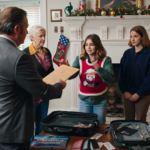
At the inheritance distribution, my brother claimed it all, but I smiled: “Dad, don’t you know?”
When my brother stood up at the family inheritance meeting and proudly announced that our parents were signing over all eight rental properties to him, leaving me with nothing, the entire room erupted in cheers. Everyone thought the golden child had finally won, until I calmly asked my dad one simple question that turned the celebration into chaos.
This is a true-like revenge story about family betrayal, hidden truths, and the moment the scapegoat child flips the script forever. What happens when the sister everyone ignored reveals she’s been the legal owner for years, thanks to a secret living trust from Grandma? Watch as decades of favoritism, lies, and greed collapse in minutes, complete with a fiancée walking out, a brother facing IRS penalties, and parents forced to sell everything.
If you love intense family drama, sibling revenge stories, golden child downfall, and satisfying moments where the overlooked daughter finally gets justice, this one will leave you speechless. No reconciliation, no forgiveness, just cold, hard consequences and a powerful lesson about who really deserves loyalty.
At the inheritance meeting in our family home in Tampa, my older brother Ryan stood up like he owned the room, tapped his glass, and announced with the biggest grin, “Mom and Dad decided to leave all eight rental properties in Florida to me. Tegan, sorry, you get nothing.”
The room exploded. Cheers, whistles. Someone even shouted, “Finally!” Cousins clapped him on the back. His fianceé, Brooke, beamed like she’d just won the lottery, and Mom dabbed her eyes with that proud little tear.
I didn’t clap. I didn’t even blink. I just looked straight at Dad and said, calm as ever, “Dad. You forgot one thing, didn’t you?”
His fork froze halfway to his mouth. Ryan’s smile vanished. Brooke stopped midsip. Thirty people suddenly went dead silent. You could hear the AC humming. And in that single second, every single person in that room knew the script they’d rehearsed for months was about to burn.
Before I tell you exactly what my dad forgot and how the rest of that afternoon turned the whole family upside down, drop a comment and let me know where you’re watching from tonight. I always like knowing I’m not the only one who sat at a table full of people who swore they loved you right before they showed you what they really think. Hit that like button if you’ve ever had to smile while your entire family cheered for your downfall, because trust me, what happened next made every single one of them regret clapping so fast.
Now, let me take you back to how we got here.
My name is Tegan Whitaker, and if you’d met my family before that inheritance meeting, you’d probably have thought we were the perfect Florida success story. Big house in South Tampa, boats in the driveway, Christmas card smiles every December. But those pictures never showed the quiet hierarchy that ruled everything behind closed doors.
Ryan has always been the son everyone orbited around. From the moment he came home from the hospital, people noticed him first, listened to him longest, forgave him fastest. Little league coach, high school quarterback, the son who stayed local and helped manage Grandma Margaret’s rental properties the second he graduated. Every family barbecue ended with someone slapping his back, telling him he was the future of the Whitaker name. He soaked it up like it was oxygen.
I learned early that I lived in the shade he cast. Teachers mixed up our names until Ryan corrected them with a laugh. Birthdays meant his cake first, his gifts opened loudest, his stories retold at the table while mine stayed folded inside me. When I asked for extra math tutoring in middle school, Mom sighed that money was tight because Ryan needed new cleats. When I got accepted to the University of Georgia on a full scholarship, Dad’s only comment was, “Guess someone has to leave Florida.”
So I did.
The day I turned 22, I packed everything I owned into my beatup Civic and drove north on I-75 until Tampa was just a glow in the rearview mirror. Atlanta gave me the first real breath I’d ever taken without someone else’s shadow on my face. I started as a junior analyst at a commercial real estate firm downtown, crunching numbers on apartment complexes and strip malls, learning how deeds work, how trusts work, how ownership can be moved quietly and permanently when someone knows what they’re doing.
I still came home, but only when Grandma Margaret asked. She was the one person who never compared me to Ryan. Never asked why I couldn’t just be happy here like your brother. She’d sit on her screened porch overlooking the bay, silver hair twisted up with a pencil, and listen to me talk about cap rates and lease abstracts like they were poetry. Some weekends she’d hand me the keys to one of the rental houses and tell me to walk through it alone, feel the weight of real ownership, even if nobody else knew it yet.
Those visits were my oxygen, too. She never once called me the smart one or the independent one, the way relatives did when they wanted to sound nice. She just looked at me, really looked, and said things like, “You see things clearly, Tegan. That’s rarer than money.” When I left on Sunday nights, she’d press a cold sweet tea into my hand and remind me the drive was only nine hours, not a lifetime.
Everyone else stopped noticing when I was in the room. Phone calls from Mom shrank to texts about holidays. Dad only called if Ryan needed help closing a deal on one of the properties. I became the daughter who did her own thing, which in our family meant the one nobody had to invest in anymore. I didn’t hate Ryan for it. Hate would have required energy I refused to give. I just accepted the rules. The way you accept humidity in July: you dress lighter, you keep moving, you don’t waste breath complaining.
Atlanta promoted me to senior property analyst two years ago. I bought a small condo in Midtown, filled it with plants that actually lived because nobody else was there to forget watering them, and built a life where my value wasn’t measured against someone else’s spotlight.
The only tether left was Grandma Margaret. Every visit, she grew a little thinner, a little quieter, but her eyes stayed sharp. She started asking more questions about trusts, about how assets could be protected from people who love too loudly and manage too loosely. I answered honestly because she was the one person who never used my knowledge to prop someone else up.
She passed quietly thirteen months ago. I drove home for the funeral, stood in the back of the church while Ryan delivered the eulogy. Everyone cried, and I felt her absence settle into my bones like a promise I didn’t fully understand yet.
That’s who I was the day I walked back into the house in Tampa for the inheritance meeting: 31, calm, carrying nine years of distance and one very old woman’s unshakable faith in me.
Three years ago everything changed without anyone knowing. Three years ago everything changed without anyone knowing.
Grandma Margaret called me on a Tuesday evening and asked me to come down the following weekend. No explanation, just that she needed my eyes on something. When I pulled into her driveway in Old Northeast St. Pete, she was already waiting on the porch with two folders and a pot of coffee strong enough to strip paint.
She didn’t waste time on small talk. She slid the first folder across the table and told me to read bank statements, rental income logs, expense reports for the eight properties. The numbers didn’t lie. Over the previous eighteen months, more than $400,000 in rent money had vanished into categories labeled maintenance, emergency repairs, and management fees. Receipts were missing or photocopied so many times they were illeible. The handwriting on the few that existed matched Ryan’s.
She watched me flip pages, her mouth a thin line.
“I gave him access because he swore he wanted to learn the business,” she said. “Turns out he learned how to bleed it instead.”
I asked the obvious question: why not confront him?
She shook her head. “Because your parents would defend him. Say boys will be boys. Promise he’ll pay it back someday. By the time someday comes, there will be nothing left to pay back.”
That was the moment she opened the second folder.
Inside were draft documents: a revocable living trust naming her as trustee for life and upon her passing me as sole successor trustee and beneficiary of every single rental property, plus eight quit claim deeds ready to transfer title immediately. All she needed was my signature and two witnesses.
She explained it like she was reading the weather. A living trust avoids probate, keeps everything private. No public filings until she’s gone. Quit claim deeds move ownership instantly and quietly. Once recorded, they’re ironclad. The notary she trusted was coming Monday morning. No lawyers in the family would ever see the paperwork unless she wanted them to.
I asked why me.
She looked out at the water and answered without hesitation. “Because you understand what these houses actually are. Thirty-two families who pay rent on time so their kids can stay in the same school. You won’t gamble that away on boats or parties or whatever new toy catches his eye this month.”
I tried to argue that Ryan would lose his mind when he found out.
She cut me off. “He doesn’t get to find out until it’s too late to undo. That’s the whole point.”
We spent the rest of the weekend going over every detail. She walked me through the trust language, showed me where to sign, made sure I understood that once the deeds were recorded at the county, the houses were legally mine whether anyone liked it or not. She even had me initial every page, so there could never be a claim I didn’t know what I was agreeing to.
Monday morning, the notary arrived at nine sharp. We signed in the dining room while the ceiling fan clicked overhead. Grandma Margaret’s hand didn’t shake once. When the notary left, she poured us both a finger of bourbon, even though it wasn’t noon yet, clinkedked her glass against mine, and said, “Now it’s done. And now we shut up about it.”
She made me swear on her parents’ graves that I would never breathe a word until the day came when someone tried to take what was no longer theirs to give. I gave her my word. We burned the extra copies in the outdoor fireplace that night and watched the smoke curl up into the palms.
For the next two and a half years, nothing looked different on the surface. Ryan kept collecting rent checks and bragging about his portfolio. Mom and Dad kept praising how responsible he’d become. I kept driving down from Atlanta every couple of months, checking on tenants when Grandma asked, fixing what actually needed fixing instead of inventing reasons to spend.
Nobody noticed the county records now listed the owner of record as Tegan Whitaker, because nobody ever bothered to look.
Grandma’s health started slipping faster after that. She spent more days in bed, less on the porch, but every time I visited, she asked the same question.
“Still our secret?”
I always answered yes. It became our ritual. Two words that meant everything.
The last time I saw her alive, she gripped my hand so hard her ring cut into my skin.
“Remember,” she whispered. “Paper beats promises every single time.”
Then she smiled like someone who just won a bet nobody else knew was on the table.
Seven months ago, right after Grandma’s funeral, Mom called and asked me to stay an extra day.
“We need to talk about the property,” she said, voice soft like she was breaking bad news. “Everyone’s coming to the house tomorrow.”
I knew what that meant. The whole family circling the estate before the will was even read. I almost said no, but something in her tone sounded final, so I agreed.
The next afternoon, the dining room looked like a board meeting. Dad sat at the head, sleeves rolled up, legal pad in front of him. Ryan lounged to his right, legs stretched out, already acting like the new landlord. Mom kept refilling coffee. Nobody drank. A stack of documents waited in the center, crisp and official.
Dad pushed the top page toward me. “It’s just a simple waiver,” he started. “We’re keeping everything in the family, but to avoid any confusion down the road, we need you to sign that you’re not expecting a share of the rentals.”
I glanced at the title: waiver of inheritance interest, real property. Eight addresses listed neatly below. My pulse stayed steady. I’d seen worse surprises.
Mom jumped in before I could speak. “Sweetheart, it’s only paperwork. Ryan’s staying here, handling everything day-to-day. It makes sense for him to have full control. This just keeps things peaceful.”
Ryan smirked, spinning a pen between his fingers. “Yeah, Tegan. Nobody wants lawyers involved. Sign it and we’re good.”
I slid the paper back an inch. “I’m not signing anything.”
The room temperature dropped. Dad’s eyebrows shot up. Mom’s hand froze on the coffee pot.
Dad recovered first. “Come on, don’t be difficult. This isn’t about taking anything away from you. It’s about clarity.”
I looked him straight in the eye. “I won’t sign away what Grandma intended for me.”
Silence.
Ryan stopped spinning the pen.
Mom tried the emotional route. “Your grandmother wanted the family taken care of. She’d hate to see us fighting.”
I didn’t blink. “She’s not here to see anything, is she? And I’m not fighting. I’m just not giving up my rights.”
Dad leaned forward, voice lowering the way it used to when I was ten and late for curfew. “Tegan, we’re trying to do this the easy way. Ryan’s put years into those houses.”
I almost laughed. Years of putting money into his own pocket, maybe.
Ryan finally spoke, irritation cracking through the casual act. “You live in Atlanta. You don’t even want them. Why make this hard?”
“Because they’re not yours to give,” I said.
Mom’s eyes welled up on cue. “We just want everyone happy after everything we’ve been through. Losing Mom…”
Classic move. Bring up the recent death. Make refusal feel cruel.
I stood up. “I’m sorry you’re upset, but I’m not waiving anything.”
Dad slapped the table hard enough to rattle the cups. “This is ridiculous. You’re acting like we’re stealing from you.”
I picked up my keys. “No, I’m acting like someone who knows exactly what’s hers.”
Ryan stood too, face red. “You’re being selfish. Typical.”
I walked to the door and paused just long enough to deliver one line.
“Selfish is thinking you can erase someone’s wishes with a signature because it’s convenient.”
Mom called after me, voice cracking. “Tegan, please don’t leave like this.”
I didn’t turn around. “I’ll see you when you’re ready to respect what Grandma actually wanted.”
The screen door slammed behind me. I heard Ryan mutter something about me always playing the victim, Dad telling him to calm down, Mom starting to cry for real this time. I got in my car, rolled the windows down, and let the hot Florida air hit my face the entire nine-hour drive back to Atlanta.
They spent the next weeks convinced I was throwing a tantrum. Group texts about healing and moving forward as a family. Dad left two voicemails that got progressively angrier. Ryan sent a single message: “Grow up.”
I didn’t reply to any of it. Instead, I printed fresh copies of the recorded deeds, filed them in a fireproof folder, and waited. I knew they were busy drafting whatever story made them the heroes and me the problem child who couldn’t let go of a grudge. They had no idea the grudge wasn’t mine to let go of.
Two weeks ago, the invitation arrived in my mailbox in Atlanta. Thick cream cards stockck, gold border, formal celebration of Margaret Whitaker’s legacy printed in raised lettering. Inside was a note in Mom’s perfect cursive: Please join us to honor Grandma’s wishes and celebrate the future of the family properties. Saturday at 3. We’ve missed you.
I knew exactly what it was: the victory lap they thought they’d earned.
The group chat exploded the same day. Ryan posted a selfie in front of one of the rental houses with the caption, “Big things coming for the Whitaker portfolio.” Brooke commented, “Hard emojis and so proud of my future husband.” Aunts and cousins liked every word. Someone even joked, “Tegan better show up this time.”
I didn’t reply, but I cleared my weekend and packed the rolling suitcase I usually take on business trips. Inside went three labeled folders, color-coded tabs, and a flash drive with every recorded document scanned in high resolution. I zipped it shut, loaded the car before dawn on Friday, and pointed south on I-75 for the nine-hour drive I could now do with my eyes closed.
The closer I got to Tampa, the thicker the tension felt, even through the windshield. Billboards gave way to palm trees, then to the familiar exit signs. Every mile marker reminded me why I’d left and why I was coming back now.
I stopped once for gas outside Okala and checked my phone. Twenty-three new messages in the family thread, all variations of excitement about Ryan stepping up. Dad sent a private text: looking forward to putting everything behind us.
I left it on read.
By the time I crossed the Howard Franklin Bridge, the bay sparkling under afternoon sun, my stomach had settled into the cold calm I get before closing a multi-million-dollar deal. I wasn’t nervous anymore. I was ready.
I pulled into the old neighborhood just after noon on Saturday. Cars already lined the street—cousins from Orlando, Uncle Ray from Naples, the property manager who’d been sending rent checks to the wrong person for years. White tents dotted the backyard, caterers unloading trays of shrimp and mini crab cakes. A bartender set up under the oak tree.
This wasn’t a meeting. It was a coronation.
Mom spotted me from the driveway and hurried over in heels and pearls, arms open like nothing had happened.
“You made it. Everyone’s asking about you.” She hugged me too tight, perfume clouding the air.
Dad followed, clapping my shoulder with that forced hardiness men use when they’re pretending everything’s fine. “Good to have the whole family together,” he said, eyes flicking to the suitcase in my hand.
Ryan appeared on the porch with Brooke glued to his side, both holding mimosas. He lifted his glass in a mock toast. “Look who decided to grace us with her presence.”
Brooke giggled and whispered something that made him laugh louder. A few cousins waved awkwardly. Most pretended not to notice the chill between us.
Inside, the house smelled like lemon polish and ambition. Framed photos of Ryan shaking hands with tenants lined the entry table. A blownup copy of the county tax map sat on an easel. Red circles around all eight addresses. Someone had even printed glossy brochures titled THE WHITAKER FAMILY RENTALS: A NEW ERA.
I wheeled my suitcase straight through the living room and parked it beside the couch, right in everyone’s line of sight. Mom’s smile faltered for half a second. Dad cleared his throat. Ryan raised an eyebrow but said nothing.
People kept arriving. The family attorney, Mr. Hargrove, shook hands and accepted congratulations like he’d already filed the paperwork. Tenants who’d been invited as a courtesy milled around looking confused but happy for free food. Childhood friends of Ryan slapped his back and asked when the closing date was.
I made small talk in one corner, accepted a bottle of water, and watched the room fill with certainty that the story had already been written. Every congratulation aimed at my brother landed like another brick in the wall they thought would keep me out.
Brooke floated past in a sundress, diamond on her left hand catching every light. “This is going to be our future,” she told a cluster of aunts, gesturing at the brochures. “Eight steady income streams before we even say I do.”
Ryan beamed, arm around her waist, accepting praise like it was his birthright.
I stood by the window, suitcase handle still in my grip, counting faces. Thirty-two people, give or take. Enough witnesses that no one could claim later they didn’t see what was coming.
The living room was packed when Ryan finally stood up. The living room was packed when Ryan finally stood up.
Champagne flute raised high, voice carrying over every conversation like he’d rehearsed it for weeks, he began, “I just want to thank Mom and Dad for trusting me with Grandma Margaret’s legacy. As of today, all eight rental properties are officially under my name. The family tradition continues stronger than ever.”
Glasses lifted. Cheers rippled through the room. Someone shouted, “To Ryan!” A cousin started clapping and the rest followed until the sound bounced off the walls.
I waited until the noise peaked, then rolled the suitcase forward, wheels clicking across the hardwood. Every head turned. The clapping died midair.
I stopped beside the coffee table, clicked the latches, and flipped the lid open. Thirty pairs of eyes locked on the neat stacks inside.
Dad found his voice first. “Tegan, what is this?”
I didn’t answer him yet. I pulled out the first quit claim deed, held it up so the notary seal caught the light, and laid it face up on the table. Then the second, third—eight in total—each bearing Grandma Margaret’s bold signature and the raised seal of the Panella’s County clerk. Next came the revocable living trust, thick and bound, successor trustee section highlighted in calm yellow. I placed it on top like a period at the end of a sentence.
Only then did I look at Dad.
“You really forgot this existed, didn’t you?”
The color drained from his face so fast I thought he might drop. Mom’s hand flew to her mouth. Ryan stared at the papers like they were written in another language.
Mr. Harrove, the family attorney, stepped forward, adjusting his glasses. He picked up the trust, first flipped to the signature page, then to the schedule of assets listing every address. His fingers moved faster as he cross-checked the quit claim deeds against the county stamps.
He looked up slowly. “These are recorded,” he said, voice flat. “All of them. Three years ago. Tegan is the legal owner of record. There is no probate interest left to distribute.”
You could hear ice melting in forgotten glasses.
Ryan lunged for the documents. “That’s impossible. Grandma was sick. She didn’t know what she was signing.”
Mr. Hargrove didn’t hand them over. “I notorized similar documents for Margaret myself. The handwriting matches. The notary is licensed and present in the county records. These are binding.”
I finally spoke again, calm and clear. “Grandma knew exactly what she was doing. She made sure the houses went to someone who would protect the tenants, not bleed them.”
Dad tried to stand, sat back down hard. “She never told us.”
“No,” I said. “She didn’t.”
Ryan’s face twisted. “You hid this the whole time. You let us plan everything.”
“I let you plan what you thought was yours,” I cut in. “Grandma asked me to wait until someone tried to take what she’d already given away. Today seemed like the day.”
Mr. Hargrove closed the trust with a soft thud that sounded final. “Legally, the matter is settled. The properties belong to Tegan. End of discussion.”
Aunts shifted in their chairs. Cousins exchanged glances. The property manager who’d been congratulating Ryan five minutes earlier now looked like he wanted to disappear into the carpet.
Mom found a whisper. “How could you do this to your own brother?”
I met her eyes. “I didn’t do anything. Grandma did. I’m just the one following through.”
Ryan slammed his glass down so hard the stem snapped. Champagne pooled across the table, soaking the corner of one deed. I didn’t flinch.
“You think you’ve won?” he spat.
“I didn’t come here to win,” I said. “I came here to make sure her wishes were respected.”
The room stayed frozen. No one moved to clean the spill. No one moved at all.
Brook’s glass slipped from her hand and shattered on the floor. Brook’s glass slipped from her hand and shattered on the floor, champagne spraying across the shoes and ankles. She didn’t bend to pick up the pieces. She just stared at me, mouth open, then at Ryan, then back at the papers. Without a word, she grabbed her purse, pushed past two cousins, and walked straight out the front door. The screen slammed behind her. Nobody went after her.
Ryan’s face went from red to purple. He snatched the living trust from Mr. Harrove’s hands and started flipping pages wildly.
“This is fake,” he shouted. “She forged it. Grandma was on painkillers the last year. She didn’t know what day it was.”
Mr. Hargrove took the document back, calm as ever. He turned to the signature page and began reading aloud, slow and deliberate.
“Article 4, section two. Upon the death of Margaret Whitaker, all real property listed in Schedule A shall pass immediately to successor trustee Tegan Whitaker, free of probate.”
He kept going, voice steady, every clause another nail. When he reached the notary acknowledgement and the recorded dates, Ryan’s yelling faded into heavy breathing.
From the corner by the hallway, Dylan stepped forward. My middle brother, the quiet one who’d spent years blending into walls, spoke for the first time all afternoon.
“She’s telling the truth,” he said.
Every head swiveled.
“I was there the day Grandma signed. She asked me to drive her to the notary because she didn’t want Mom or Dad knowing. I waited in the car. She came out smiling.”
Ryan spun toward him. “You knew and didn’t say anything?”
Dylan met his glare. “She made me promise the same thing she made Tegan promise. Some promises matter more than keeping the peace.”
Mom crumpled onto the couch, hands over her face, shoulders shaking. Dad looked ten years older in ten seconds. He slid down to his knees right there on the rug, reaching toward me like I was the last solid thing in the room.
“Tegan, honey, please. We didn’t know. We can fix this. We’ll redo everything. Just don’t take it all away from your brother.”
His voice cracked on the last word. Tears ran down his cheeks. Real ones this time. Mom reached for my hand, mascara streaking.
“We thought we were doing what was best for the family. We thought Ryan needed it more. You’re doing so well on your own.”
I pulled my hand back before she could grab it. “This was Grandma’s decision, not mine.”
Ryan lunged again, this time at me. Dylan moved faster, stepping between us, one palm on Ryan’s chest.
“Back off,” Dylan said, low and firm.
Ryan stopped, breathing hard, fists clenched but useless. Aunts and uncles stood frozen, some with phones half raised, recording, others looking at the floor. The property managers slipped out the side door without saying goodbye. The caterers hovered in the kitchen doorway, unsure whether to keep serving or start cleaning up the mess that had nothing to do with spilled drinks.
Dad stayed on his knees. “We’ll sell the boats. We’ll take second mortgages. Whatever it takes to make this right.”
Mom sobbed louder. “We’re so sorry. Please don’t hate us.”
I looked at both of them, then at Ryan, shaking with rage, then at Dylan standing steady beside me for the first time in our lives.
“I don’t hate you,” I said. “But I’m done fixing things for people who never saw me as part of the solution.”
I closed the suitcase, latched it, and set the handle upright.
Mr. Hargrove cleared his throat. “I’ll prepare the necessary notices to all tenants and financial institutions first thing Monday. Ownership transfer is already complete. This is purely administrative.”
Ryan made a sound like a wounded animal. Mom wailed into a throw pillow. Dad just stared at the floor.
I picked up my keys.
Three months later, the dust had settled, but nothing was the same. Three months later, the dust had settled, but nothing was the same.
Ryan’s name disappeared from every lease, every bank account, every vendor contract tied to the eight properties. Tenants started receiving new payment instructions with my name at the top. Most of them never even noticed the change. Rent stayed the same, repairs got done faster, and nobody tried to charge them for fake roof work anymore.
The IRS notice arrived the week after the meeting. Turns out, years of writing off personal vacations as property inspections and new trucks as maintenance vehicles finally caught up. They froze what was left of Ryan’s accounts and slapped a lean on anything still in his name. He lawyered up with money he didn’t have and lost anyway. The final penalty came in at just over six figures. He’s still paying it off on a payment plan that will follow him for years.
Mom and Dad put the big house on the market thirty days later. The boats went first, then the jet skis, then Mom’s jewelry collection. They moved into a two-bedroom condo near Carolwood with a view of a parking lot instead of the bay. Dad took early retirement because the stress gave him heart palpitations. Mom started working part-time at a boutique to cover groceries. They stopped hosting holidays. Nobody felt like celebrating.
Brooke sent back the ring by mail. No note.
Ryan moved into a studio apartment downtown and took a job selling cars on Dale Mabberry. He still drives past the rentals sometimes, slows down, stares, then speeds off when he sees my management sign in the yard.
Dylan texts me every couple of weeks. Just short check-ins, nothing heavy. He’s the only one I answer. He says the rest of the family talks about me in past tense, like I died instead of Grandma Margaret.
I tell him that works for me.
I stayed in Atlanta. The rental income covers my mortgage and then some. I hired a local management company run by women who actually return calls within an hour. Vacancies dropped, tenant satisfaction went up, and every month the numbers land in my account clean and quiet. I bought two more properties last quarter, smaller deals, but mine from day one.
Not a single family member has tried to reach me directly. No letters, no emails, no drive-by visits. The last voicemail I got was from Mom two months ago, crying, asking if I’d come for Christmas. I didn’t call back. I deleted it and blocked the number the same day.
Some nights I sit on my balcony in Midtown, city lights below, and think about the little girl who used to beg for math tutoring while her brother got new cleats. That girl learned the world rewards the loudest voice in the room until someone finally decides to speak with proof instead.
Blood doesn’t guarantee loyalty. It never did. The only thing that ever protected me was an old woman who saw the future clearly enough to put it in writing and a promise I kept when it mattered most.
I still have the fireproof folder. Every deed, every trust page, every recorded stamp sits inside it on the top shelf of my closet. I don’t look at it often. I don’t need to. The houses pay the bills. The tenants stay happy. And my phone stays silent from anyone who once called themselves family.
Grandma Margaret was right. Paper beats promises every single time. And some doors, once you close them, stay closed for good.
…back.
Back into the house that burned you the first time.
I didn’t realize how true that was until about a week after the “inheritance celebration,” when the adrenaline finally drained out of my system and left something quieter behind—something heavier.
You don’t just walk away from three decades of being the forgotten child and wake up weightless. You walk away, and then your phone starts buzzing with numbers you’ve known your whole life, and every notification feels like a ghost hand tugging at your sleeve.
For the first three days, I kept my phone on silent but still flipped it face-up every time I walked past the counter, like I was waiting for the version of my parents I never had to show up in my notifications.
They didn’t.
Instead, I got exactly what you’d expect.
A group text from an aunt:
We’re all family at the end of the day. This is just money. Call your mother.
A long paragraph from Mom:
You embarrassed us. Your grandmother would be heartbroken. You’ve always taken things too far.
A single line from Dad:
You made your point. Come home and let’s talk like adults.
And from Ryan:
Hope it was worth it.
Not a single word about the fact that for three straight years they’d been planning to carve up something that wasn’t theirs. Not one, “Did we miss something? Did Grandma tell you something she didn’t tell us?” Just shock that the universe didn’t run on their assumptions.
I read each message once, then moved them into a folder I titled “Evidence of why I left” and turned off text previews entirely.
Cold? Maybe.
Necessary? Absolutely.
Two weeks later, I was sitting in a therapist’s office in Atlanta, trying not to stare at the plants in the corner and wondering if it made me pathetic that I didn’t even know how to start this conversation.
Her name was Dr. Collins, mid-40s, soft cardigan, steel in her eyes. The kind of woman who looked like she’d seen people at their ugliest and still believed they could become something better.
“So,” she said, flipping open a notebook. “What brings you in today?”
I laughed once. It came out sharper than I intended.
“Short version?” I said. “My family tried to hand my inheritance to my brother. I turned the room upside down with legal documents. He lost everything. I walked away. And now I feel… weirdly guilty.”
She raised an eyebrow. “Guilty about what?”
I stared at the pattern in the carpet for a long heartbeat. “About not saving them from themselves. About not softening the blow. About not… cushioning it for them, I guess.”
“Did they cushion things for you?” she asked.
I almost answered automatically, the way kids from families like mine are trained to answer: They did their best. They had stress. It wasn’t that bad.
Instead, I pictured eleven-year-old me, asking Mom if I could take a math summer course and hearing, “We don’t have money for that. Ryan needs a new bat, those things aren’t cheap.” I remembered Dad standing on the porch when I left for Georgia, saying, “Don’t expect us to pay for you to come running home.”
I thought of a thick waiver shoved across Grandma’s dining table, eight addresses listed in neat print, my father saying, “Sign it and we can do this the easy way.”
“No,” I said finally. “They never did.”
Dr. Collins wrote something down. “Then why do you think it’s your job to protect them from having to face what they did?”
Silence stretched between us.
Because when you grow up as the overlooked child, you learn to be the buffer. You smooth things over. You apologize first. You dim yourself so the golden one shines brighter. You become the shock absorber nobody thanks.
Because you’re so used to being blamed that when someone else is finally held accountable, you feel… off-balance.
I swallowed. “I don’t know,” I said. “Habit, I guess.”
She nodded. “You’re allowed to let consequences land where they belong, Tegan. Even if it makes people uncomfortable. Especially then.”
Three months after the meeting, on a rainy Thursday, my door buzzer rang in Atlanta.
I wasn’t expecting anyone. I glanced at the clock—7:23 p.m.—then at the security monitor. For a second, I thought my eyes were playing tricks on me.
Dylan.
My middle brother, standing there in a windbreaker, hair damp, shoulders hunched like he wasn’t sure if he should ring again or run for it.
I hit the intercom. “Yeah?”
He looked straight into the camera like he could see me.
“Hey,” he said. “It’s me. I… I’m in town for a conference. Thought I’d see if you were home.”
My first instinct was to say I wasn’t. To pretend I was in another city, another country, anywhere but here. To keep every door shut.
Instead, I heard myself say, “Come up. Third floor, 3B.”
He walked in like he was stepping into someone else’s life. Eyes taking in the bookshelves, the plants, the framed photos of friends and tenants’ kids’ drawings on my fridge. It hit me that he’d never seen where I lived. My real life, not the version filtered through our parents’ commentary.
“You look different,” he said.
“Older?” I guessed.
“Free,” he said. “You look free.”
We sat at my tiny dining table with mugs of tea because I didn’t know what else to do with my hands. For a while, we talked about safe things. His job in IT. Atlanta traffic. The conference. Neutral weather reports for people who shared a childhood.
Then he set his mug down and went for the artery.
“They’re still acting like it was some kind of mugging,” he said. “Like you snuck up and stole something from them in broad daylight.”
I snorted. “Yeah. I’ve seen the voicemails.”
“They’re not mad about the money,” he went on. “Not really. They’re mad you didn’t play your part. That you knew more than they did and didn’t warn them. Makes them feel stupid.”
“I didn’t make them sign fake tax write-offs,” I said. “I didn’t make Dad wave a waiver in my face. That was all them.”
“I know,” he said quietly. “I told them that. They don’t want to hear it.”
We sat in the quiet for a second, the only sound the soft drip of rain against the window.
“I was scared,” he added. “At the meeting. Not of you. Of him.” He meant Ryan. “He looked like he was going to rip your head off when you opened that suitcase.”
“I noticed,” I said.
“That’s why I said something,” Dylan said. “About driving Grandma to the notary. I wasn’t trying to steal your thunder. I just… I didn’t want him to pretend you made it up. Not again.”
That hit me harder than I expected. Not the part about Ryan, but the last two words.
Not again.
Because that was the pattern, wasn’t it? Childhood arguments where I’d say, “Ryan broke it,” and the chorus would respond with some version of “Stop making trouble, Tegan.” Teachers calling home about his grades and my parents turning to me with, “What did you do to upset your brother?”
Everyone always so eager to believe the story where I was the problem.
“Thank you,” I said, and meant it. “For backing me up.”
He shrugged, eyes dropping to his hands. “Grandma would’ve haunted me if I didn’t.”
We both smiled at that. Then his face grew more serious.
“They’re selling the house,” he said. “Closing’s next month. Mom cries every time she sees a box. Dad pretends he doesn’t notice the For Sale sign.”
“Ryan?” I asked.
“He blames you for the IRS. Says if you’d just gone along with the plan, they never would’ve gone digging around. He doesn’t talk about Grandma much. Or at all.”
So nothing new. Ryan had always been allergic to the idea that actions had consequences.
Dylan hesitated. “He… he misses the money. Not the people. The money.”
“I figured,” I said.
Dylan looked up. “They’re going to ask you again. To come home. To fix it. To ‘rebuild the family.’ They keep using that phrase. I just… I wanted to see your face when I told you so I could gauge if you were at all tempted.”
I laughed. It came out harsh and broken. “I’m not,” I said. “I’m really not.”
He exhaled, shoulders relaxing like I’d just given him permission to put something down.
“Good,” he said. “Because they don’t get to burn down the bridge and then scream at you for not walking back over it.”
We stayed up until after midnight talking about things we’d never said out loud. How he’d watched them pour all their approval into Ryan and pretend he didn’t notice. How he’d taught himself to be invisible to keep from catching any stray anger.
“How did you stand it?” he asked eventually. “Leaving. Staying gone. I always thought if I moved away, they’d act like I died.”
“They do,” I said. “But here’s the thing. Once you realize you were already invisible, their silence starts to feel less like punishment and more like… confirmation you were right to go.”
He nodded slowly, like that was sinking in deeper than anything else I’d said.
Before he left the next morning, he stood in my doorway and shoved his hands into his pockets.
“I can’t cut them off completely,” he said. “Not yet. I’m not there. But I needed to see you. To see what it looks like to build something that has nothing to do with them.”
“Does it terrify you?” I asked.
He thought about it. “Yes,” he said. “And it gives me hope.”
He pulled me into the first real hug we’d had since we were kids. The kind where you hold on a second longer than necessary, just to prove you’re still there.
When the door closed behind him, my apartment felt different. Not fuller. Just… steadier.
Sometimes the revenge story isn’t about watching the villain fall. Sometimes it’s about watching one side character step out of the background and into his own life.
Owning eight rental properties looks glamorous on TikTok. You see those videos—people walking through empty units, keys jingling, text overlays bragging about passive income while some motivational track plays in the background.
Real life is less aesthetic.
Real life is a tenant calling at 6:12 a.m. on a Tuesday because her AC died in August and her five-year-old can’t sleep in that heat. It’s a single dad in 3B who’s three days late on rent for the first time in four years and calls to warn you before you have to notice.
The first time I went back down to Florida after the inheritance implosion, it wasn’t for family. It was because of a roof.
Unit 4 at the Cedar Lane complex had leaked during a storm, and the property manager sent me photos that made my stomach drop: water stains blooming across the ceiling like bruises, a line of pots catching drips, a kid’s mattress shoved into the living room.
In the old days, that would have been marked “non-emergency.” Slap some paint on it, tell the tenant to “keep an eye on it,” and hope the next storm missed.
Not on my watch.
I flew into Tampa, drove straight from the airport to the property, and knocked on the door.
A woman in her late 20s answered, hair pulled into a messy bun, dark circles under her eyes. A little girl peered out from behind her leg, thumb in her mouth.
“You must be Ms. Whitaker,” the woman said, a little wary.
“Please, call me Tegan,” I said. “I’m so sorry this has taken even this long. Can I come in?”
We walked through the unit together. She pointed out the spots where the water had dripped, the corner where mold had started to creep in. She mentioned offhand that the old manager told her it’d “take months” to get a roofer out and that if she wanted repairs faster, she could “always move.”
“Did he really say that?” I asked.
She nodded, eyes skimming my face like she was checking to see if she’d crossed some invisible line by complaining.
“I’ve got a kid in kindergarten,” she said. “Finding a place we can afford in the same school zone? It’s… yeah. It wasn’t really an option.”
I took a breath. “I want you to stay,” I said simply. “Let me fix this properly.”
I called the roofing company from the parking lot. You’d be amazed how fast people move when the owner shows up in person and says words like “full replacement” and “paying in cash.”
By the time I flew back to Atlanta, the work order was signed. Two weeks later, I got an email from the property manager with a photo attached. Same kid, same room. This time, she was standing under a brand-new ceiling, grinning, holding up a thumbs-up like we’d rehearsed it.
I stared at that photo longer than I had stared at the inheritance paperwork.
Because this was the part Grandma understood that the rest of the family never did: these houses weren’t trophies. They were lives. Stability. Kids who didn’t have to change schools mid-year because some grown man liked to pay for boat fuel with rent checks.
Every time I fixed a problem Ryan had ignored, it felt less like revenge and more like redirection. Taking money that used to evaporate into his lifestyle and pouring it into something solid.
You want to talk about justice? Sometimes it looks like an IRS penalty. Sometimes it looks like a roof that doesn’t leak.
Six months after the infamous meeting, an envelope arrived in my Atlanta mailbox with a law firm’s name in the upper left corner.
I knew before I opened it what it was: the other shoe.
They were contesting the trust.
The letter was stuffed with phrases like “undue influence,” “lack of capacity,” “unfair deprivation” and my personal favorite, “estranged daughter’s manipulative actions.” It claimed Grandma had been confused the last year of her life, that she’d been “pressured” into naming me sole beneficiary, that “longstanding family expectations” had created an implied guarantee that Ryan would inherit the houses.
I forwarded the letter to my own attorney, a woman named Mariah who’d been at my firm before starting her own practice. She called me five minutes later.
“They’re going to lose,” she said without preamble. “They have no proof. The documents are clean, the notary is solid, the deeds have been recorded for years. This is a last-ditch hail Mary from people who can’t accept consequences.”
“Do I have to see them?” I asked.
“Not unless you want to,” she said. “Worst-case scenario, they try to drag you into a deposition. Even then, we keep it business. They’re the ones on the attack, not you.”
Three months later, I sat in a conference room in downtown Tampa, fluorescent lights buzzing, a pitcher of water sweating in the center of the table. Opposite me sat Mom, Dad, and Ryan with their attorney. They looked smaller than I remembered. Not physically. Just… diminished.
Mom wouldn’t meet my eyes. Dad kept smoothing his tie even though it was already straight. Ryan glared at the stack of documents in front of him like he could set them on fire with his mind.
Their attorney launched into a lecture about fairness. About “reasonable expectations of inheritance.” About “a son who had dedicated years to managing the properties while his sister was absent.”
Mariah slid a thin file across the table in response. Inside: copies of every misappropriated expense Ryan had quietly funneled through Grandma’s accounts. Every “business trip” to Key West. Every “urgent repair” that coincided with big-ticket purchases. Certified copies of the already-recorded deeds. A notarized letter from Grandma’s doctor stating she’d been mentally competent at the time of signing.
“You want to talk about undue influence?” Mariah said calmly. “Let’s talk about a son who convinced his elderly grandmother he needed full access to her accounts to ‘help’ her, then drained nearly half a million dollars over eighteen months. Let’s talk about a trust drafted by an independent attorney three years before her death, with a notary present and clear witness signatures. Let’s talk about a pattern of favoritism that left one beneficiary with all the praise and all the cash while the others were told to be grateful for scraps.”
The other attorney sputtered something about “family loyalty.” Mariah didn’t flinch.
“The law doesn’t enforce family loyalty,” she said. “It enforces documents. And the documents are not on your side.”
They dropped the suit a week later.
The judge’s order dismissing the case used phrases like “wholly without merit” and “frivolous attempt to circumvent valid estate planning.” He even sanctioned their attorney’s firm for wasting the court’s time.
When I read that sentence, a laugh burst out of me, loud and surprised. It was the first time in my life I’d seen a system I didn’t control say out loud what I’d felt for years:
No, you don’t get to rewrite reality just because it makes you uncomfortable.
They never apologized. They never called to say, “We were wrong to drag you through that.” They just sank deeper into their story where I was the villain who’d betrayed “family.”
But here’s the thing about stories: they only work if everyone keeps reading from the same script.
I’d already started a different book.
It’s funny. People think revenge is that moment in the living room—the gasps, the papers, the ring hitting the floor as Brooke walked out. And yeah, I’d be lying if I said that part wasn’t… satisfying.
But the longer I live with it, the more I realize the real revenge wasn’t one big explosion.
It was the quiet after.
It was waking up in Atlanta to a calendar filled with my own meetings, not last-minute pleas to “help your brother one more time.” It was not seeing my phone light up with panic every time Ryan made another bad decision. It was having enough rental income to fund things that actually mattered.
Like the scholarship.
The idea came to me one night when I was closing out the month’s books. The numbers were solid. Reserves fully funded. Repairs up to date. Vacancy rates low. For the first time, the properties felt less like a defensive wall and more like a foundation.
I opened a fresh spreadsheet and started running scenarios. Set aside X per month, invest at Y rate of return, in five years I could fully endow something meaningful. In ten, even bigger.
I named it The Margaret Whitaker Foundation, because of course I did. The first scholarship would go to a kid from Tampa Bay who wanted to study anything related to housing—urban planning, real estate law, architecture, social work. Somebody who understood, like Grandma did, that where people live shapes everything.
When I told Mariah about it, she smiled. “That’s the best ‘screw you’ I’ve ever heard,” she said.
“It’s not a screw you,” I said, then thought about it. “Okay, maybe it’s a little bit of a screw you. But mostly it’s a thank you.”
The application went live quietly, without any splashy press conference. Just a link shared on a couple of community boards, a few emails to guidance counselors at local high schools. Within a month, my inbox held seventeen essays from kids whose stories looked painfully familiar: the one who’d moved six times before sophomore year because their landlord kept selling to investors, the one whose grandma had raised them in section 8 housing, the one who’d lived in a motel for a semester when their mom’s car broke down and she lost her job.
I chose a girl named Mariah (yes, like my attorney—a weird coincidence that made me smile). First-generation college student, 3.9 GPA, working nights at a diner to help her mom keep the lights on. Her essay ended with a line that sucker-punched me:
I don’t just want to own buildings. I want to be the kind of landlord my family never had.
I wired her the first semester’s tuition from the same account Ryan once used to buy a jet ski. It felt like closing a loop Grandma started and my brother tried to cut.
When the foundation’s brochure went to print, I tucked one copy into the fireproof folder with the deeds. Not for them. For me. A reminder that paper doesn’t just protect you from other people’s greed. It can also codify your own values.
Paper beats promises, yes.
But it can also build futures.
People sometimes ask if I ever regret it.
Not inheriting the houses—I don’t regret that for a second. I mean the nuclear-level reveal. The public humiliation. The fact that I didn’t give them a heads up, didn’t cushion the blow, didn’t try to negotiate behind closed doors so they could “save face.”
Here’s my answer, and I want you to hear it clearly:
No.
I don’t.
Because private conversations are how they kept me small for years. Behind closed doors is where they told me I was overreacting, sensitive, selfish. It’s where Mom said, “Don’t make a scene,” and Dad said, “We’ll talk about this later,” and later never came.
Doing it in front of everyone wasn’t about revenge. It was about witnesses.
It was about making sure they couldn’t twist the story into something unrecognizable and feed it back to me as truth.
We are always being told to handle family matters quietly, to keep the peace, to avoid airing “dirty laundry.” Funny how that advice always seems to benefit the people making the mess.
I didn’t burn my family down that day. I just turned on all the lights so everyone could see the smoke.
If you grew up as the scapegoat, you know what I’m talking about. How many times were you told to be the bigger person? To let it go? To apologize first? To keep secrets that were never yours to keep?
Here’s something I wish someone had told me at 15 instead of 31:
Being the bigger person doesn’t mean letting people walk over you. It means understanding that you’re allowed to step off the doormat.
You’re allowed to say no. You’re allowed to protect what’s yours. You’re allowed to enforce boundaries with the same intensity they enforced entitlement.
And yes, you are allowed to let people sit in the wreckage they built with their own hands.
Last Thanksgiving, I got a postcard.
No return address, no signature, just a picture of the Tampa skyline at sunset and four words scrawled on the back in familiar block letters:
Paper. Beats. Promises. Always.
I knew it was from Dylan.
No explanation. No guilt trip. No plea to “come home.” Just a reminder. A little inside joke between the only two people in our generation who saw Grandma clearly.
I stuck it on my fridge next to a crayon drawing from the little girl whose roof I fixed and a printed email from scholarship-Mariah with a photo of her on campus, grinning in front of a dorm.
That cluster of paper on cheap magnets? That’s my family now. Tenants. Students. People who don’t owe me loyalty because of blood, but because we show up for each other in ways that matter.
Do I miss having parents I could call for advice? Sometimes. Do I wish Ryan had turned out different? Sure. There’s a version of this story where he grew up, took responsibility, and shared the work. Where Dylan and I didn’t have to choose between peace and proximity. But that’s not the story I got.
I got this one.
The one where the golden child falls, the scapegoat stands up, and the quiet middle kid starts looking for the nearest exit from the script he didn’t write.
The one where a grandmother trusted the least favored kid with the entire legacy because she knew character when she saw it.
The one where the “selfish” daughter uses her inheritance to keep roofs over people’s heads and send teenagers to college instead of buying a boat.
The one where no one gets a tidy Hallmark reconciliation, but one woman gets her life back.
So if you’re still with me, sitting wherever you are—with your own stack of family baggage on the table in front of you—I’ll leave you with this:
You are not obligated to walk back into any room where you are only welcome as long as you stay small.
You are not required to forgive people who are still actively benefiting from the harm they did.
You are not cruel for letting adults face the natural consequences of their choices.
You are allowed to be the one who says, “No. Not this time. Not with me.”
And if you ever find yourself at a table where someone raises a glass and announces, “You get nothing,” remember this story.
Remember the girl who rolled in a suitcase full of recorded deeds and a trust no one saw coming. The one who didn’t raise her voice, just laid out the papers and watched the lies collapse under their own weight.
Remember that sometimes the most powerful revenge isn’t yelling, or crying, or begging anyone to treat you better.
Sometimes it’s as simple as sliding a folder across the table and saying, “Actually… that’s mine.”
If you’ve ever had to choose between the family you were born into and the peace you built yourself, tell me in the comments where you’re watching from tonight. Because I promise you, wherever you are, you’re not the only one who’s had to sit there while your relatives clapped for your supposed downfall.
Hit that like button if you know exactly what it feels like to be the quiet one in the corner holding the real story.
And if this gave you even a tiny bit of courage to hold your own boundaries, to trust your own evidence, to walk away from the table instead of begging for crumbs… I’d love to know.
I’ll be here, in my little Midtown condo, answering comments between lease renewals and scholarship applications, carrying forward one stubborn old woman’s legacy one quiet, documented decision at a time.
Because sometimes the hardest thing isn’t walking away.
It’s refusing to walk back.
If you’ve ever had to choose between the family you were born into and the peace you built yourself, tell me in the comments where you’re watching from tonight. Because sometimes the hardest thing isn’t walking away. It’s refusing to walk.
When your family decides the “golden child” deserves everything and expects you to quietly sign your share away, would you keep the peace or stand your ground and protect what you’ve built, even if it means closing the door on them for good? I’d love to hear your story in the comments below.
News

At My Brother’s Wedding, Dad Mocked Me “Just a Soldier” — Then an SUV Pulled Up “President Awaits You”. What happens w
At My Brother’s Wedding, Dad Mocked Me “Just a Soldier” — Then an SUV Pulled Up “President Awaits You” What…

When I Came Home from NATO Duty, I Didn’t Expect My Own Father to Drag Me Into Court. He stood b
When I Came Home from NATO Duty, I Didn’t Expect My Own Father to Drag Me Into Court He stood…

My Younger Brother Texted In The Group: “Don’t Come To The Weekend Barbecue. My New Wife Says You’ll Ruin The Whole Party.” My Parents Spammed Likes. I Just Replied: “Understood.” The Next Morning, When My Brother And His Wife Walked Into My Office And Saw Me…
My younger brother texted: “Don’t come to the BBQ.” Until my brother and wife step into my office… When your…

At the family party, my sister called me “the family failure.” Her boss only smiled and said… Skyler, the golden c
At the family party, my sister called me “the family failure.” Her boss only smiled and said… A shocking family…
At The Inheritance Meeting, My Daughter-In-Law Shouted Proudly: ‘My Father-In-Law Left Us The Seven Miami Houses. Ella, Too Bad, You Only Got The Shed In Mississippi.’ Everyone Applauded. I Just Smiled And Said: ‘Son… You Really Don’t
During the Inheritance Split My Daughter-In-Law Celebrated But I Smiled: “Son, You Still Don’t Know?” The words hit me like…
My Dad Said: “STOP TREATMENT — WE WON’T APPROVE THE SURGERY.” He Signed a DNR to Take Control of My $15M Inheritance
Some fathers protect their daughters—mine tried to sign my life away. A DNR, a $15M trust, and a coma became…
End of content
No more pages to load