They Locked Me in the Bathroom at My Sister’s Wedding—Then 10 Limos Pulled Up and Silence Took Over
At my sister’s wedding, my own parents betrayed me in the cruelest way—locking me in the bathroom and calling me “not real family.” What happened next turned this family drama into one of the most unforgettable revenge stories ever told. When ten limousines arrived, the hall froze. Watch this shocking tale of family betrayal, drama, and ultimate revenge unfold.
They thought they could humiliate me one last time, lock me away like I was nothing. But what my family didn’t know was that the failure they’d spent thirty-seven years looking down on had been hiding the biggest secret of all.
My name is Rose Sterling, and this is the story of how I went from being the forgotten daughter to owning the very ground they stood on.
At my sister Britney’s wedding—the golden child’s perfect day—my own mother handed me a wedding invitation with no name on it. Just “To Occupant,” like I was a stranger. But I went anyway, because I’d promised my dying father I’d always look after family. That was my first mistake.
What happened next was something I never could have imagined. They locked me in the bathroom during the ceremony and sent a message to their secret family group chat—one I didn’t even know existed.
“Perfect. This is where she belongs. Out here is for real family only. Don’t someone tell.”
But here’s what they didn’t know. I wasn’t just Rose, the family disappointment, anymore. I was Rose Sterling, CEO of a multimillion-dollar empire they had no idea existed.
So I made one phone call. Just one.
“Bring them all. Ten limousines. Now.”
What happened in the next thirty minutes didn’t just destroy a wedding. It exposed secrets that had been buried for decades, revealed a sister I never knew I had, and uncovered the truth about who really belonged in this family.
By the time I was done, they weren’t just silent. They were finished.
This is that story.
My name is Rose Sterling. I’m thirty-seven years old and, on paper, my life looks perfect. I’m the CEO of Sterling Marketing Solutions, a company I built from nothing into a multimillion-dollar enterprise. I live in a penthouse overlooking downtown Seattle, drive a Mercedes, and have more money in my investment portfolio than most people see in a lifetime.
But success has a way of feeling hollow when you have no one to share it with.
The wedding invitation arrived on a Tuesday morning, slipped under a stack of business correspondence that my assistant had left on my kitchen counter. At first glance, it looked elegant enough—cream-colored cardstock with gold embossing, the kind of expensive stationery that screamed, Look how important this event is.
But when I picked it up, my stomach dropped.
There was no “Dear Rose,” no “Miss Sterling.” Instead, in that perfectly scripted font, it simply read:
To Occupant.
To Occupant.
Like I was a piece of junk mail.
I stared at the invitation for a long moment, feeling that familiar ache in my chest that I’d carried since childhood.
Britney Elizabeth Morrison, my younger sister, was getting married to David Jonathan Clark at the prestigious Grandview Manor. The date was circled in gold: Saturday, October 15th, three weeks away. The invitation trembled slightly in my hands as I read the details.
Black tie required.
Reception to follow.
RSVP requested by October 1st.
Everything meticulously planned and gorgeous—just like Britney herself. But that “To Occupant” felt like a slap across the face. A reminder that even at thirty-four, my little sister still saw me as an afterthought.
I set the invitation down on my granite countertop and walked to the floor-to-ceiling windows that overlooked the city. From up here, forty stories above the street, everything looked small and manageable. I could see the Space Needle in the distance, ferries crossing Elliott Bay, people moving like ants through their daily routines.
It was a view that usually calmed me, reminded me of how far I’d come from the scared, overlooked girl I used to be.
But today, it just made me feel more alone.
The memory hit me like it always did when Britney was involved—sudden and sharp, pulling me back to that hospital room five years ago.
Dad lying in that narrow bed, his once-strong frame reduced to skin and bones, machines beeping steadily around him. The cancer had taken so much from him by then, but his eyes were still clear when he gripped my hand with what little strength he had left.
“Promise me something, Rose,” he’d whispered, his voice barely audible above the hum of the ventilator. “Promise me you’ll always look after your sister. I know things haven’t been easy between you two, but she’s going to need you. Family is everything, sweetheart. It’s all we really have in the end.”
I’d squeezed his hand and nodded, tears streaming down my face.
“I promise, Dad. I’ll take care of her.”
He’d smiled then—that same warm smile that had gotten me through every scraped knee and broken heart of my childhood.
“That’s my girl. You’ve always been the strong one, Rose. Don’t ever forget that.”
He died three days later.
I’d kept that promise, even when it cost me.
When Britney’s first business venture failed, I’d quietly paid off her debts. When she wanted to take that photography course in Paris, I’d covered her expenses without her even knowing. When she’d called me crying at two in the morning because some guy had broken her heart, I’d driven across town to sit with her until sunrise.
But somehow, none of it seemed to matter. I was still the sister who got invited like a stranger.
I picked up my phone and dialed the number I knew by heart, even though we rarely talked anymore. It rang four times before she answered.
“Sterling residence. Margaret speaking.”
Mom’s voice was crisp and formal, the same tone she used with telemarketers.
“Hi, Mom. It’s Rose.”
There was a pause—just long enough to sting.
“Oh. Rose. What can I do for you?”
Not hello. Not how are you. Just straight to business.
“I got Britney’s wedding invitation,” I said, forcing my voice to stay steady. “I wanted to confirm my attendance and see if there’s anything I can do to help with the preparations.”
Another pause. Longer this time. In the background, I could hear the faint sound of classical music—probably one of those meditation playlists Mom had become obsessed with since Dad died.
“You weren’t really expected to come,” she said.
The words hit me like ice water. No sugar-coating, no attempt at diplomacy—just cold, honest indifference.
“What do you mean?” I managed to ask, though part of me already knew.
“Well, dear, you know how these things are. Limited seating, very intimate guest list. Britney has so many friends from her art circle, and David’s family is quite large. We just assumed you’d be too busy with work anyway. You always are.”
I gripped the phone tighter, my knuckles turning white.
“She’s my sister, Mom.”
“Of course she is. And we love you very much. But this is Britney’s special day, and we want everything to be perfect. You understand.”
Perfect.
The word that had defined my sister’s entire life—and, by extension, had defined my absence from it.
I hung up the phone and stood there in my empty penthouse, the silence pressing against my eardrums like a physical weight. Mom’s words echoed in my head.
“You weren’t really expected to come.”
But really, when had I ever been expected anywhere in this family?
The memories came flooding back, as they always did when the wound was freshly opened.
I was seven years old again, standing in our childhood kitchen while Mom fussed over four-year-old Britney’s scraped elbow. It was barely a scratch, really, but you’d have thought she’d severed an artery from the way Mom carried on.
“Oh, my poor baby girl,” Mom cooed, covering the tiny mark with three different kinds of ointment and a princess bandage. “Mommy’s little angel needs to be more careful.”
Meanwhile, I’d been sitting at the kitchen table with a split lip from falling off my bike, blood still trickling down my chin. When I’d finally worked up the courage to ask for a bandage, Mom had barely glanced my way.
“Rose will be fine,” she’d said, not even looking up from Britney’s elbow. “She’s tough as nails, this one. She can handle anything.”
That became the family narrative.
Rose the resilient.
Rose the capable.
Rose who never needed anything because she was just so naturally strong.
While Britney was Mommy’s precious princess who needed to be protected from the world.
The pattern continued through elementary school, middle school, high school.
When Britney struggled with math, she got a private tutor and endless patience.
When I struggled with the same subject, I was told to figure it out myself because “Rose is so smart, she’ll work it out.”
When Britney wanted to quit piano lessons because they were too hard, Mom immediately called the teacher to cancel.
When I begged to quit soccer because the coach was verbally abusive, I was told that quitters never win and forced to stick it out for two more miserable seasons.
But the real sacrifice came when I was nineteen and Dad got his diagnosis.
Pancreatic cancer. Stage three.
The medical bills started pouring in almost immediately—experimental treatments that insurance wouldn’t cover, specialists who demanded payment upfront, medications that cost more per month than most people’s rent.
I was a sophomore at Harvard, studying business administration on a partial scholarship. I’d worked my ass off to earn it. My grades were perfect, my professors loved me, and I had dreams of maybe working on Wall Street or starting my own consulting firm.
But when Dad needed me, there was never really a choice.
“I have to drop out,” I told my parents during one of our weekly hospital visits. “I can get a job. Help with the bills.”
Mom had immediately protested—but not for the reasons I’d hoped.
“Oh, Rose, you don’t need to do that. You’re so resourceful. I’m sure you’ll find another way.”
Meanwhile, Britney’s art school tuition in France was never even discussed as a potential cut. She was twenty-one and “finding herself” in Provence, sending home Instagram photos of herself painting landscapes and drinking wine at cafés, while I took a job at a marketing firm and handed over every paycheck to keep Dad alive.
The irony wasn’t lost on me that I turned out to be good at marketing. Really good.
Good enough that within three years, I’d been promoted to senior account manager. Good enough that by twenty-five, I’d saved up fifty thousand dollars and was ready to start my own agency.
That’s when Britney came home from France with her grand plan to open an upscale salon. She’d learned about European beauty techniques and was convinced she could revolutionize Seattle’s beauty scene.
The only problem was she had no money and no business experience.
“Rose is so smart with money,” Mom had said during that awful family dinner where they’d all ganged up on me. “And you know how much she loves to help family.”
I’d written the check that night, telling myself it was an investment in my sister’s future.
Britney had been so grateful, hugging me tight and promising she’d pay me back with interest as soon as the business took off.
Bloom Beauty Salon was an instant success. Britney had inherited Dad’s charm and Mom’s eye for aesthetics, and within two years she had a waiting list three months long. The local newspaper did a feature on her as “Seattle’s Rising Beauty Star.” She was invited to speak at women’s entrepreneur conferences.
She started dating David—a lawyer from one of the city’s most prominent families—and at the salon’s two-year anniversary party, when someone asked how she’d managed to start such a successful business so young, Britney had smiled that radiant smile of hers and said:
“Oh, I did it all myself. Pure determination and a little bit of magic.”
Not one mention of my fifty thousand dollars.
Not one acknowledgment of the financial foundation that had made her dream possible.
I’d stood there with my champagne glass, watching everyone congratulate my sister on her amazing self-made success, and felt more invisible than I’d ever felt in my life.
Even when I’d built my own company into something ten times more successful than her salon, even when I’d made more money than the rest of the family combined, I was still somehow the one who didn’t quite belong at their table.
But I made Dad a promise. And promises to the dead are sacred.
Three weeks later, I stood at the entrance of Grandview Manor, watching valets in crisp white uniforms whisk away luxury cars with practiced efficiency.
The venue was everything I’d expected from Britney—absolutely breathtaking and completely over the top. The historic mansion sprawled across manicured grounds like something out of a fairy tale, its limestone façade glowing golden in the late afternoon sun. Massive oak trees draped in thousands of tiny white lights created a canopy of stars, while a red carpet stretched from the circular driveway to the grand entrance.
I’d chosen my outfit carefully: a simple navy blue dress that cost more than most people’s rent but looked understated enough not to draw unwanted attention. The silk fell perfectly to just below my knees, and I’d paired it with pearls that had belonged to my grandmother. Conservative. Elegant. Forgettable. Or so I’d hoped.
As I approached the entrance, I could hear the soft strains of a full orchestra drifting from inside. Through the tall windows, I caught glimpses of the reception hall—an explosion of white roses and baby’s breath that must have cost a fortune. Crystal chandeliers cast rainbow patterns across cream-colored walls, and I counted at least twenty round tables draped in ivory silk, each one decorated with centerpieces taller than most children.
“Five hundred guests,” the invitation had said.
I recognized many of the faces from Seattle’s social pages: city council members, prominent business owners, old-money families whose names appeared on hospital wings and university buildings. This wasn’t just a wedding. It was a statement about the kind of circles Britney now moved in.
A uniformed usher approached me with a practiced smile.
“Good evening, ma’am. Name for the guest list?”
“Rose Sterling. I’m the bride’s sister.”
His smile faltered slightly as he scanned his clipboard, clearly not finding what he expected. After an awkward moment, he looked up with forced cheer.
“Of course. Right this way, please.”
As we entered the main hall, I felt the subtle shift in energy that comes when people notice something unexpected. Conversations didn’t stop exactly, but they quieted. Eyes turned my way with that particular blend of curiosity and judgment that wealthy people have perfected into an art form.
“Is that Britney’s sister?” I heard someone whisper behind a champagne flute.
“I thought she only had one sister,” came the response.
“Oh no, there are two. But I heard they don’t really get along. Family drama, you know how it is.”
“She looks familiar. Doesn’t she run some little marketing company downtown?”
Little marketing company.
If they only knew.
The usher led me to a table near the back—Table 18, according to the elegant calligraphy on the place card. Not quite the worst table in the room, but close enough to send a message. I was seated with what appeared to be David’s college friends and their wives—people young enough to still find wedding receptions genuinely exciting.
Before I could settle in, I spotted Britney making her way through the crowd in my direction.
She looked absolutely radiant in a dress that probably cost more than a new car—flowing silk and delicate beadwork that caught the light with every movement. Her blond hair was swept up in an elaborate updo that showcased the diamond earrings that had been our grandmother’s—the same earrings I’d always assumed would be mine one day, since I was the oldest granddaughter.
“Rose!” Britney’s voice carried that performative warmth she’d perfected over the years. “You made it. How wonderful.”
She air-kissed me on both cheeks, European style, careful not to disturb her makeup. Her smile was bright and perfect, but it didn’t reach her eyes.
“You look beautiful, Britt,” I said—and I meant it. Whatever else I thought about my sister, I’d never been able to deny that she was stunning.
“Thank you, sweetie. Oh, you simply must meet David’s cousin Patricia. She runs the most darling little art gallery in Pioneer Square. Patricia, this is my older sister, Rose. She’s in business.”
The introduction lasted exactly long enough to be polite before Britney was whisked away by someone else demanding her attention.
I watched her glide through the crowd, stopping to hug and laugh with seemingly everyone in the room, her joy infectious and seemingly genuine.
I was still watching when I felt a firm hand on my arm.
Mom appeared beside me, resplendent in dusty rose silk and wearing the same pearls she’d worn to every important family event for the past twenty years.
“Rose, darling,” she said, her voice low and controlled, her smile fixed in place. “So lovely that you decided to come after all.”
Her grip on my arm tightened slightly as she guided me toward a quieter corner of the room, away from the main flow of guests.
“Now listen to me carefully,” she continued, her smile never wavering. “This is Britney’s day—her special moment. I need you to promise me that you won’t do anything to upset her or draw attention to yourself. No family drama, no bringing up old grievances. Just smile, be pleasant, and let your sister have her fairy tale. Can you do that for me?”
I looked at my mother. Really looked at her.
And for the first time, I saw something I’d never noticed before.
Fear.
She was actually afraid of what I might do or say.
I smiled and nodded like the good daughter I’d always been.
What they did next, I never could have imagined.
The ceremony was beautiful, I had to admit.
Britney floated down the aisle like something out of a magazine, and David looked genuinely smitten as she approached the altar. The orchestra played Pachelbel’s Canon flawlessly, and there wasn’t a dry eye in the house when they exchanged vows they’d written themselves.
Even I found myself getting a little emotional, remembering the little girl who used to play dress-up in Mom’s old wedding dress.
During the cocktail hour that followed, I nursed a glass of champagne and made polite conversation with the other guests at my table. They were nice enough people—David’s fraternity brothers and their wives, all successful young professionals who seemed genuinely interested in getting to know me. For a brief moment, I almost forgot why I’d been dreading this day.
It was just before dinner service when I excused myself to find the restroom.
The main powder room near the reception hall had a line of women waiting, so I wandered through the mansion’s elegantly appointed hallways until I found a smaller, more private bathroom tucked away near what looked like the manor’s original library.
The restroom was as luxurious as everything else at Grandview: marble countertops, gold fixtures, and lighting that was actually flattering instead of the harsh fluorescents you usually found in public bathrooms.
I touched up my lipstick and checked my hair, taking a moment to collect myself before heading back to face the rest of the evening.
That’s when I heard it.
The distinct sound of a key turning in a lock.
At first, I thought I had imagined it. But when I tried the door handle, it wouldn’t budge. I pressed my ear against the heavy wooden door and could hear footsteps retreating down the hallway outside.
“Hello?” I called out, trying to keep my voice light. “I think the door is stuck. Could someone help me?”
Silence.
I tried the handle again, pushing against the door with my shoulder. Nothing.
The door was definitely locked—from the outside.
My heart started to race as I realized this couldn’t be an accident. You don’t accidentally lock someone in a bathroom with a key.
That’s when my phone buzzed.
I pulled it from my purse, expecting maybe a work email or a spam text. Instead, I saw a notification for a group message from something called “Sterling Family.”
I’d never seen this group chat before. I wasn’t even sure how I’d been added to it.
The message was from Mom.
“Perfect. This is where she belongs. Out here is for real family only.”
I stared at the screen, reading the words over and over, trying to make sense of what I was seeing.
Below Mom’s message, other responses were starting to come in.
Britney:
“Thank God. I was worried she’d find a way to ruin the photos.”
David:
“Your mom is genius. How long should we leave her?”
Britney again:
“At least until after dinner. Maybe longer.”
Mom:
“She’ll figure out how to get out eventually. She always does. Rose is so resourceful.”
There were laugh-crying emojis.
Actual emojis.
They were laughing about this.
I sank down onto the marble floor, my designer dress pooling around me like a deflated balloon.
For thirty-seven years, I’d told myself that they loved me but just had a hard time showing it. That Mom’s coldness was just her way of being practical. That Britney’s self-centeredness was just immaturity she’d eventually grow out of.
That the constant feeling of being on the outside looking in was all in my head.
But this wasn’t in my head.
This was deliberate. Calculated.
They’d planned this.
While I’d been agonizing over whether to come to the wedding. While I’d been carefully choosing an outfit that wouldn’t upstage the bride. While I’d been practicing gracious small talk in my bathroom mirror.
They’d been plotting to lock me away like an embarrassing relative they didn’t want the neighbors to see.
The group chat kept pinging with new messages—more jokes about how I’d probably try to pick the lock with a bobby pin, speculation about whether I’d start banging on the door and make a scene.
Someone—I think it was David’s mother—suggested they should have just not invited me at all.
But it was Britney’s final message that broke something fundamental inside me:
“She’s probably crying in there. Rose always cries when she doesn’t get her way. So dramatic.”
I wasn’t crying.
For the first time in my entire life, I wasn’t crying when my family hurt me.
Instead, I felt something I’d never experienced before.
A white-hot rage that started in my chest and spread through my entire body like wildfire.
All those years of making excuses for them. All those years of convincing myself that if I just tried harder, loved them more, sacrificed more, they’d finally see me as worthy of their affection.
All those years of being the good daughter who never complained, never fought back, never demanded the respect I deserved.
They thought I was weak.
They thought I was pathetic.
They thought I was someone they could lock away and forget about while they celebrated with their real family.
They had no idea who they were dealing with.
My hands stopped shaking.
I made one phone call.
The number I dialed was one that very few people had access to. It rang twice before a crisp, professional voice answered.
“Lisa Chen speaking.”
“Lisa, it’s Rose. I need the executive fleet. All ten limousines. Bring them to Grandview Manor on Capitol Hill, and I need them now.”
There was a moment of stunned silence on the other end. In the five years that Lisa had been my executive assistant, I had never once used the company fleet for personal business. Hell, most people didn’t even know Sterling Enterprises owned a fleet of luxury vehicles.
“All ten, Miss Sterling? Are you certain?”
“Every single one. Full drivers. Full detail. I want them lined up in front of this place like we’re hosting a state dinner. How quickly can you make it happen?”
“Give me thirty minutes,” Lisa said, and I could hear the efficiency kicking in that had made her indispensable to me. “Should I ask what this is regarding?”
“Family business,” I said simply.
Lisa had worked for me long enough to know that when I said family business in that particular tone, she shouldn’t ask follow-up questions.
“Understood. Anything else you need?”
“Just the cars. And Lisa?”
“Yes?”
“Make sure every driver knows they’re representing Sterling Enterprises tonight. Full presentation mode.”
“Consider it done.”
I hung up and leaned back against the marble wall, a smile playing at the corners of my mouth for the first time all evening.
My family thought they knew who Rose Sterling was. They thought I was the struggling little marketing executive who’d never quite lived up to her potential.
They had no idea that the “little marketing company” they liked to dismiss was actually Sterling Enterprises, a multimedia conglomerate that I’d built from nothing into an empire worth over four hundred million dollars.
It had started innocently enough.
After I dropped out of Harvard to help with Dad’s medical bills, I’d taken that entry-level job at Morrison Marketing just to keep food on the table and money flowing toward the hospital. But I’d always been good with numbers, good with strategy, and it turned out I had a natural instinct for understanding what made people want to buy things.
Within two years, I was managing accounts that brought in more revenue than some small countries. By year three, I’d identified inefficiencies in the company’s structure that were costing them millions annually.
When I presented my findings to the board, they promoted me to senior account director and gave me a bonus large enough to start thinking about my own future.
The transition from employee to entrepreneur happened gradually.
I started freelance consulting on weekends, taking on clients that Morrison couldn’t or wouldn’t handle. Then I registered Sterling Marketing Solutions as an LLC, operating it out of my apartment while still working my day job.
The first year, I made an additional fifty thousand dollars.
The second year, it was closer to two hundred thousand.
By the time I was twenty-eight, Sterling Marketing Solutions was generating enough revenue that I could quit Morrison and focus on my own company full-time.
But I didn’t stop there.
I used the profits to acquire smaller marketing firms, expanded into public relations, then digital media, then content creation. Every expansion was carefully calculated. Every acquisition thoroughly researched.
The decision to keep my success secret from my family had been deliberate.
I’d watched what happened when people knew you had money. Suddenly you became everyone’s solution to their problems. Every family gathering turned into a pitch session. Every phone call came with an ulterior motive.
I’d already experienced that on a small scale with Britney’s salon loan, and I had no interest in becoming the family ATM.
So I’d created a carefully constructed fiction.
As far as Mom and Britney knew, I was Rose Sterling, middle manager at a small marketing company, making decent money but nothing spectacular. I drove a nice but not ostentatious car, lived in a penthouse that I claimed to be renting, and was always vague about the details of my work when they asked.
Meanwhile, Sterling Enterprises had grown into a multimedia powerhouse with offices in twelve states and partnerships with some of the biggest brands in America. We handled marketing campaigns for Fortune 500 companies, managed crisis communications for politicians and celebrities, and had even started producing our own digital content series.
Last year’s revenue had topped ninety million dollars, and this year we were on track to break a hundred million.
Through the bathroom door, I could hear the sounds of the reception continuing without me. The orchestra had struck up something lively for dinner service, and I caught snippets of conversation and laughter as guests made their way back to their tables.
The master of ceremonies was announcing the first course, and I could hear the clink of silverware against china as five hundred people enjoyed their lobster bisque or whatever ridiculously expensive appetizer Britney had chosen.
They were all out there, toasting the happy couple, taking photos, making memories that would last a lifetime.
And here I was, locked in a bathroom like a misbehaving child, listening to my own family celebrate the fact that they’d successfully excluded me from the festivities.
But not for much longer.
Twenty-seven minutes later, I heard engines roar outside.
The sound started as a low rumble in the distance, like thunder rolling across hills. But this wasn’t weather. It was the synchronized purr of ten perfectly tuned V8 engines approaching in formation.
Even through the thick walls of the manor and the closed bathroom door, I could hear it building, getting closer, more imposing with each passing second.
Then came the sound I’d been waiting for—the distinctive crunch of gravel under heavy tires as ten identical black Lincoln Navigator limousines rolled up the circular driveway of Grandview Manor in perfect single file.
Each vehicle was forty-two feet of gleaming obsidian metal and tinted windows, the kind of cars that usually transported heads of state or A-list celebrities who demanded absolute luxury and privacy.
Lisa had outdone herself.
Through the small bathroom window, I caught a glimpse of the lead vehicle as it swept past. Every car was spotless, polished to a mirror finish that reflected the manor’s elegant lighting. The Sterling Enterprises emblem—a stylized eagle I’d designed myself—was discreetly placed on each rear door. Visible but not ostentatious. Professional. Powerful. Unmistakably expensive.
The engines cut off in unison, and for a moment, there was absolute silence.
Then chaos erupted.
“What the hell is that?” I heard someone shout from inside the reception hall.
The orchestra, which had been playing a gentle waltz to accompany the main course, stuttered to a halt mid-note. Through the bathroom door, I could hear the scraping of chairs against hardwood floors as five hundred wedding guests suddenly abandoned their meals and rushed toward the windows that overlooked the front entrance.
“Is that the President?” a woman’s voice called out, high-pitched with excitement.
“Ten limos? Who travels with ten limos?”
“Oh my God, look at those cars. Those aren’t rental vehicles. Someone important must be coming. Really important.”
I pressed my ear against the door and listened to the pandemonium unfolding outside my marble prison.
The venue manager was clearly in full panic mode.
I could hear him barking orders to his staff as they scrambled to figure out what protocol they were supposed to follow when an unannounced motorcade showed up at a private wedding.
“Check the guest list again. Did anyone RSVP with a security detail? Should we call the police?”
“No, don’t call the police. What if it’s someone legitimate and we embarrass them?”
“But who could it be? The governor? A senator?”
Through the bathroom window, I watched as the manor’s security guards—two men who normally dealt with drunk wedding guests and parking disputes—approached the lead limousine with obvious uncertainty. They’d probably never encountered anything like this in their careers.
The drivers remained in their vehicles, engines off but clearly ready to move at a moment’s notice. Professional. Disciplined. Waiting for orders.
I could hear wedding guests pressing against the windows now, their voices getting louder as the excitement built.
“Are those government plates?”
“I can’t see through the windows, they’re too dark.”
“Maybe it’s a celebrity.”
“Oh my God, what if Taylor Swift is crashing Britney’s wedding?”
“Don’t be ridiculous. Taylor Swift doesn’t travel with ten cars.”
“Well, someone does.”
The irony wasn’t lost on me.
For the first time in my life, I was the center of attention at a Sterling family event—and nobody even knew it was me causing the commotion.
All those years of being overlooked, dismissed, treated like an afterthought, and now five hundred people were glued to windows trying to figure out what kind of VIP had just arrived at Britney’s perfect wedding.
I heard rapid footsteps approaching the bathroom door—probably venue staff trying to find alternative routes through the building, or maybe security doing a sweep to make sure no unauthorized persons were lurking in the private areas. Either way, it meant my solitary confinement was about to end.
The sound of a key turning in the lock was the sweetest music I’d ever heard.
For thirty-seven years, I’d been the Sterling daughter who didn’t matter. The one who could be ignored, dismissed, locked away when she became inconvenient. I’d spent decades accepting their treatment, telling myself that love meant sacrifice, that family meant always being the bigger person, that keeping the peace was more important than demanding respect.
But as that lock clicked open and I prepared to step back into the world, I felt something I’d never experienced before.
Not just anger. Not just determination.
Pure, undiluted power.
For the first time in my life, I wasn’t walking into a room as Rose the disappointment, Rose the afterthought, Rose who could be safely ignored.
I was walking in as someone who commanded ten limousines with a single phone call.
The restroom door swung open, and I stepped out.
The hallway outside the bathroom was empty except for one frantic-looking staff member who was hurrying toward the main reception hall with what appeared to be an emergency radio in his hand. He glanced at me briefly, probably wondering what a wedding guest was doing wandering the back corridors during dinner service, but he was too focused on whatever crisis he’d been dispatched to handle to give me more than a passing thought.
I took a moment to collect myself, smoothing down my navy dress and checking my reflection in the antique mirror that hung opposite the bathroom door.
The woman looking back at me was someone I barely recognized.
Gone was the apologetic slouch I’d carried for thirty-seven years—the way I’d learned to make myself smaller so other people could feel bigger.
My shoulders were pulled back, my spine straight as a steel rod. My chin was lifted at an angle that suggested confidence rather than deference.
This wasn’t Rose the peacekeeper, Rose the family doormat, Rose who always smiled and nodded and accepted whatever scraps of affection they threw her way.
This was Rose Sterling, CEO and founder of a four-hundred-million-dollar empire.
And it was time my family met her properly.
I walked back toward the reception hall with measured, deliberate steps. Each footfall on the marble floor was quiet but purposeful—the kind of walk that came naturally when you’d spent years commanding boardrooms full of people twice your age who initially assumed you were someone’s assistant rather than the person signing their paychecks.
As I approached the main entrance to the reception hall, I could see the chaos my limousines had created. Guests were still pressed against the windows, craning their necks to get a better view of the mysterious motorcade. The orchestra had given up any pretense of continuing their performance and were standing around looking as confused as everyone else.
Servers stood frozen with plates of untouched food, unsure whether they should continue service or wait for whatever was happening to resolve itself.
That’s when I saw him.
Charles Morrison, the general manager of Grandview Manor, rushing across the room with the kind of barely controlled panic that comes from realizing you might be about to offend someone very important.
Charles had managed high-end events in Seattle for over twenty years, and he had the refined ability to spot real money from a mile away. He knew those weren’t rental cars sitting in his driveway.
Our eyes met across the crowded room, and I watched recognition dawn on his face like sunrise.
He’d handled three Sterling Enterprises corporate events over the past two years, including our annual board meeting last spring where we’d spent over two hundred thousand dollars for a two-day retreat.
He knew exactly who I was—and exactly what those limousines represented.
Charles abandoned whatever conversation he’d been having and made a beeline straight for me, weaving through confused wedding guests with the practiced efficiency of a man who’d spent decades managing social disasters.
“Miss Sterling,” he called out as he approached, loud enough that several nearby guests turned to look. “We had no idea you were here tonight. Please accept our deepest apologies for any inconvenience you may have experienced this evening.”
The effect of his words rippled through the immediate area like a stone dropped in still water. Conversations stopped mid-sentence as people tried to process what they’d just heard.
Miss Sterling.
As in the Sterling whose name was on half the buildings in downtown Seattle.
As in the Sterling whose company had been featured on the cover of Pacific Business Journal for three consecutive months last year.
I offered Charles a smile that was polite but cool.
“Good evening, Charles. I’m just here as a wedding guest tonight. Family event.”
But the damage was already done.
The words Miss Sterling had been spoken loudly enough that they carried across the immediate area, and I watched as guests began putting together pieces of a puzzle they hadn’t even realized existed.
The expensive limousines outside.
The venue manager’s deferential treatment.
The Sterling last name that matched the bride’s family.
I could see Britney across the room, still in her wedding dress but no longer glowing with bridal joy. Her face had gone pale, and she was staring at me with an expression I’d never seen before.
Not dismissal. Not condescension.
Fear.
She whispered something urgently to David, who followed her gaze and then looked equally shocked.
Near the head table, I spotted Mom standing frozen with a champagne flute halfway to her lips. Her mouth was slightly open, and for the first time in my adult life, Margaret Sterling looked completely at a loss for words.
She was staring at me as if I were a stranger who had somehow wandered into her daughter’s wedding wearing her other daughter’s face.
As I began walking toward the center of the room, something extraordinary happened.
People moved out of my way.
Not the grudging half-step aside that you give to someone you’re barely tolerating, but the automatic, respectful space that people create for someone they recognize as important.
Conversations stopped as I passed. Heads turned. I could feel the weight of five hundred pairs of eyes following my progress across the room.
For thirty-seven years, I’d walked through family gatherings feeling invisible, ignored, tolerated at best.
Now, for the first time in my life, I commanded attention simply by existing in the space.
These people didn’t know my history with Britney and Mom. They didn’t know about years of being treated like the family disappointment. All they knew was that someone powerful enough to travel with a ten-car motorcade had just walked into the room, and the venue manager was treating her like visiting royalty.
But I wasn’t done yet.
The master of ceremonies was a young man in his twenties who looked like he’d probably done a hundred weddings but had never encountered anything quite like this. He was standing near the small stage area where the orchestra had set up, clutching his microphone and looking around helplessly as if someone might appear to tell him what he was supposed to do when a mysterious motorcade disrupted the evening’s carefully planned timeline.
I walked directly toward him, my heels clicking against the hardwood floor with the kind of confidence that comes from knowing you own the ground you’re walking on—literally, in this case.
“Excuse me,” I said, extending my hand toward the microphone. “I believe it’s time for the sister of the bride to say a few words.”
The poor man looked like he wanted to refuse, but between my authoritative tone and the fact that Charles Morrison was hovering nearby, nodding encouragingly, he had no choice but to hand over the microphone. His hands were actually shaking as he passed it to me.
I stepped up onto the small platform, and the entire reception hall fell silent.
Five hundred people turned their attention to me with the kind of focused intensity usually reserved for major announcements—or natural disasters.
The orchestra members stood frozen with their instruments, unsure whether they should prepare to play or simply wait to see what happened next.
“Ladies and gentlemen,” I began, my voice carrying clearly through the excellent sound system Grandview Manor was known for, “I’m Rose Sterling. Sister of the bride.”
A murmur rippled through the crowd. Most of the guests had probably assumed I was some kind of business associate or perhaps a family friend. The revelation that I was actually Britney’s sister sent whispers racing across the room as people tried to reconcile what they were seeing with whatever story they’d been told about the Sterling family dynamics.
“I know many of you are curious about the motorcade outside,” I continued, allowing a small smile to play at the corners of my mouth. “I apologize for any disruption to this beautiful celebration. You see, I was… unavoidably detained this evening, and my security team became concerned when I didn’t check in at the scheduled time.”
Security team.
I could practically hear the gears turning in people’s heads as they tried to figure out what kind of person traveled with a security team to a family wedding.
“Since I have your attention,” I went on, “I thought this might be the perfect opportunity to share some wonderful news with all of you.”
Many of you may not know that Grandview Manor—this absolutely stunning venue where we’re celebrating tonight—recently became part of the Sterling Real Estate Holdings portfolio.”
The murmur in the crowd grew louder.
I paused, letting that information sink in while I watched Charles Morrison nod confirmingly from the side of the room.
“In fact,” I continued, “Sterling Real Estate Holdings is now the majority owner of this beautiful historic property. We acquired a sixty-percent stake just last month as part of our expansion into luxury event venues throughout the Pacific Northwest.”
The silence that followed was deafening.
I could see people doing the math in their heads, realizing that the mysterious sister who had arrived with a ten-car motorcade didn’t just have money—she had the kind of money that bought historic mansions as business investments.
Near the head table, Mom had sunk into her chair and was staring at me with an expression of complete bewilderment.
This was clearly not the Rose Sterling she thought she knew—the struggling middle manager who needed to be hidden away when important people were around.
“So, in a very real sense,” I said, my voice warm but carrying an edge that anyone who’d ever negotiated with me would recognize, “this celebration is taking place in what you might call the family home.”
A few people laughed nervously.
“How wonderfully appropriate.”
I turned to look directly at Britney and David, my smile never wavering.
“I want to take this opportunity to congratulate my sister and her new husband. Britney has always had such excellent taste, such a keen eye for identifying exactly what she wants. She’s always known how to choose what belongs to others.”
The words hung in the air like a challenge.
Anyone paying attention could hear the subtext, could sense that there were layers to this family dynamic that went far beyond typical sibling rivalry.
The atmosphere in the room had shifted completely—from joyous celebration to something much more complex and uncomfortable.
I could see some of the guests exchanging glances, clearly picking up on the tension but not sure what they were witnessing. A few people near the back had their phones out, probably recording what was turning into the most dramatic wedding speech they’d ever witnessed.
“My dear sister has always been so talented at taking credit for success,” I continued, my voice still perfectly pleasant while the knife twisted. “So gifted at presenting herself as self-made while standing on foundations that others have built for her.”
Britney was openly staring at me now, her mouth slightly open. I don’t think she’d ever heard me speak with this kind of authority, this level of controlled power.
For thirty-seven years, she’d known me as the sister who always backed down, who always apologized, who always made herself smaller so Britney could shine brighter.
The woman standing on the stage was someone entirely different.
“And as for my wedding gift to the happy couple…”
I reached into my small evening purse and pulled out my phone, holding it up so the screen was visible to the crowd. The venue’s excellent lighting system meant that even people in the back could see what I was about to show them.
“My wedding gift,” I said, “is the gift of truth.”
You see, when you own a diversified portfolio of businesses, you sometimes discover interesting connections that others might prefer to keep hidden.”
I could see David shifting uncomfortably in his chair, his face beginning to take on a grayish pallor that had nothing to do with the lighting.
“For instance, David,” I said, “I was reviewing some outstanding accounts at Sterling Bank yesterday—that’s one of my subsidiary companies—and I noticed a rather substantial debt in your name. Two point three million dollars, to be exact, from a series of business loans that went into default eight months ago.”
The murmur in the crowd grew louder.
“The loans were for a cryptocurrency investment firm that David claimed would revolutionize digital trading,” I continued, consulting my phone as if reading from official records. “Unfortunately, the SEC shut down the operation for securities fraud before it ever processed a single legitimate transaction. The investors lost everything, and David was left personally liable for the full amount under the terms of his loan agreement.”
I looked directly at Britney, whose wedding dress suddenly seemed to be weighing her down like a lead blanket.
“Did you know about this, sister dear? Did your fiancé mention that he’s been technically bankrupt for the better part of a year?”
“That’s not true,” Britney said—but her voice lacked conviction. She was staring at David, clearly waiting for him to deny what I’d just said.
David, however, was studying his hands with the intensity of someone who’d discovered the secret to the universe in his cuticles.
“Oh, but it gets more interesting,” I said, swiping to a new screen on my phone.
“You see, David, I was curious about why someone in your financial position would choose this particular moment to get married. So I had my security team do a little research.”
I held up the phone again, this time displaying a high-resolution photograph that I’d had enlarged and enhanced. The image was crystal clear: David Clark, unmistakably recognizable, locked in a passionate embrace with a blonde woman in what was clearly a hotel room.
“This photograph was taken last Tuesday at the Four Seasons downtown. The timestamp shows it was captured at 2:47 p.m., and the metadata confirms it was taken with David’s own phone, which automatically uploads to his cloud storage account.”
The crowd was deadly silent now. Even the servers had stopped moving, frozen in place with their trays of untouched food.
“The woman in the photograph,” I continued, “is Jessica Montgomery, who I believe many of you know as the maid of honor in tonight’s wedding party.”
A collective gasp went up from the crowd.
I could see Jessica at one of the front tables, her face having gone completely white. She was shaking her head frantically, but the evidence was right there for everyone to see.
“The hotel records show that David paid for the room with a credit card that was already over its limit,” I went on, relentless. “In fact, he’s been meeting Jessica at various hotels around the city for the past six months, always paying with credit cards that are essentially worthless, given his financial situation.”
Britney shot to her feet so quickly that her chair toppled over backward.
“This is lies!” she screamed, her voice cracking with emotion. “You’re making this up. You’re jealous and you’re trying to ruin my wedding.”
But even as she said it, she was looking at David—and David was looking everywhere except at her.
His silence was more damning than any confession could have been.
“David,” Britney said, her voice dropping to almost a whisper. “Tell them it’s not true. Tell them she’s lying.”
David opened his mouth, closed it again, then finally managed to speak.
“Britney, I can explain.”
“Explain what?” she demanded. “Explain why you never told me you were broke? Explain why you’re sleeping with my best friend? Explain why you’re marrying me when you’re in love with someone else?”
The crowd was starting to shift restlessly. Some guests were pulling out their phones, clearly wanting to capture this unprecedented meltdown for posterity. Others were gathering their belongings and heading for the exits, apparently deciding they’d witnessed enough family drama for one evening.
“I needed the money,” David said finally, his voice barely audible through the microphone. “Your family has money and Jessica doesn’t. I thought I could make it work. Thought I could pay everything back before you found out.”
The confession hung in the air like a toxic cloud.
Britney stood there in her thousands-of-dollars wedding dress, staring at the man she’d just married, finally understanding that their entire relationship had been built on lies and financial desperation.
Her champagne glass slipped from her hand and shattered on the marble floor. The sound of crystal hitting stone seemed to break whatever spell had been holding the room in suspended animation.
Britney let out a wail that could have shattered the remaining glassware and took off running toward the exit, her elaborate wedding dress trailing behind her like the train of a fallen queen.
The delicate beadwork that had probably taken weeks to hand-sew was catching on chair legs and table corners, leaving a trail of scattered pearls and broken threads in her wake.
“Britney, wait!” David called after her, finally finding his voice now that it was far too late. He stumbled to his feet, knocking over his own chair in his haste to follow her. “Let me explain! It’s not what you think!”
But Britney was already disappearing through the main entrance, the sound of her sobbing echoing off the marble walls of the foyer.
David ran after her, his formal shoes slipping on the polished floor, his voice growing more desperate with each step.
“Britney, please! I love you! I can fix this!”
The reception hall erupted into chaos.
Conversations exploded at every table as guests tried to process what they’d just witnessed. Some people were standing on their chairs to get a better view of the drama unfolding, while others were frantically texting or calling people who hadn’t been fortunate enough to witness the spectacle firsthand.
“That was absolutely brutal,” I heard someone say from a nearby table.
“Brutal, but necessary,” came the response. “That poor girl deserved to know what kind of man she was marrying.”
But not everyone was on my side.
From the other direction, I caught snippets of harsher commentary.
“How could she do that to her own sister? On her wedding day, of all days?”
“It’s cruel, that’s what it is. Even if it’s true, there’s a time and a place. She could have told her privately.”
“This was just revenge. Pure and simple.”
The guests were splitting into clear factions—those who believed I’d performed a necessary intervention and those who thought I’d committed an unforgivable act of sibling cruelty. The arguments were getting louder, with some people actually standing up to face off with others at neighboring tables.
In the middle of it all, Mom was trying desperately to salvage something from the wreckage.
She had positioned herself near the head table and was speaking in urgent, hushed tones to anyone who would listen, her hands gesturing frantically as she attempted damage control.
“There’s obviously been some kind of misunderstanding,” I heard her saying to a group of David’s relatives. “Family disputes, you know how these things can get blown out of proportion. I’m sure once everyone calms down, we can sort this all out.”
But it was too late for damage control.
The wedding photographer had stopped taking pictures and was packing up his equipment with the efficient movements of someone who’d decided his work here was done. The videographer was already heading for the exit, probably calculating how much of this footage he could legally use without ending up in a lawsuit.
The venue staff had begun the delicate process of clearing tables, moving with the practiced discretion of people who’d witnessed their share of high-society meltdowns. Servers were quietly removing untouched plates of food while the catering manager spoke in hushed tones with Charles Morrison about whether they should continue with the planned dessert service.
Jessica—the maid of honor whose affair had been so dramatically exposed—had vanished entirely. Her table was empty except for her abandoned purse and a lipstick-stained napkin, suggesting she’d made her escape during the initial chaos.
The orchestra had given up any pretense of providing background music and were quietly packing their instruments. The violinist I’d heard earlier was wrapping her bow with the kind of careful attention that suggested she was trying very hard not to think about what she’d just witnessed.
I stood on the small stage for another moment, watching the complete dissolution of what had been, just an hour ago, a perfect fairy tale wedding. Five hundred people who’d come expecting an evening of celebration were instead filing out into the night, their conversations animated by the most dramatic family implosion most of them had probably ever witnessed firsthand.
For thirty-seven years, I’d been the forgotten Sterling daughter—the one who could be locked away when she became inconvenient. Tonight, I’d finally made myself impossible to ignore.
The satisfaction I felt was unlike anything I’d ever experienced—a deep, visceral sense of justice finally being served.
But underneath the triumph, there was something else.
A hollowness, maybe.
Or the echo of something that had been broken beyond repair.
I’d spent my entire adult life trying to earn a place in this family, and tonight, I’d definitely destroyed any chance of that ever happening.
I handed the microphone back to the bewildered master of ceremonies and walked calmly toward the exit. The crowd parted before me just as they had earlier, but now the looks I received were a mixture of awe, fear, and respect.
I was no longer Rose the disappointment.
I was Rose the destroyer.
Rose who could bring down a wedding with a single phone call and a few well-chosen words.
Outside, my limousines were still waiting in perfect formation. I climbed into the lead car, settling into the leather seats that smelled like money and power, and nodded to my driver.
But as my limo pulled away, I knew this wasn’t over.
Not by a long shot.
The three days following Britney’s wedding were the quietest I’d experienced in years.
My phone, which usually buzzed constantly with business calls, meeting requests, and the general chaos of running a multimillion-dollar enterprise, had fallen almost completely silent.
No angry calls from Mom.
No tearful voicemails from Britney.
No attempts at contact from any member of my family whatsoever.
I’d expected some kind of fallout—perhaps a furious confrontation, or at least a heated phone call demanding an explanation for my actions.
Instead, I got the kind of silence that suggested I’d crossed a line from which there was no return.
The Sterling family had apparently decided that Rose the destroyer was no longer worth their time or energy.
I was in my home office reviewing quarterly reports on Wednesday morning when my assistant, Lisa, called with an unusual request.
“Miss Sterling, I have Harold Kim on the line. He says it’s urgent and needs to speak with you immediately about a personal matter.”
Harold Kim.
I hadn’t heard that name in almost five years—not since Dad’s funeral and the reading of his will.
Harold had been Dad’s attorney for over twenty years, handling everything from business contracts to estate planning. He was a man in his seventies now, old-school in the best possible way, with the kind of integrity that had become increasingly rare in the legal profession.
“Put him through,” I said, curious about what could be so urgent after all this time.
“Rose, my dear,” Harold’s voice carried the weight of his years but was still sharp and clear. “I hope you’re well. I’m calling because I need to see you as soon as possible. There’s something I should have given you years ago, and recent events have convinced me that I can’t wait any longer.”
Recent events.
Word of the wedding disaster had clearly traveled through Seattle’s social circles faster than I’d anticipated.
“Of course, Harold. When would be convenient?”
“Today, if possible. This afternoon. Can you come to my office? And, Rose… please come alone. This is a matter that requires complete privacy.”
There was something in his tone that made my stomach tighten.
Harold Kim was not a man given to drama or unnecessary urgency. If he said something couldn’t wait, it meant something significant was happening.
I arrived at Harold’s downtown office two hours later.
The building was one of those elegant old structures that spoke of established money and longstanding relationships—the kind of place where Seattle’s founding families had been conducting business for generations.
Harold’s office was on the fifteenth floor, with windows that looked out over Elliott Bay and walls lined with leather-bound legal texts that had probably been there since the 1960s.
Harold himself looked older than I remembered, more frail, but his eyes were as keen as ever. He greeted me with the same gentle warmth he’d always shown, the demeanor of a man who’d spent decades helping families navigate their most difficult moments.
“Rose, thank you for coming so quickly. Please, sit down.”
He gestured to one of the comfortable chairs across from his mahogany desk.
“I’m going to give you something that your father entrusted to me five years ago, with very specific instructions about when it should be opened.”
He moved to an old safe in the corner of his office—one of those heavy models that looked like it could survive a nuclear blast. After working the combination, he withdrew a manila envelope that looked yellowed with age.
“Your father gave this to me shortly after his diagnosis, when he first started making arrangements for his estate. He was very specific about the conditions under which you should receive it,” Harold said, his voice growing solemn as he handed me the envelope.
“He said—and I quote—‘Only give this to Rose if something suspicious happens to the will, or if the family dynamics become so toxic that she needs to know the truth.’”
The envelope felt heavier than it should have, as if it contained more than just paper. My name was written across the front in Dad’s familiar handwriting, along with a date from five years ago and the words:
For Rose’s eyes only.
“Harold… what is this about?”
“Open it, my dear. Your father will explain better than I ever could.”
My hands trembled slightly as I broke the seal. Inside was a single sheet of Dad’s personal letterhead, covered in his neat handwriting. I recognized the pen he’d used—a fountain pen that had belonged to his own father, one he’d only brought out for the most important documents.
My dearest Rose,
If you’re reading this, it means they’ve hidden the truth from you, just as I feared they might. I’m so sorry, sweetheart, for putting you in a position where you had to discover this on your own.
I paused, my heart racing.
Hidden what truth?
There are two wills, Rose. The one they showed you is not the one I intended to be my final testament. Margaret insisted I change it—threatened to leave me if I didn’t put Brittany first in everything. But I couldn’t abandon my principles entirely.
The real will is hidden where only you would think to look.
Two wills.
My father had written two different wills.
Find the real one, Rose, and when you do, you’ll understand why this was necessary. But more importantly, you need to find Sarah. She deserves to know the truth about who she is and what she’s entitled to.
I failed her once by letting them push her away. Don’t let me fail her again.
I read the paragraph twice, then three times, but the words didn’t make any more sense.
Sarah.
Who was Sarah?
Dad had never mentioned anyone named Sarah to me. Not once in my entire life.
Margaret and Brittany will fight you on this, the letter continued. They’ll deny everything, claim I was confused or manipulated. But you’re stronger than they are, Rose. You always have been.
Find the truth. Protect Sarah. And don’t let them rewrite history to suit their version of events.
The letter was signed with his full name—Robert James Sterling—and dated just two weeks before he died.
I looked up at Harold, who had been watching me read with the expression of a man who’d been carrying a heavy burden for far too long.
“Harold… who is Sarah?”
He sighed deeply, suddenly looking every one of his seventy-plus years.
“That, my dear, is a question I was hoping your father’s real will would answer. But first, we need to find it.”
Someone had made sure I never found the truth—until now.
I set the letter down on Harold’s desk, my hands still trembling slightly. The implications of what I’d just read were staggering, but I needed facts before I could process the emotional weight of it all.
“Harold, I need you to explain this to me step by step. You said there were two wills. What exactly did the original will say?”
Harold moved slowly back to his chair, the weight of five years of kept secrets evident in every movement. He opened a thick file folder that had been sitting on his desk and withdrew several documents.
“The will that was probated—the one your family has been operating under—leaves eighty percent of your father’s estate to your mother and Britney, with twenty percent going to various charities. It was dated about six months before your father passed away.”
He handed me a copy of the document I’d seen before—the one that had left me with nothing but a few pieces of jewelry and the crushing understanding that even in death, Dad had apparently valued me less than everyone else.
“But there was an earlier will,” Harold continued, “dated just two weeks later, that told a very different story. In that document, your father left seventy percent of his estate to be divided equally between you and someone named Sarah Sterling. Your mother and Britney were to receive twenty-five percent combined, and the remaining five percent went to charity.”
I stared at him, trying to process what he was telling me.
“Sarah… Sterling? He gave her our last name in the will?”
“Yes. And that’s not all. The earlier will also included provisions for Sterling Enterprises—the company you built. Your father had apparently been watching your success more closely than you realized. He’d discovered that you were using your maiden name for business purposes and wanted to ensure that your achievements were formally recognized in his estate planning.”
The room felt like it was spinning.
Dad had known about my business success. He’d known I was far from the struggling middle manager I’d pretended to be.
“Harold… how is this possible? Why wasn’t this will the one that was executed?”
Harold’s expression grew grim.
“That’s where things get complicated, Rose. Three days after your father’s funeral, your mother and Britney came to my office. They said they were concerned about some business documents that might need to be copied for estate purposes.”
I remembered that day. I’d been too devastated to think about paperwork, too consumed with grief to worry about practical matters. Mom and Britney had volunteered to handle the legal details, and I’d been grateful for their help.
“I let them into my private office while I went to get some files from storage,” Harold continued. “They said they just needed a few minutes to identify which documents might be relevant. I thought nothing of it. They were family, and they were grieving too.”
His voice grew heavy with regret.
“When I returned about twenty minutes later, they were just finishing up. Your mother thanked me for my time, and they left. It wasn’t until later, when I went to review your father’s files, that I discovered the original will was missing.”
“Missing from where?”
“From my safe. The same safe where I’d stored it immediately after your father signed it.”
Harold gestured toward the heavy metal box in the corner.
“Only two people knew the combination to that safe, Rose. Your father and myself.”
The pieces were falling into place with sickening clarity.
“Dad gave Mom the combination during his final weeks, when he was heavily medicated and perhaps not thinking as clearly as usual,” Harold said quietly. “Your father became very concerned about ensuring that all his important documents were accessible to your mother if something happened to him. He gave her the safe combination along with detailed instructions about where to find various papers.”
Harold’s voice dropped to almost a whisper.
“I believe he trusted her to honor his final wishes. Instead, she used that access to steal the document that would have changed everything.”
I felt a rage building in my chest that made my wedding revenge look like a minor tantrum.
“You’re telling me that Mom and Britney deliberately stole Dad’s real will and replaced it with an earlier version that benefited them more?”
“I can’t prove it in a court of law,” Harold said carefully. “But the timeline is extremely suspicious. The original will disappeared on the same day they had unsupervised access to my safe, and it’s never been found despite extensive searching.”
“Why didn’t you report it to the police? Why didn’t you contest the probate?”
Harold sighed deeply.
“Without the physical document, I had no proof. And your father had indeed signed both wills. The later one simply superseded the earlier one. When the original disappeared, the earlier will became legally valid by default. I suspected foul play, but suspicion isn’t evidence.”
The betrayal was so complete, so calculated, that it took my breath away.
For five years, I’d believed that Dad had chosen to leave me virtually nothing. I’d carried that pain, that sense of not being valued, that confirmation of my place as the family disappointment.
And all of it had been a lie.
“Harold, you said the real will mentioned me and this Sarah person equally. That means Dad intended for me to have thirty-five percent of everything, not the twenty percent I thought I was supposed to get?”
“Thirty-five percent of a considerable fortune,” Harold confirmed. “Your father was worth significantly more than the public will indicated. There were assets that were deliberately omitted from the probated version.”
“But who is Sarah?” I asked softly. “And why would Dad leave her anything?”
I left Harold’s office with more questions than answers, but at least I had a direction.
If Dad had hidden clues about the real will “where only you would think to look,” there was one place that made perfect sense.
The old family house where I’d grown up—the one Mom had kept but rarely visited since Dad’s death.
I drove to the Magnolia neighborhood where I’d spent my childhood, parking in front of the modest two-story house that had once been filled with what I thought was a normal, happy family.
Mom had moved to a downtown condo after Dad died, claiming the house held too many memories. But she’d refused to sell it.
Now, I wondered if her reluctance had less to do with sentiment and more to do with ensuring that certain secrets stayed buried.
I still had a key. Mom had insisted all the children keep them “just in case,” and I let myself in through the front door.
The house smelled like dust and old memories. Furniture was covered in sheets like ghosts of better times.
I headed straight for the attic—the one place in the house that had always been Dad’s domain, where he’d stored his files, his books, and what he’d called his “thinking space.”
The attic was cramped and poorly lit, filled with boxes that hadn’t been touched since the estate sale five years ago. I began systematically searching through everything, looking for anything that might explain who Sarah was and why Dad had included her in his will.
Most of the boxes contained the usual accumulation of family life: old tax returns, Christmas decorations, photo albums from family vacations.
It was behind a stack of Dad’s old business journals that I found it—a section of wall paneling that didn’t quite line up with the rest. When I pressed against it, a small panel shifted, revealing a hidden compartment that couldn’t have been more than two feet square.
Inside was a metal document box, the kind designed to protect important papers from fire or flood. My hands were shaking as I lifted it out and set it on the dusty attic floor.
The box wasn’t locked, but the hinges creaked with age as I opened it.
The first thing I saw was a birth certificate.
Sarah Elizabeth Sterling
Born: March 15, 1986
Place of birth: Seattle, Washington
My breath caught in my throat.
-
The same year I was born.
Just three months after my own birthday.
The father was listed as Robert James Sterling.
My father.
I had a sister.
Not just Britney, but another sister—someone who was virtually the same age as me. Someone I’d never heard of, never met, never even knew existed.
Beneath the birth certificate was a stack of photographs, and the images they contained rewrote everything I thought I knew about my family.
There was Dad, looking younger and happier than I remembered him, holding a little girl with dark curls and serious eyes.
There was a photo of him pushing two children on swings—me on one swing, this other little girl on the other.
There was a Christmas-morning picture that made my heart stop completely.
On the back, in Dad’s handwriting:
“My three daughters. Christmas 1992.”
Three daughters.
In the photo, Dad was sitting on the floor in front of our old Christmas tree with three little girls around him. I recognized myself immediately—six years old and gap-toothed, holding a new doll. Britney was there too, just three years old and already beautiful, clutching a stuffed unicorn.
But between us sat another girl about my age, with Dad’s eyes and an uncertain smile.
I’d never seen this photo before.
I had no memory of this Christmas. No recollection of this other child who had apparently been part of our family.
At the bottom of the box was Dad’s personal journal—a leather-bound book I’d seen him writing in countless times but had never been allowed to read.
I flipped through pages of his neat handwriting until I found entries from the early 1990s.
“Margaret is getting more insistent about Sarah,” one entry read. “She says having another child around confuses Brittany, makes her feel like she has to compete for attention. But Sarah is my daughter too. How can I choose between my children?”
A few pages later, the ultimatum came.
“Today, Margaret says she’ll leave and take Brittany with her if I don’t cut all contact with Sarah. She says another child will destroy this family, that Brittany deserves to be an only child until Rose is old enough to be a proper big sister. I don’t know what to do.”
The final entry about Sarah was dated 1993.
“I made the hardest decision of my life today. Sarah’s mother has agreed to relocate to another state in exchange for financial support. Margaret promised this is temporary, just until the family situation stabilizes. But looking at my little girl’s face when I told her I couldn’t see her anymore… I don’t think I’ll ever forgive myself for this.”
I sat back on my heels, the journal trembling in my hands.
Margaret hadn’t just stolen Dad’s will.
She’d stolen his daughter.
She’d forced him to abandon a six-year-old child—to break off all contact with his own flesh and blood—just to preserve her vision of the perfect family with Britney as the only princess.
Sarah had been erased.
But I was going to find her.
I couldn’t search for Sarah on my own—not with the resources I needed, and not without risking exposure.
The next morning, I called Marcus Webb, a private investigator I’d used occasionally for Sterling Enterprises when we needed background checks on potential business partners or when corporate espionage became a concern.
Marcus was ex-FBI, the kind of methodical professional who could find a needle in a haystack and then provide you with a detailed report on how it got there.
“I’ll need everything you have,” Marcus said during our meeting at his downtown office. “Birth certificate, any photographs, last known addresses, family connections.”
I handed over copies of everything I’d found in Dad’s hidden box, watching Marcus study the documents with the focused attention of someone who’d spent decades piecing together people’s secrets.
“Sarah Elizabeth Sterling,” he read aloud. “Born March 15, 1986, in Seattle. Father’s name: Robert Sterling. Mother’s name: Jennifer Lynn Torres. This gives me a solid starting point.”
Within forty-eight hours, Marcus had found her.
“Sarah Torres,” he reported during our follow-up call. “She’s using her mother’s surname now. Lives in the Beacon Hill neighborhood. She’s a registered nurse at Harborview Medical Center—works primarily night shifts in the emergency department. Single mother. Eight-year-old daughter named Emma. No current romantic relationships that I could identify.”
The address he gave me was in one of Seattle’s more affordable neighborhoods—the kind of area where working-class families scraped by on tight budgets and long hours.
I asked Marcus to conduct discreet surveillance for a few days, just to give me a better picture of Sarah’s life before I figured out how to approach her.
His report painted a picture that broke my heart.
Sarah lived in a small two-bedroom apartment in a building that had seen better decades. She worked three twelve-hour shifts per week at the hospital, usually Thursday through Saturday nights, which meant she was sleeping during the day and had limited time with her daughter.
Emma was in third grade at the local public school, often staying with an elderly neighbor, Mrs. Chen, when Sarah had to work.
“Subject appears to be struggling financially,” Marcus noted in his clinical way. “Drives a 2010 Honda Civic with significant wear. Shops primarily at discount grocery stores. Daughter’s clothing appears to be mostly secondhand, but the child seems well cared for and happy.”
The surveillance photos Marcus provided showed a woman who looked remarkably like Dad—the same serious dark eyes, the same determined set to her jaw.
Sarah was thirty-seven—just like me—but the years had been harder on her. She looked tired in a way that spoke of chronic exhaustion, the kind that comes from working physically demanding jobs while raising a child alone.
In one photo, she was walking Emma to school, both of them bundled up against Seattle’s October chill. Emma was a beautiful little girl with her mother’s dark hair and what looked like Dad’s smile.
In another, Sarah was coming home from her shift at the hospital, still in scrubs, carrying groceries that looked like they’d been carefully selected for maximum nutrition at minimum cost.
The most heartbreaking photo showed Sarah and Emma at a playground, with Sarah pushing her daughter on a swing while wearing the kind of smile parents perfect when they’re determined to give their children joy even when they’re exhausted themselves.
“She has no idea who her father really was, does she?” I asked Marcus during one of our updates.
“Nothing in her behavior suggests any knowledge of the Sterling family connection,” he confirmed. “She’s never attempted to contact your family or make any claims on your father’s estate. As far as I can determine, she believes whatever story her mother told her about her paternity.”
I spent sleepless nights trying to figure out how to approach Sarah.
How do you walk up to someone and say, Hello, I’m the sister you never knew you had, and by the way our father was wealthy and left you a significant inheritance that was stolen by our stepmother?
How do you explain thirty years of separation without destroying someone’s understanding of their own life story?
But the decision was taken out of my hands when Marcus called with urgent news.
“We have a problem,” he said without preamble. “Sarah’s being watched by someone else.”
A chill ran down my spine.
“What do you mean?”
“Blonde woman, mid-thirties, driving a black BMW X5. She’s been conducting her own surveillance for at least three days—maybe longer.”
My blood ran cold.
“Can you get a photo of this woman?”
“Already did. Sending it to your phone now.”
The image that appeared on my screen confirmed my worst fears.
Britney.
Unmistakable, even from a distance. Sitting in her car outside Emma’s school, a telephoto-lens camera on the passenger seat.
“Marcus, I need you to increase surveillance immediately. Full protection detail for both Sarah and her daughter. And I need to know everything about what this other woman has been doing.”
“Understood,” he said. “But, Rose… if someone else is already tracking your target, it suggests they know something you don’t. Or they’re trying to get there first.”
Someone else had already found her.
And that someone was my sister.
Marcus called me the next morning with news that made my blood run cold.
“Your sister approached the target yesterday afternoon,” he reported, his voice carrying the professional detachment that couldn’t quite mask his concern. “She waited outside the apartment building until Sarah came home from her shift, then intercepted her in the parking lot.”
“What did she say?” I asked, though I already dreaded the answer.
“I was too far away to hear the conversation, but it lasted about fifteen minutes. Your sister handed Sarah an envelope—looked thick, probably containing cash. Sarah seemed hesitant at first, but she took it.”
I felt sick.
Whatever Britney was planning, she’d gotten to Sarah first—and that gave her a significant advantage. People who are struggling financially are vulnerable to all kinds of manipulation, especially when someone appears offering help with no strings attached.
Marcus had managed to piece together more details through follow-up surveillance.
Britney had introduced herself as a family friend who’d heard about Sarah’s situation and wanted to help. She’d spun a story about being part of a charitable foundation that assisted single mothers in the healthcare field, complete with a professional-looking business card and what appeared to be official documentation.
“The cash was twenty-five thousand dollars,” Marcus continued. “Sarah counted it twice. Seemed shocked by the amount. But here’s where it gets interesting: your sister made Sarah sign something—some kind of agreement or contract.”
The contract, as Marcus later discovered through careful investigation, was brilliant in its simplicity and devastating in its implications.
Britney had convinced Sarah that there were con artists operating in Seattle who specifically targeted single mothers with false claims about inheritances and family connections they’d never known about.
“These scammers,” Britney had apparently told Sarah, “find out personal information and then approach their victims, claiming to be long-lost relatives with stories about wealthy family members who’ve left them money. They’re very convincing, very professional, and they prey on people who are struggling financially.”
The twenty-five thousand dollars was presented as a gift from the charitable foundation—no strings attached—designed to help Sarah get back on her feet.
But there was one small favor Britney asked in return.
If anyone approached Sarah claiming to be a sister or family member—especially someone talking about inheritances or family money—would Sarah please contact the foundation immediately before engaging with these individuals?
“We’ve been tracking this particular scam ring,” Britney had explained, “and we believe they may target you specifically because of your last name and some public records they’ve accessed. If you help us gather evidence against them, we can offer an additional hundred thousand dollars as a reward for your assistance.”
All Sarah had to do was sign an agreement stating that she would not meet with or provide information to anyone claiming family connections for the next six months, giving the foundation time to build their case against the scammers.
Marcus had even managed to get a photo of the business card Britney had left behind.
Northwest Family Protection Services
With a phone number that probably went straight to a burner phone Britney had set up specifically for this purpose.
The genius of the scheme was its emotional manipulation.
Britney had taken Sarah’s natural skepticism about “too good to be true” offers and turned it into a weapon against the very person who was trying to help her.
She’d made Sarah believe that anyone approaching her with stories about family inheritance was automatically a criminal trying to exploit her poverty.
By the time I worked up the courage to approach Sarah myself—three days after Britney’s initial contact—the damage was already done.
I found Sarah’s address and drove to her apartment building, rehearsing different ways to introduce myself that might not immediately trigger the warnings Britney had planted in her mind.
Sarah was coming home from grocery shopping when I arrived, carrying two bags that looked carefully planned for maximum nutrition at minimum cost.
She was exactly as beautiful as the surveillance photos had suggested—but seeing her in person made the family resemblance undeniable. She had Dad’s eyes, his stubborn chin, and something in her posture that reminded me of myself at her age—a kind of determined pride that refused to let circumstances break her spirit.
“Excuse me,” I said, approaching carefully so as not to startle her. “Are you Sarah Torres?”
She stopped walking and turned to face me, immediately on guard. Her eyes traveled from my expensive shoes to my designer handbag, and I watched her mentally catalog me as someone who clearly had money.
“Who’s asking?”
“My name is Rose Sterling,” I said softly. “I believe we’re sisters.”
The change in her expression was immediate and devastating. Where there had been cautious curiosity, now there was suspicion bordering on hostility.
She took a step back, shifting the grocery bags as if preparing to defend herself.
“Let me guess,” Sarah said, her voice heavy with disappointment that cut me to the core. “You’re here to tell me about some inheritance I never knew about. Some wealthy relative who left me money, and all I have to do is pay some fees or provide some information, right?”
In that moment, I realized just how thoroughly Britney had poisoned the well.
Sarah wasn’t just skeptical. She was convinced that I was exactly the kind of predator she’d been warned about.
“Sarah, I know how this must sound, but—”
“Look, lady,” she cut in. “I already know about the scam you’re running. Someone from the Family Protection Foundation warned me that people like you would be coming around with exactly this story. So whatever you’re selling, I’m not buying.”
When I finally met Sarah, she looked at me and asked, “Are you here to lie to me, too?”
The accusation in her voice hit me harder than any insult Britney had ever thrown my way.
This woman—my sister—was looking at me like I was a predator, someone who’d come to exploit her desperation. And I realized that’s exactly what Britney had trained her to see.
“Sarah… please just give me five minutes,” I said. “If what I tell you doesn’t make sense, if you think I’m lying, I’ll leave and never bother you again.”
She hesitated, probably weighing the risk against her curiosity. Finally, she gestured toward a small bench near the apartment building’s entrance.
“Five minutes,” she said. “But I’m not going anywhere private with you, and I’m not signing anything.”
We sat down, and I tried to figure out where to begin.
How do you compress thirty-seven years of family dysfunction into five minutes?
“Sarah, the woman who warned you about inheritance scams—can you describe her?”
“Blonde, maybe mid-thirties, very put together. Designer clothes, expensive car. She said her name was Jennifer Morrison, from some family protection foundation.”
“That was my sister Britney,” I said quietly. “Her real name is Britney Sterling, and she just got divorced from a man named David Clark. She’s not with any foundation. She’s trying to keep you away from me because she’s terrified of what you might learn.”
Sarah’s expression shifted slightly—from hostility to confusion.
“Why would your sister care if I meet you?”
“Because we’re both Robert Sterling’s daughters,” I said. “And because there’s an inheritance involved that she’s been keeping from both of us.”
I could see her processing this, trying to reconcile what I was saying with what Britney had told her.
“Sarah, can I ask you something?” I continued. “Growing up, what did your mother tell you about your father?”
Her face tightened.
“That he was a man who left when things got complicated,” she said quietly. “That he chose his other family over us. That we were better off without him.”
“But you wondered about him anyway, didn’t you?” I asked gently.
Something in her expression cracked open.
“Every day,” she admitted. “I used to make up stories about why he left, about whether he ever thought about me. When other kids talked about their fathers, I felt like I was missing some essential piece of myself.”
I reached into my purse and pulled out my phone, scrolling to the photos I’d taken of the pictures from Dad’s hidden box.
“Sarah, I need you to look at something,” I said, handing her the phone.
I showed her the Christmas photo first—the one with all three of us as children, the one labeled “My three daughters” in Dad’s handwriting.
Sarah stared at the image for a long moment, her breathing becoming shallow.
“That’s… that’s me,” she whispered. “I remember that dress. I remember that Christmas morning.”
She looked up at me with wide eyes.
“How do you have this picture?”
“Because I was there too,” I said. “I’m the little girl on the left.”
I swiped to the next photo—Dad pushing two children on swings.
“And this one,” I asked. “Do you remember this day?”
Tears were starting to form in Sarah’s eyes.
“I used to dream about swings like these,” she said softly. “I could never figure out why, but swings always made me feel safe and sad at the same time.”
“Our father didn’t abandon you, Sarah,” I said. “He was forced to give you up. My stepmother—our stepmother—threatened to leave him and take Britney unless he cut all contact with you.”
I told her everything then.
About Dad’s journal entries.
About Margaret’s ultimatum.
About how they’d systematically erased her from our family history to preserve their perfect little unit.
I explained about the missing will, about Harold Kim’s letter, about how Britney and Margaret had stolen Sarah’s rightful inheritance.
“You were six years old when they made him send you away,” I said. “But he never stopped loving you. He never stopped thinking about you. That’s why he included you in his will. He was trying to make up for thirty years of forced separation.”
Sarah was crying openly now, clutching the phone with the photos.
“All these years I thought I wasn’t good enough,” she said. “I thought there was something wrong with me that made my own father not want me.”
“There was nothing wrong with you,” I said firmly. “You were just a threat to Margaret’s perfect family dynamic. She wanted Britney to be the only princess. And you were in the way.”
I could see the pieces clicking together in Sarah’s mind—the way understanding was rewriting her entire life story.
“But wait,” she said, wiping her eyes. “If you’re his daughter too, why are you helping me? Won’t this inheritance thing hurt you financially?”
“Sarah, I need you to understand something,” I said. “The family you’re imagining—the one that excluded you—excluded me too. I spent thirty-seven years being treated like an outsider in my own home. Margaret and Britney made it clear that I was the disappointing daughter, the one who didn’t quite measure up, the one who could be locked away when she became inconvenient.”
I told her about the wedding. About being trapped in the bathroom while my family celebrated without me. About years of being overlooked, dismissed, and treated like a burden they had to tolerate.
“I understand what it feels like to be erased,” I said. “You were completely removed from the family. But I was kept around just enough to make me feel like the failure. We were both victims of the same people—just in different ways.”
Sarah was looking at me with something approaching recognition now, as if she was seeing our shared experience reflected in my words.
“They made you feel unwanted too,” she said quietly.
“Every single day,” I replied. “But here’s what I’ve learned. We don’t have to let them define our worth anymore. We don’t have to accept their version of who we are or what we deserve.”
Sarah set down my phone and looked directly at me.
“The money she gave me,” she said slowly. “The twenty-five thousand. That was to keep me away from you, wasn’t it?”
“I’m afraid so,” I said. “And probably to get you to sign something that would complicate any legal claims you might have.”
“She seemed so concerned about me,” Sarah whispered. “So worried that I was going to be taken advantage of.”
Her voice turned bitter.
“But she was the one manipulating me all along.”
We sat in silence for a moment, both of us processing the magnitude of what we’d just uncovered. Two sisters, separated for thirty years by lies and manipulation, finally finding each other despite every attempt to keep them apart.
“Rose,” Sarah said finally, her voice steady. “What do we do now?”
I reached over and took her hand—my sister’s hand—for the first time since we were children. Her fingers were calloused from years of hard work, but they were steady and strong.
We held hands for the first time in thirty years.
And we began to plan.
Our first step was finding the right legal representation.
Harold had given me the name of Mark Ellis, a specialist in estate disputes who’d built his reputation on cases involving missing wills and family fraud.
Mark’s office was in one of downtown Seattle’s most prestigious law firms—the kind of place that charged by the minute and delivered results that justified every penny.
When Sarah and I walked into his conference room two days later, I could see Mark sizing us up with the practiced eye of someone who’d spent decades evaluating whether clients had legitimate cases or were chasing fantasies.
He was in his fifties, graying at the temples, with the kind of calm confidence that comes from winning more battles than you’ve lost.
“Tell me everything,” he said simply, after we’d made our introductions.
I laid out the whole story.
Dad’s hidden letter.
The missing original will.
Harold Kim’s suspicions about theft.
The recent discovery of Sarah’s existence.
Mark listened without interruption, occasionally taking notes on a yellow legal pad.
When I finished, he turned to Sarah.
“Miss Torres,” he said, “this is obviously a shock to your understanding of your family history. Are you prepared for what this process might entail? Estate disputes can be lengthy, expensive, and emotionally brutal.”
Sarah’s voice was steady when she answered.
“Mr. Ellis, I’ve spent thirty-seven years wondering why my father abandoned me. If there’s a chance to learn that he didn’t—that he was forced to give me up—then yes. I’m prepared for whatever it takes.”
Mark nodded approvingly.
“The first thing we need to establish is paternity,” he said. “Miss Sterling, you mentioned finding a birth certificate, but…”
And that was the moment I realized: the revenge I’d taken at Britney’s wedding had been personal.
What came next would be justice.
Have you ever been treated like the “forgotten one” in your own family, only to discover your strength and finally choose respect for yourself over keeping the peace—what was the moment that made you say “enough,” and how did your life change after that?
News

At My Brother’s Wedding, Dad Mocked Me “Just a Soldier” — Then an SUV Pulled Up “President Awaits You”. What happens w
At My Brother’s Wedding, Dad Mocked Me “Just a Soldier” — Then an SUV Pulled Up “President Awaits You” What…

When I Came Home from NATO Duty, I Didn’t Expect My Own Father to Drag Me Into Court. He stood b
When I Came Home from NATO Duty, I Didn’t Expect My Own Father to Drag Me Into Court He stood…

My Younger Brother Texted In The Group: “Don’t Come To The Weekend Barbecue. My New Wife Says You’ll Ruin The Whole Party.” My Parents Spammed Likes. I Just Replied: “Understood.” The Next Morning, When My Brother And His Wife Walked Into My Office And Saw Me…
My younger brother texted: “Don’t come to the BBQ.” Until my brother and wife step into my office… When your…

At the family party, my sister called me “the family failure.” Her boss only smiled and said… Skyler, the golden c
At the family party, my sister called me “the family failure.” Her boss only smiled and said… A shocking family…
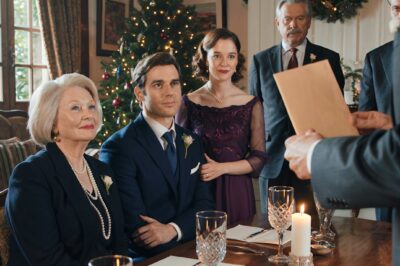
At The Inheritance Meeting, My Daughter-In-Law Shouted Proudly: ‘My Father-In-Law Left Us The Seven Miami Houses. Ella, Too Bad, You Only Got The Shed In Mississippi.’ Everyone Applauded. I Just Smiled And Said: ‘Son… You Really Don’t
During the Inheritance Split My Daughter-In-Law Celebrated But I Smiled: “Son, You Still Don’t Know?” The words hit me like…

My Dad Said: “STOP TREATMENT — WE WON’T APPROVE THE SURGERY.” He Signed a DNR to Take Control of My $15M Inheritance
Some fathers protect their daughters—mine tried to sign my life away. A DNR, a $15M trust, and a coma became…
End of content
No more pages to load