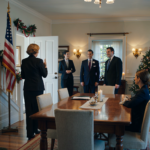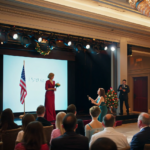
At My Brother’s Wedding, Dad Mocked Me “Just a Soldier” — Then an SUV Pulled Up “President Awaits You”
What happens when the family that sees you as a failure is forced to salute your success? This family drama story follows a daughter, a decorated Naval Commander, who has spent her life being dismissed and belittled in favor of her “golden child” brother. At his lavish wedding, her father delivers a final, public humiliation, mocking her life’s work as nothing more than “playing with big boats.” But the truth has its own timetable.
When an urgent call interrupts the reception, a black government SUV arrives, and a world her family never knew existed crashes their party. The narrative they’ve spun for decades — of her failure and their success — is about to be publicly and spectacularly detonated. Her revenge isn’t a scheme; it’s the life she built in their shadow.
Where disrespect reigns, the truth is a revolution.
The wedding reception was exactly as I’d expected — a loud, gaudy monument to my brother’s ego, funded entirely by my father’s checkbook. The air was thick with the scent of liies so overpowering they made my head ache, mixed with the cloying sweetness of cheap champagne trying to pass itself off as expensive. I watched my father, Robert, a man who measured his worth by the things he could buy for others to see, slap backs and laugh a little too loudly. He was playing his favorite role: the proud patriarch. My brother Kevin, the family’s charming but reckless golden child, stood beside him, soaking in the praise he never had to earn. It was the perfect picture, and as always, I was on the outside of the frame.
Then my father grabbed the microphone for an impromptu speech. He gushed about Kevin’s new marketing job, his beautiful bride, and the future they’d have in the house he’d just co‑signed for. Each word was a testament to Kevin’s success — a success built on a foundation of parental handouts. I thought about the thousands of dollars I had meticulously saved for my own education, every penny earned through work they dismissed as unimportant.
He finally gestured vaguely in my direction, a lazy flick of the wrist. “And there’s my daughter,” he announced, his voice suddenly shifting, coated in a thick layer of condescending pity. “Our little soldier.” A few relatives offered me weak, sympathetic smiles. It was then that a curious cousin leaned over and asked my dad what exactly I did in the military.
My dad let out a loud, dismissive bark of a laugh that made my stomach tighten. “Who knows? She’s just a soldier. She plays with big boats or something.” He looked directly at me then, a cruel glint in his eye as he delivered the final blow, his voice carrying across the nearby tables. “When are you ever going to afford a wedding like this? Huh?”
The words hung there — a public appraisal of my failure. I didn’t flinch. I just raised my glass of water, took a slow, deliberate sip, and felt the familiar chill of my own heart turning to solid ice. And the worst part? I wasn’t even surprised. It was just the loudest echo of a story they had been writing for me my entire life.
To understand the insult my father threw at me so casually at that wedding, you have to understand the universe he created. At its center was my brother Kevin, the golden child — a man who wore his charisma like a shield to hide a total lack of substance. Orbiting him was my mother, Linda, a gentle woman whose fear of confrontation was so profound that she would agree to any injustice just to keep the peace. And holding it all together, with the gravity of his wallet and his will, was my father, Robert — a man obsessed with the appearance of success. A success he needed to manufacture, control, and display for the world. In this solar system, I was a distant, cold planet, acknowledged only when my orbit inconvenienced them.
The clearest example of this dynamic is burned into my memory from the year I turned seventeen. For his eighteenth birthday, Kevin was gifted a brand‑new sports car — a gleaming black convertible that my father presented to him in the driveway in front of all his friends. The keys were tossed like a trophy, and my father’s chest swelled with pride. I watched from the living room window and, in the reflection of that polished new car, I saw the tally of my own life: the school trips I was told we couldn’t afford; the worn‑out laptop I had to use for two years after Kevin broke his and got an immediate replacement; the endless chorus of “money is tight” that only ever seemed to apply to me. That car wasn’t just a car. It was a four‑wheel declaration of my brother’s value — and my own insignificance.
A week later, I quietly approached my dad in his study. I had been researching colleges — my one hope for escape — and I’d found a prep course that could help with my entrance exams. I asked him for $500 to cover the course and the application fees. He didn’t even look up from his newspaper. “Money doesn’t grow on trees,” he said, the words worn from overuse. “If you want something in this life, you have to get a job and earn it.” He finally lowered the paper and looked at me, his eyes devoid of warmth. “We’ve poured everything we have into setting your brother up for success. We can’t afford to do that for everyone.”
The hypocrisy was so blatant, it was almost breathtaking. I just nodded, said, “Okay,” and walked away. There was no point in arguing with the laws of his universe. That moment solidified my escape plan. I worked two jobs my entire senior year and not only paid for my own applications but also secured a full four‑year scholarship through the Navy ROC program. The day I told them, I was buzzing with pride. I had done it all myself. I had built my own future.
I laid the acceptance letter and scholarship award on the kitchen table, expecting, for one foolish moment, to see a flicker of pride in their eyes. Instead, I was met with disappointment. My father scoffed. “The Navy? What a waste of your potential,” he said, shaking his head. To him, my potential was a life lived nearby — a career he could brag about at dinner parties. Doctor, lawyer — something he understood. My mother, Linda, just started to cry. “But why do you have to go so far away?” she whispered, as if my success was a personal attack on her. “Kevin is staying right here near home.” They didn’t see a daughter who had achieved something incredible. They saw a daughter who was abandoning them, escaping their orbit.
Over the next decade, this became the false narrative they clung to. My life in the Navy was a story of failure and rebellion they told themselves and everyone else. When I was promoted to NS sign and then to lieutenant, it was met with a shrug. When Kevin got a minor raise at his marketing firm, my father threw a celebratory dinner. My deployments, often to dangerous and classified locations, were framed as me avoiding the family and running away from my responsibilities. They told our relatives I had a simple government desk job because acknowledging the truth — that I was an officer with immense responsibility — was impossible for them. It didn’t fit their story. My father needed to be the patriarch, the provider, the one everyone relied on. My independence wasn’t just something he couldn’t brag about — it was an insult to his very identity. He resented that I didn’t need him.
Lying awake in my hotel room that night after the rehearsal dinner, I finally accepted it: they would never see me. So I decided I was done trying to be seen. The truth would just have to speak for itself.
After my father’s sneering dismissal at the rehearsal dinner, something inside me didn’t just break — it settled. For years, I had carried the hurt of their disapproval like a chronic fever, a constant low‑grade ache of not being good enough. But his words, so public and so cruel, were like a dose of ice‑cold medicine. The fever broke. The ache was gone. In its place was a profound and unfamiliar calm — a quiet, cold clarity that was almost unnerving.
I finally saw that seeking their love was like trying to draw water from a dry well. It was pointless. The mockery wasn’t an attack. It was a gift — the final signature on a contract, releasing me from all obligation to want their approval ever again. My goal was no longer to win their love. It was simply to let the truth have its moment.
My plan — if you can even call it that — wasn’t some intricate scheme I hatched in a fit of vengeful rage. The pieces were already on the board long before my brother’s wedding invitation arrived in the mail. My life, the one they knew nothing about, had its own momentum. As a commander in US naval intelligence, my job was to exist in a world of classified information and high‑stakes decisions. For the last eighteen months, I had been the lead intelligence liaison to the National Security Council for a time‑sensitive operation. My family thought I played with big boats. In reality, I provided the crucial data that guided the actions of the most powerful people on the planet. I was on call 24/7, and I knew that the final phase of this operation was imminent.
When the thick, cream‑colored wedding invitation arrived, my first instinct was to decline. It was the easy option, the one I had taken so many times before. Citing the demands of my simple government job was my go‑to excuse for avoiding the suffocating judgment of family gatherings. But this time — this time felt different. Holding the invitation, I thought about two decades of being minimized, of having my life’s work treated like a childish hobby. I thought about the car, the college fund, the endless praise for Kevin, and the quiet eraser of me.
It was there in my quiet D.C. apartment that I made a different choice. I would go. I would accept their invitation to the grand theater of my brother’s success. The plan was one of radical, passive honesty. My receipt wasn’t a piece of paper or a saved text message. It was my entire authentic life — a life symbolized by the plain dark encrypted phone that never left my side.
In my hotel room, I laid out my dress for the wedding — a simple, elegant navy‑blue gown, a quiet nod to a joke only I would get. I made the conscious decision to stop shielding them from my reality. I would go to the wedding. I would smile politely. I would be the quiet, invisible daughter they always wanted me to be. But my secure phone — the one that connected me to my real life — would stay on. I wouldn’t hide it. I wouldn’t make an excuse and run to the lobby if it rang. I would let my two worlds collide right there on the dance floor. I wasn’t going to light the match. I was just going to let them see the fuse that had been burning all along.
I had the truth. I had the stage they had so generously set for me. All that was left was to wait for the curtain call.
We returned to the wedding reception at the exact moment after my father’s words had landed. A thick, sticky silence hung over our section of the room — the kind of quiet that’s louder than any noise. Some relatives stared at their plates, suddenly fascinated by their half‑eaten chicken, while others shot me glances filled with a terrible, pitying kindness I never asked for. My father, Robert, looked immensely pleased with himself, basking in the glow of his own casual cruelty. He expected me to be flustered, to be hurt — to perhaps even cry.
Instead, I just looked at him and offered a small, quiet smile that didn’t come anywhere near my eyes. I was no longer a participant in his drama. I was simply an observer, waiting for the play’s final act. And I knew it was coming.
Then I felt it: a low, urgent vibration against the silk lining of my clutch. It wasn’t the light buzz of a text from a friend. It was the insistent, powerful pulse of my encrypted work device — a secret tremor from a world they couldn’t even imagine. A world that was about to crash into theirs.
I discreetly opened the small bag and glanced at the stark, glowing screen. There were only five words, but they were five words that would change everything: “Status, urgent, vehicle on route.” That was it. My heart gave a single, steady beat.
It’s time.
With a calmness that felt like it belonged to someone else, I stood up and carefully folded my napkin, placing it on the table. I walked over to my mother, Linda, who was already starting to look flustered by my sudden movement. “I have to leave,” I said, my voice even and low. “It’s work.” She opened her mouth to protest, to ask why, to tell me I couldn’t possibly leave my brother’s wedding — but I was already walking away, my back straight, my heels clicking with quiet purpose on the marble floor.
I pushed through the grand venue doors and into the cool evening air. Dozens of guests were mingling on the stone patio, smoking and laughing under the strings of fairy lights. They all turned as I walked out, their curiosity peaked. Just as I reached the curb, a vehicle glided to a silent stop directly in front of me. It wasn’t a taxi or an Uber. It was a large, black, government‑plated SUV with windows so heavily tinted they looked like polished obsidian.
The festive music from the reception seemed to fade into the background. A hush fell over the patio guests. The passenger door opened and a man stepped out. He wasn’t in a military uniform. He was in a perfectly tailored dark suit that probably cost more than my first car. He radiated an aura of calm, serious authority that made everyone else look like they were just playing dress‑up. His eyes scanned the crowd for a fraction of a second before landing on me — his focus absolute. He ignored everyone else and walked directly toward me. The crowd parted for him as if he had an invisible shield.
He stopped a respectful three feet away, but his voice was pitched to be loud, clear, and utterly undeniable. It cut through the night air — a blade of pure fact. “Commander,” he said, and the word hung in the air — electric and impossible. “Sorry to interrupt, but the president is waiting for your briefing via secure video teleconference. We need to leave now.”
The entire world seemed to freeze. I saw my father, who had followed me outside — presumably to scold me for my rudeness — stop dead in his tracks. The arrogant, ruddy color drained from his face, leaving behind a pale, slack‑jawed mask of pure shock. My brother Kevin stumbled out the door behind him, his perfect smile frozen in a richness of confusion. The whispers started immediately, spreading through the guests like a fire in dry grass.
“Commander,” one said. “Did he just say the president?” The false narrative my family had spent two decades constructing — the story of the aimless runaway daughter with the unimportant little job — was publicly and spectacularly annihilated in less than fifteen seconds.
I simply gave the aide a small, crisp nod. “I’m ready,” I said. Then I turned my head and gave my father one last look. There was no anger in it. No triumph. It was just a quiet final assessment. And in that moment, he didn’t look like a tyrant. He just looked small. For the first time in my entire life, he had absolutely nothing to say. And in the ringing silence of their shock, I didn’t feel anger or victory. I just felt free. For the first time, I was the one who got to walk away.
As the black SUV pulled away from the curb, the chaotic flood llit scene of the wedding shrank in the rearview mirror until it was just another memory. Inside the vehicle, it was silent, cool, and professional. The air smelled of clean leather, not cloying flowers. No one spoke. There was only the low hum of the engine and the quiet crackle of a radio. This was my world — a world of order, purpose, and consequence.
Hours later, after the urgent briefing was complete and the immediate crisis averted, I was in a sterile temporary office deep within a secure government building. It was only then, under the harsh fluorescent lights, that I finally looked at my personal phone. It was a digital inferno. Dozens of missed calls from my father, my mother, my brother. The text messages scrolled on and on — a torrent of frantic, self‑centered outrage.
“How could you embarrass us like that?” from my father. “You made a scene at your brother’s wedding. I can’t believe you,” from Kevin. “You need to call me right now and explain yourself. Everyone is asking questions,” from my mother. Not a single message asked if I was okay. Not one expressed curiosity or pride. It was all about them — their embarrassment, their social standing, their confusion.
I read through the messages one after another and felt nothing. It was like reading a frantic argument between strangers. I pressed the button on the side of the phone, plunging the screen into darkness, and placed it face down on the desk. The silence that followed was the most peaceful sound I had ever heard.
A few weeks later, back in my own apartment in D.C., a letter arrived. I recognized my mother’s looping, elegant handwriting immediately. The envelope was thick, and I could see a small faint watermark on the paper — a tear stain, her signature tool of emotional warfare. The letter inside was exactly what I expected: a masterpiece of self‑pity and blame‑shifting.
“I just don’t understand why you would hide your life from us,” she wrote. “I feel like such a fool. All these years, I thought you were struggling and you never told me the truth. How could you not trust your own mother?” There was no apology for their dismissal; no acknowledgement of their cruelty. My success wasn’t a reason for celebration. It was a secret I had maliciously kept from her. My entire life was once again reframed to be about her feelings.
I read the letter once, then walked it over to the kitchen and dropped it into the recycling bin without a second thought. My silence was the only answer she was ever going to get.
My new life — the one I had built in the shadows of their indifference — was where I truly felt at home. The following week, I stood at the head of a polished table in a secure briefing room, a place where words had weight and facts mattered. The room was filled with serious people — colonels, analysts, department heads — and all their attention was focused on me. They listened as I laid out the intelligence. They asked sharp, insightful questions, and they respected the answers I gave.
Here, I wasn’t just a soldier. I was commander. Here, in this room, was my real unit — the family I had chosen. A family bound not by blood, but by mutual respect and a shared sense of duty. This, I thought to myself as I answered a question from a two‑star general, is what belonging actually feels like. It wasn’t something you were handed. It was something you forged.
A few months later, I got a call from a cousin — the one who had innocently asked my father what I did for a living. After some pleasantries, she hesitantly told me about the fallout. Apparently, my father was now trying to brag about me to anyone who would listen. “My daughter works for the president, you know,” he’d say at the local country club. But it was no use. Everyone had seen his public scorn. They had heard him call me “just a soldier.” His desperate attempt to claim my success as his own had backfired, turning him into a local joke.
My brother Kevin, she mentioned, was also struggling. Without my father’s undivided attention and financial safety net, the cracks in his perfect life were beginning to show. Hearing this didn’t bring me joy or a sense of victory. It was just data — a confirmation of a hypothesis I had long ago accepted. They hadn’t changed. But their gravity could no longer hold me in its orbit.
I learned that your real value is never determined by the people who refuse to see it. It’s forged in the silence, in the hard work they dismiss, and in the quiet authority you build for yourself. If you’ve ever had to become your own commanding officer, drop a salute in the comments below. I see you.
I didn’t go back inside after the SUV door closed. The driver didn’t ask where to take me; he already knew. We slid through the city like a shadow, weaving past valets in tuxedos and couples in glittering gowns who stared at their reflections in restaurant windows. Mine stared back too—navy gown, hair pinned with military efficiency, face I barely recognized because it wasn’t braced for impact anymore. It was ready.
They took me to a federal building that never appeared on tourist maps and always appeared in the background of important photographs. Up two elevators, through one glass vestibule that fogged the minute we crossed it. The aide with the perfect suit held the door, and in we went, into a conference room chilled to the temperature where nerves sharpen into edges.
A secure screen hummed to life. A seal I’d memorized long ago materialized—a circle older than all our families combined—and then a face in silhouette. I heard the rustle of papers, the pause before a gavel falls.
“Commander,” the Situation Room director said, his voice a clean line through static. “You’re on.”
I nodded, not to him, but to the truth. The map bled onto the wall—coastline, storms gritting their teeth, shipping lanes like veins. I spoke in plain English; I always have. The world doesn’t need theatrics when the stakes can break you in half. I walked them through weather windows, satellite passes, the one fishing trawler that wasn’t fishing, the call that changed cadence at the forty‑second mark—a tell that no machine on earth can unhear once it knows it exists. Questions came from squares of light. I answered with what we had, what we didn’t, what could get someone killed.
At the end, the silhouette leaned forward. “Thank you, Commander.” There are compliments that dazzle; this wasn’t one. It was heavier. Useful. The screen went dark. The room didn’t change temperature, but I did.
When the SUV returned me to the hotel, the fairy lights on the patio were dimmer, as if the electricity had taken sides and not theirs. I walked past an arrangement of lilies that had surrendered to their own perfume. Robert—my father—was waiting in the marble foyer with his tie loosened and his certainty gone.
“I don’t appreciate surprises,” he said.
“You prefer illusions,” I said, and pressed the elevator button.
He followed me in. Up close, the wrinkles around his mouth looked less like experience and more like negotiations he’d waged with his reflection. “You made a scene,” he said, as if the words could reconstitute the evening into something polite.
“I took a call,” I said. “You made a speech.”
The doors opened on the guest‑room floor. I stepped out; he didn’t. The distance between us was only the width of an elevator threshold and the length of an entire childhood.
“Good night, Robert,” I said. I didn’t call him Dad. That name is a door he closed a long time ago, quietly, so he wouldn’t hear the click.
Sleep was a rumor. I lay on my back in the dark hotel room and let the AC hum sync with the last lines of code I’d memorized for a mission whose name would never appear in a memoir. Across the room, my dress hung like the ghost of a previous life. I thought about the first uniform I ever wore: ROTC gray so stiff it felt like penance, boots that blistered, hair pulled so tight I could hear my own pulse.
Back then, the world split cleanly between people who thought I couldn’t and people who thought I shouldn’t. I didn’t know yet that the most dangerous category was people who thought I didn’t.
At seventeen, I stood in the kitchen with a stapled packet in my hand—a scholarship application with margins smudged by hope. Robert was reading the business section, two inches from his nose, like a man trying to pull a ship into harbor with his eyes. “Five hundred dollars,” I said, and laid the paper on the table like an offering.
He didn’t look up. “Money doesn’t grow on trees.”
“Boats don’t grow on driveways,” I wanted to say, but didn’t. There was a black convertible outside that answered on his behalf.
I got the money by working the late shift at a grocery store whose security guard called me “Kid” and sometimes—quietly, kindly—“Ma’am,” when he saw me studying chemistry flashcards between customers. I got the scholarship. I got out.
But you never really get out of a story your family wrote in fountain pen. Ink lasts. It just doesn’t decide what it says about you. You do.
In the weeks after the wedding, time unspooled in measured lines: briefings at odd hours, coffee that smelled like resolve, a gym where no one spoke and everyone counted. The call that night wasn’t a one‑off. It was a hinge, and the door kept swinging. Our operation moved through its phases the way the tide moves—inevitable if you understand the moon.
I didn’t answer Robert’s calls. I let his voicemails live in the voicemail room together, bragging to one another about how important they were. My mother, Linda, texted at dawn with apologies that contained no admission. Kevin sent one message that said, “Wild night lol” and then nothing for a while, because the word “wild” is what people use when they’ve run out of adjectives for other people’s lives.
There were other messages, though, the kind that matter. A former junior officer wrote, Saw the clip—proud of you, ma’am. A petty officer I’d argued with for twenty minutes on a pier at 0300 wrote, Thank you for making me smaller on paper than I am in person. My CO wrote nothing, which is how you know a CO is paying attention.
The country club version of events reached me through a cousin who had learned to lower her voice before she told me anything. Robert was performing contrition, which looks identical to performance. He had taken to mentioning my name like a man dropping a black card on a white tablecloth. “My daughter works for the president,” he said, carefully skipping the part where he once joked I played with little boats.
No one laughed. It turns out people remember the performance too.
Three weeks later I stood at the end of a long table in a secure room, pointer in my hand, men and women ringed around me like the hours on the kind of clock that counts down. I finished the EXSUM, fielded the questions, and when the last slide faded, a civilian I respected looked up from his notes.
“Commander,” he said, “off the record… how did your family take it?”
I smiled. “Like any family takes a storm,” I said. “They didn’t admit it rained.”
He nodded in that way people do when they understand something without liking it.
When the operation concluded—cleaner than we hoped, dirtier than anyone will ever know—I put my name in for leave and pointed myself toward the coast. Not the one where I was born; the one I earned. A little town two hours south of the base where gulls complain professionally and the coffee comes from a machine older than its barista.
The innkeeper gave me a room with a window that remembered ship masts. I spent a day not speaking and an evening speaking only to the sea, which is to say I let the waves do it. In the morning, I ran until my lungs burned clean. On the way back, I stopped at a bait shop that also sold lemonade and wooden knives carved by a man who could have made a living as a surgeon.
I picked up a knife. The handle fit my palm like a truth. The carver, a weathered woman in a ball cap that read NO WAKE, nodded at my grip.
“First time?” she asked.
“No,” I said. “Just the first time I’ve had time.”
She wrapped the knife in newspaper with the care of someone swaddling a first child.
“Keep it sharp,” she said. “Dull blades slip.”
I knew what she meant. About knives. About everything.
Kevin called two days after I returned to D.C. He didn’t lead with hello. “Can you talk to Dad?” he asked.
“About what?”
“He’s…not himself.”
“Who is he?” I asked. Silence, then:
“He’s embarrassed.”
“He’s responsible,” I said.
Kevin exhaled, long, like air escaping a dream. “Look,” he said, “maybe you could swing by the house. Mom keeps asking when you’ll visit.”
Linda asks a lot of things. The question she never asks is what do you need? It’s always what do you think of me thinking of you?
“I’ll come tomorrow,” I said. “One hour.”
The house I grew up in looked like a magazine had staged a photo shoot and then abandoned the furniture there out of guilt. On the mantel, a graduation portrait of Kevin dominated in a frame so ornate you could have used it as a weapon. There was a photo of me too, a smaller one, crooked in its stand like it wasn’t sure it should be there.
Linda opened the door. Her lipstick was the shade of earned sympathy. “You look thin,” she said, which in our language means I’ve been worrying aloud about you to people who cannot help you.
“I’m strong,” I said, and stepped inside.
Robert was in his study, a room that smells like bourbon and justification. He didn’t stand when I entered; he didn’t know which part of himself should rise.
“You made me look like a fool,” he said.
“You made yourself sound like one,” I said. “I was busy.”
He flinched, not at the words, but at the mirror they were trying to hold up to him. “You always talk in riddles,” he said.
“I talk in facts,” I said. “You don’t like where they lead.”
Linda hovered in the doorway, hands twisted in the hem of her cardigan as if she were wringing out a wrong.
“I wrote you a letter,” she said softly.
“I know,” I said. “I recycled it.”
She inhaled sharply, as if the word itself could bruise. “I was trying to explain.”
“You were trying to re‑center the story,” I said. “I’m not the center either. The work is.”
Robert made a sound halfway between a scoff and an apology, which is to say it was nothing. “So that’s it? You walk in here, speak to us like we’re strangers, and—”
“You are strangers,” I said. “Not because I left. Because you never arrived.”
The clock in his study ticked, a nervous metronome.
“What do you want from us?” Linda asked, tears pricking exactly on cue.
“Nothing,” I said, and felt the weight of the word balance itself in my mouth. “Which is what I wanted then and what you couldn’t accept.”
“Family sticks together,” Robert said.
“Family tells the truth,” I said. “You can’t stick to what you won’t admit.”
I left before the hour was up. Not out of anger. Out of respect for the boundary I finally believed in.
At work, boundaries look like badges, and badges look like permission. I was promoted without ceremony—just an email with a subject line that made my heart beat twice. I didn’t tell Linda. I told the team. They were the ones I trusted with celebration because they wouldn’t weaponize it later.
We marked it at a diner where the coffee comes in thick mugs and the waitress calls everybody “Honey” like she’s grandfathering us all into the same family. Chief Hernandez, who has a face that could stop a fight and a laugh that could prevent one, slid a coin across the table.
“What’s this?” I asked.
“Challenge coin,” he said. “From the old unit.”
I turned it over. On the back, someone had stamped the words QUIET FIRST. I closed my fingers around it. Some awards glint. Some ground you.
“Also,” Hernandez said, “we heard you finally opened that scholarship idea you kept in your footlocker.”
I nodded. The Anchorline Fund had lived as a plan in my head for five years, a promise I made to a nineteen‑year‑old seaman who thought leadership always sounded like yelling. It didn’t. It sounded like Stay with me. We’ll solve it.
“We opened it last week,” I said. “Small grants. Big mentors.”
Hernandez grinned. “We’ll make it big.”
The first applicant I interviewed sat up so straight her posture could have saluted for her. She wore a second‑hand suit and dignity like it had cost retail. Her name was Alana Bishop; she wanted to be the kind of officer who mapped possibilities instead of constraints.
“What did they tell you you couldn’t do?” I asked.
She smiled, quick and sharp. “Be in charge without being loud.”
“What did you do?”
“Became precise,” she said.
We gave her the grant and a mentor who didn’t look like any of the officers on her grandmother’s wall.
Two months after the wedding, I was invited—officially—to a commissioning ceremony at the academy I had once driven past just to remind myself that institutions are only as impenetrable as their doors. I wore my uniform. It fit like the truest thing in my closet.
In the lobby, a man in a tuxedo stopped me. “My son is commissioning today,” he said, beaming the way fathers beam when they can see the person their child will hand the world to someday.
“Congratulations,” I said.
He hesitated. “Were you the—” He lowered his voice, as if he were about to name a ghost. “—Commander from the video?”
“I was a commander in a video,” I said. “And I am a commander in a life.”
He nodded, relieved, as if I had returned a borrowed narrative intact.
During the ceremony, I kept my eyes on the cadets’ faces, not their uniforms. Uniforms can pretend. Faces can’t. When the time came to pin the last insignia, the superintendent looked out at the crowd.
“Commander,” he said, “would you do us the honor?”
I walked to the stage. The cadet in front of me was steady, jaw clenched like she might bite a future that was trying to bite her first. I pinned the bars just below her collarbone—not hidden, not loud, exact. She swallowed hard.
“Lead without apology,” I said, just for her.
“I will,” she said, and for once a promise sounded like a fact.
Kevin showed up at my apartment on a Sunday afternoon when the city smells like hot bricks and second chances. He hunched his shoulders in the doorway, a boy trying to hide in a man’s shirt.
“What do you need?” I asked.
He looked past me, at a room that contained exactly the kind of furniture a life requires and nothing it doesn’t.
“I lost my job,” he said, and flinched like I was the one who might laugh.
“I’m sorry,” I said, because compassion isn’t contingent on history.
He shrugged. “I was… coasting. I thought Dad would help me start something. He’s…busy being penalized for dues.”
I didn’t enjoy the symmetry. Justice isn’t a party trick.
“I can’t get you a job,” I said, “and I won’t call anyone to make you feel like you earned what you didn’t. But I’ll read your résumé. I’ll tell you what matters in rooms where you want to belong.”
He nodded, eyes on his shoes. “I told myself a story,” he said. “That you were trying to hurt us by not telling us about your work. I realize now we didn’t ask because we didn’t want to know the answer.”
“That’s a better story,” I said. “Make it the one you revise into truth.”
We worked for two hours. He left with a résumé that was honest enough to stand up and humble enough to try again. Before he reached the door, he stopped.
“I’m… proud of you,” he said, and because he had never said the word to me without using it as a mirror, I believed him.
Autumn bit the edges of the city. Leaves skittered across the Navy Yard like shy reporters. The operation from the summer turned into a different set of meetings, the kind with longer tables and shorter patience. I argued for a budget line that didn’t make anyone look heroic on camera and saved lives in rooms with no cameras at all. Sometimes you measure victory by the absence of a casualty report.
One night, after a run that felt like penance I didn’t owe anyone, I stopped by the memorial by the river. There’s a bench there with a plaque that reads For those who kept the storm offshore. I sat and let the water keep its secrets.
A woman approached, early thirties, hair tucked under a beanie, posture that told me the gym meant discipline, not vanity. She hovered, then sat at the far end of the bench like a person who knew how to share space.
“Were you—” she started, then shook her head. “Sorry. Never mind.”
“Ask,” I said.
“Were you the one from the SUV?”
“I was one of many from many SUVs,” I said. “But I was a person in a moment people enjoyed watching.”
She smiled. “My dad saw that video,” she said. “He was in the Army in the nineties. He said, ‘That’s the look we never learned how to give our daughters.’” Her voice didn’t shake, but her eyes did.
“We learn by doing,” I said.
She nodded. “I joined,” she said. “Today.”
We sat there for a while, not speaking. The water kept the rest.
In December, Robert sent a text with a photo of a gift basket—wine, cheese, a ribbon tied like a truce. Dinner? he wrote. My treat.
I stared at the screen. Relationships aren’t rebuilt on appetizers. They’re rebuilt on admissions. I typed and deleted, then typed again.
I’ll meet you for coffee. No speeches.
The café we chose had chalkboard menus and a barista who looked like he could find any country on a map without asking which hemisphere it lived in. Robert arrived in a jacket that tried too hard.
“Do you know,” he said after the first sip, “how hard it is to be the parent who’s wrong?”
“Yes,” I said. “Because I was the child who knew it.”
He winced.
“I don’t know how to fix it,” he said.
“Stop performing,” I said. “Start practicing.”
“How?”
“Tell the truth about me when I’m not in the room,” I said. “And tell the truth about you when I am.”
He nodded, slow, like a man realizing a staircase has more steps than his knees wanted to admit.
A week later, my cousin sent a blurry video from a party. Robert stood in a circle of men with matching watches. Someone said, “Isn’t your girl the one who works with the—” and made a sweeping hand gesture that tried to corral the executive branch.
Robert’s jaw worked. He swallowed.
“She’s a Naval intelligence officer,” he said. “A commander. I used to call her ‘just a soldier.’ I was wrong.”
It wasn’t eloquent. It was better. It was honest.
Linda waited longer. Shame is a shy animal; it doesn’t come when called. She invited me to an early Christmas service at a church that smells like old wood and newer promises. I picked a seat near the back, where people who don’t know the choreography sit. She slid in beside me, clutched a paper program like it might float.
“I was cruel because I was afraid,” she said before the choir made everyone believe in other people’s harmonies. “I told myself motherhood was a kind of ownership. You taught me it’s stewardship.”
The choir began before I could answer. Afterward, in the cold outside, her breath made little ghosts of all the things she wished she’d said earlier in our lives.
“I can’t promise I’ll be different overnight,” she said. “But I want to learn how to love you for who you are, not for how you make me feel about me.”
I believed her. Not completely, not forever. Enough.
The Anchorline Fund grew the way good things do: slowly, then all at once. Donors who didn’t need their names on buildings wrote checks. Retired chiefs wrote letters the length of novels. The first cohort met in a windowless classroom that glowed anyway because they were in it. We taught them how to brief like the room already respects them, how to write orders that can be obeyed without translation, how to say No in a language that sounds like Yes, to the right thing.
On the last day, I stood in the back and watched a woman from rural Ohio explain an algorithm to a colonel who had assumed his rank made him fluent. It didn’t. Her clarity did.
After, she came up to me, flushed with the effort of being precise.
“I always thought I had to roar,” she said.
“You have to resonate,” I said. “Roars fade. Resonance builds.”
Spring brought rain that cleaned the city so thoroughly the monuments looked embarrassed. The wedding I had walked out of announced a baby. Kevin texted me a sonogram with a single line: If it’s a girl, I want her to meet the woman I want her to become.
I stared at the gray, grainy promise and felt something unclench I didn’t realize I’d held tight since I was born.
When the baby came in late June, the hospital room smelled like antiseptic and forgiveness. Kevin handed her to me the way people hand over relics, not because they’re breakable, but because they’re holy.
“What’s her name?” I asked.
He smiled. “We were thinking of Navy, but mom said that’s not a name.”
I laughed for the first time that day. He shook his head. “It’s Annie,” he said. “After Grandma Anne who taught mom to plant tomatoes and me to shut up. And… after Anchorline.” He looked sheepish, then brave. “I know it’s not how initials work. It is how meaning does.”
Annie’s eyelids fluttered like little flags in a wind no one else could feel. I put a finger in her palm. She closed around it like a decision.
“Welcome aboard,” I whispered.
I still run by the river. I still brief rooms where the oxygen gets opinionated. I still go home sometimes, to the house with the staged mantel and the clock that never decides if it loves the hour. Linda has started asking different questions: Are you tired? Do you want tea? Did you bring work? Do you want to not talk about it? Robert talks less, which turns out to be the most generous thing he can do.
At dinner one night, he put down his fork and looked at me like he wanted to look right this time.
“I know you don’t need it,” he said, voice careful, like a man stepping onto a new dock. “But I’m proud of you.”
I didn’t need it. I did want it. Both can be true.
“Thank you,” I said. “It lands.”
Every family has a story they tell about themselves. Ours used to be a fable about a son who succeeded and a daughter who ran away. Now it’s more honest: a son who’s learning what work feels like when you do it for yourself; a mother who discovered that apologies are not punishments; a father who realized power isn’t a personality; a daughter who understood she could be her own commanding officer and still come to dinner if the food is honest.
The SUV doesn’t come for me often—thank God. When it does, the driver says my name like a password we share. Sometimes there are cameras. More often, there are not. Either way, the work is the same, and so am I.
At my brother’s wedding, a man asked, “Who knows what she does?” and answered with a laugh. Now, more people know. Some never will. It is not their job to understand. It is my job to do it.
If you’re reading this because someone told you you were just anything—just a soldier, just a sister, just a civilian—here is what I learned under lights and lilies, under flags and fluorescent bulbs: just is a word small people wrap around big lives so they can hold them without burning their hands.
Let go of their wrapping. Keep your hands steady. When the call comes—whoever it’s from, whatever it asks—be ready to say, “I’m here.”
And if an SUV ever glides to your curb and a quiet man in a dark suit says, “The president awaits you,” don’t look back to see who’s watching. They’ll catch up. Or they won’t.
Either way, you will be exactly where you belong: not on a list someone else wrote, but in a life you did.
News
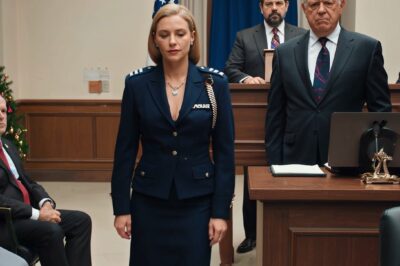
When I Came Home from NATO Duty, I Didn’t Expect My Own Father to Drag Me Into Court. He stood b
When I Came Home from NATO Duty, I Didn’t Expect My Own Father to Drag Me Into Court He stood…
My Younger Brother Texted In The Group: “Don’t Come To The Weekend Barbecue. My New Wife Says You’ll Ruin The Whole Party.” My Parents Spammed Likes. I Just Replied: “Understood.” The Next Morning, When My Brother And His Wife Walked Into My Office And Saw Me…
My younger brother texted: “Don’t come to the BBQ.” Until my brother and wife step into my office… When your…

At the family party, my sister called me “the family failure.” Her boss only smiled and said… Skyler, the golden c
At the family party, my sister called me “the family failure.” Her boss only smiled and said… A shocking family…
At The Inheritance Meeting, My Daughter-In-Law Shouted Proudly: ‘My Father-In-Law Left Us The Seven Miami Houses. Ella, Too Bad, You Only Got The Shed In Mississippi.’ Everyone Applauded. I Just Smiled And Said: ‘Son… You Really Don’t
During the Inheritance Split My Daughter-In-Law Celebrated But I Smiled: “Son, You Still Don’t Know?” The words hit me like…
My Dad Said: “STOP TREATMENT — WE WON’T APPROVE THE SURGERY.” He Signed a DNR to Take Control of My $15M Inheritance
Some fathers protect their daughters—mine tried to sign my life away. A DNR, a $15M trust, and a coma became…
SEALs Laughed at Her Lipstick in Line — Until They Saw Her Patch: “ELITE MARKSMAN”. She walked into the Navy SEAL
SEALs Laughed at Her Lipstick in Line — Until They Saw Her Patch: “ELITE MARKSMAN” She walked into the Navy…
End of content
No more pages to load